ComfortDelGro targets larger overseas footprint amid limited Singapore growth

Tay Peck Gek
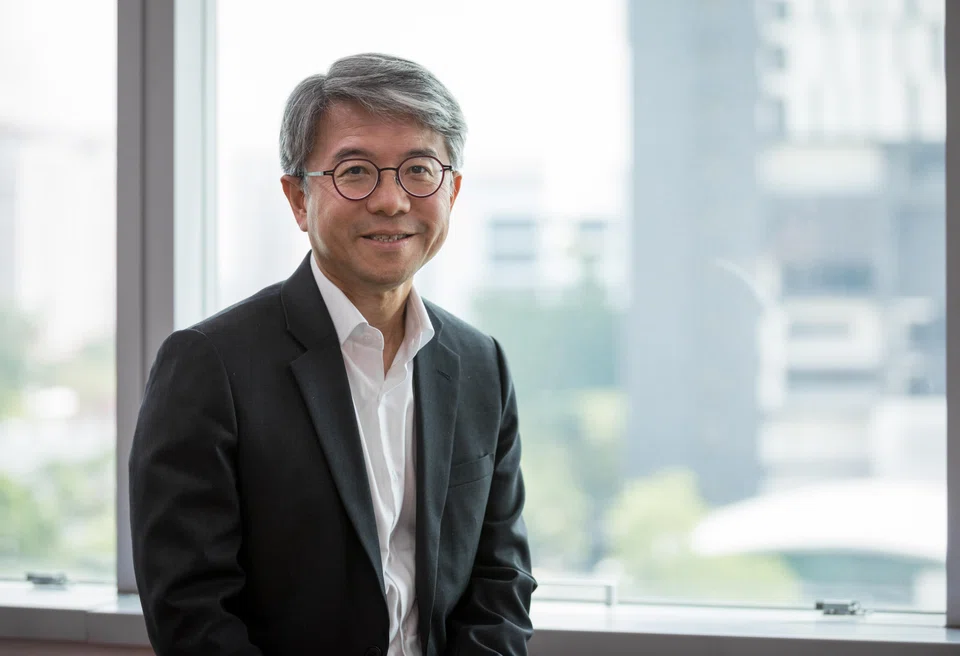
COMFORTDELGRO Corporation plans to raise the contribution from its overseas operations to 50 per cent of total revenue in the near term, from 40 per cent currently, amid limited growth opportunities in the Singapore market.
The transport heavyweight’s group chief executive officer Cheng Siak Kian told The Business Times in a recent interview that Singapore still offers some room for its rail operations to grow.
Opportunities include the upcoming Jurong Region Line and Cross Island Line, which will be largely limited to existing rail operators in Singapore, although foreign players will be allowed to participate as minority partners of joint ventures.
However, the listed group finds it tough for its local bus operations – run by its listed subsidiary SBS Transit , which is Singapore’s largest public bus operator with a market share of 55 per cent – to make further inroads here.
Cheng, who took over the reins of ComfortDelGro in January, acknowledged: “For us to increase market share (in Singapore) is extremely difficult, and that’s a fact.”
To “swing the balance” between the local and overseas markets, the group CEO pointed out that ComfortDelGro will have to grow its overseas business even more to catch up to its Singapore revenue, which is still expected to increase despite the limited market size.
Revenue for the group amounted to over S$1.8 billion for the first half of FY2023, with about S$1.1 billion or 58.2 per cent derived from Singapore.
Currently, the transport group has a presence in several countries, including the United Kingdom, Australia and China. It also recently secured a major train operating contract in Paris.
In deciding where it would expand its geographical footprint, Cheng cited a few criteria. “Typically we look at the contract… it is important that we go into public transport contracts that we know are gross cost contracts.”
Such deals mean ComfortDelGro is paid a fee to operate the service and does not have to worry about revenue as the authority collects the fare and carries the financial risk. Hence, it provides ComfortDelgro with sustainable, reasonable margin.
Countries that have a strong rule of law appeal to the Singapore land transport player, as it will be reassured that all rights are respected and protected. It is drawn to markets where there is good demand for public transport as well.
Although the public bus and rail business generates a low operating profit margin – ranging from 2 per cent to 5.7 per cent in the past six quarters for ComfortDelGro – Cheng pointed out that the group makes up for it with scale and will “continue to increase our share in the markets that we’re in”.
ComfortDelGro ensures that it bids at a “reasonable” price so that the business is not loss-making. However, Cheng declined to disclose what a reasonable margin is, due to commercial sensitivity.
The stability of revenue from the public transport operations offers the visibility of return its shareholders look for, Cheng noted.
“If you look at our shareholders … a lot of them are very long-term institutions or investors with a view that this is going to be a stable dividend-yielding stock with some upside, some growth… They don’t expect us to, you know, give them another 30 per cent growth year-on-year,” Cheng said. “So our obligations, the strategy that you have, must also be in line.”
Public transport remained the group’s biggest income contributor in H1 FY2023, accounting for S$52.4 million or 44.7 per cent of operating profit, followed by taxi and private hire with S$42.7 million or 36.4 per cent.
ComfortDelGro now also offers ride-hailing through taxi and private-hire vehicles on its app called Zig, and sees itself as a “taxi leasing company enabled by technology”.
On the taxi sector having been disrupted by ride-hailing service providers, Cheng said that ComfortDelGro will not engage in price competition: “It’s not sustainable for a listed company like us because we have to deliver actual Ebit (earnings before interest and tax). It makes a difference, meaning that it’s not adjusted, we actually have to deliver a good return, we actually have to deliver cash flow, we need to pay (a) dividend.”
Cabbies also need a sustainable income, Cheng said – a message that he reiterated throughout the interview.
ComfortDelGro’s taxi and private-hire segment has shown improvement since borders reopened, with the average take-home income of cabbies now being 20 per cent higher than pre-pandemic levels. This is partly due to the fare revision introduced in March 2022. Cheng did not disclose the average income figure because of commercial sensitivity.
The segment logs 90,000 rides daily, or about 15.2 per cent of the average daily number of street-hail and ride-hail trips of 592,000.
ComfortDelGro will add cabs to its fleet, if the demand warrants it, in spite of rising certificate of entitlement (COE) premiums. This is because cab operators pay a moving average of COE premiums for new taxis, making it less prohibitive than bidding for fresh COEs.
ComfortDelGro has about 9,000 cabs – or 60 per cent of the cab population in Singapore – with a utilisation rate of nearly 100 per cent. Cheng is also unable to say exactly when the remaining 10 per cent taxi rental rebate would be withdrawn, as it depends on various factors, including demand and drivers’ take-home pay.
However, ComfortDelGro will hesitate to quickly expand its private-hire car fleet of over 600 in the short term because of the sky-high COE prices. Currently, over 5,000 private-hire drivers are registered with Zig.
Zig has seen increasing use for hailing private-hire vehicles and taxis. ComfortDelGro intends for customers to migrate to the app but will keep the dialling-for-taxi service, although on a smaller scale.
TRENDING NOW
Fed hike throws Singapore banks a margin lifeline; UOB most likely to feel impact
He built the Vingroup empire. Now South-east Asia’s richest man is handing some key roles to his sons
Real-estate veteran Desmond Sim quits from CEO roles at Realion, ETC
Chagee, Mixue and Luckin won the market. Sustaining their edge is the harder part