

Condo management stays ahead with EV charging
Singapore
AS AT July 2017, there are about 606,000 cars on Singapore roads and the overwhelming majority are petrol-engined, with only 132 plug-in petrol-electric hybrids and 12 pure electric vehicles.
According to the Land Transport Authority, there are also two electric motorcycles, 31 electric commercial vehicles and one solitary electric bus - part of an e-bus trial being conducted here.
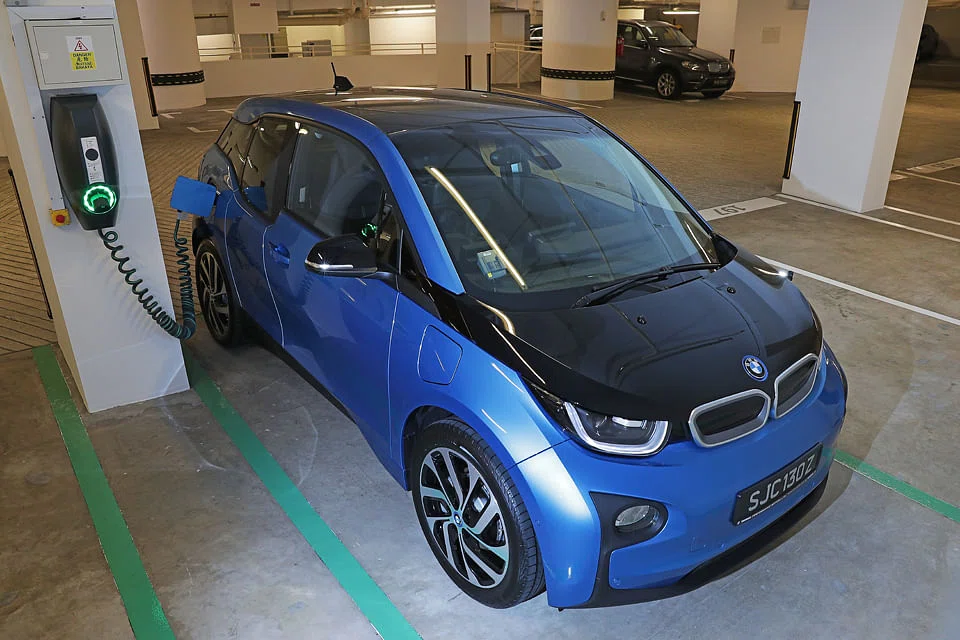
The BMW brand dominates the electric vehicle (EV) market. There are nearly 120 plug-in BMWs sold by its authorised dealer, against four parallel-imported Tesla cars.
But the growth in plug-in models here has slowed recently because the costs of the technology are still high, while the infrastructure and incentives that support driving electric vehicles are limited, said Preeti Gupta, BMW Asia's corporate affairs director.
"Customers are still hesitant to switch to a new technology and the government's decision to change from Type 1 to Type 2 plugs took nearly 18 months, hindering the ability for additional PHEV (plug-in hybrid electric vehicle) and EV models from entering the market,'' she added.
Still, that has not discouraged some condominiums from installing charging stations recently.
Alexandre Louis Pascal Collin, the treasurer of One Shenton's management committee, said: "One Shenton has always been keen on providing its residents the most up-to-date facilities. With the significant technological progress made over the past years in EV cars and Singapore's intention to become an innovative nation, we thought it was the right time to offer this service to our residents to remain ahead of other developments in the Marina Bay vicinity."
But he added: "The biggest challenge was to convince ourselves that the investment to set up EV charging stations was worth the cost given that we so far have few residents with EVs. We hope to have more EV cars in the near future."
Once outside these private residential developments though, EV owners may not have access to many charging stations.
Part of a nation-wide charging infrastructure should be ready by the end of this year, but it will be mostly reserved for BlueSG, an EV car-sharing programme to have 1,000 cars and 2,000 charging points.
Most of the charging points are reserved for BlueSG cars, with only 20 per cent available for public use. The reason? It is assumed that private EV owners have their own private charging points.
Also, under the Land Transport Authority's (LTA) e-mobility roadmap, public buses and taxis offer the biggest potential for electrification. Taxi and bus fleets today account for only 3 per cent and 2 per cent of the overall vehicle population respectively, but they log the highest and second highest annual mileage per vehicle respectively.
Buses also currently emit the highest amount of carbon dioxide per vehicle, thus offering the highest carbon abatement potential.
Both taxis and buses also have centralised pit stops (for example bus terminals), where charging facilities can be centralised for use.
Still, BMW hopes that a robust charging network can be developed in Singapore with the support of the government and private companies.
Ms Gupta said: "We believe the availability of a wide range of PHEVs will drive interest and increased sales of both PHEVs and EVs. As PHEV adoption rises, the demand for more charging stations will increase.''
An example is Sri Lanka where sales of EVs and PHEVs spiked in 2015 when the government introduced extremely low tax of just 5 per cent for EVs.
"As the demand for charging infrastructure increased, private businesses quickly moved to address that need.''
TRENDING NOW

Temasek’s Wan Chee Foong to helm PIL, Lars Kastrup to be board adviser

Chagee, Mixue and Luckin won the market. Sustaining their edge is the harder part

He built the Vingroup empire. Now South-east Asia’s richest man is handing some key roles to his sons
One-third of Singapore-listed firms at risk in severe AI downturn: MAS

