Container freight rates set to rise on more China lockdowns
 Add BT as a preferred source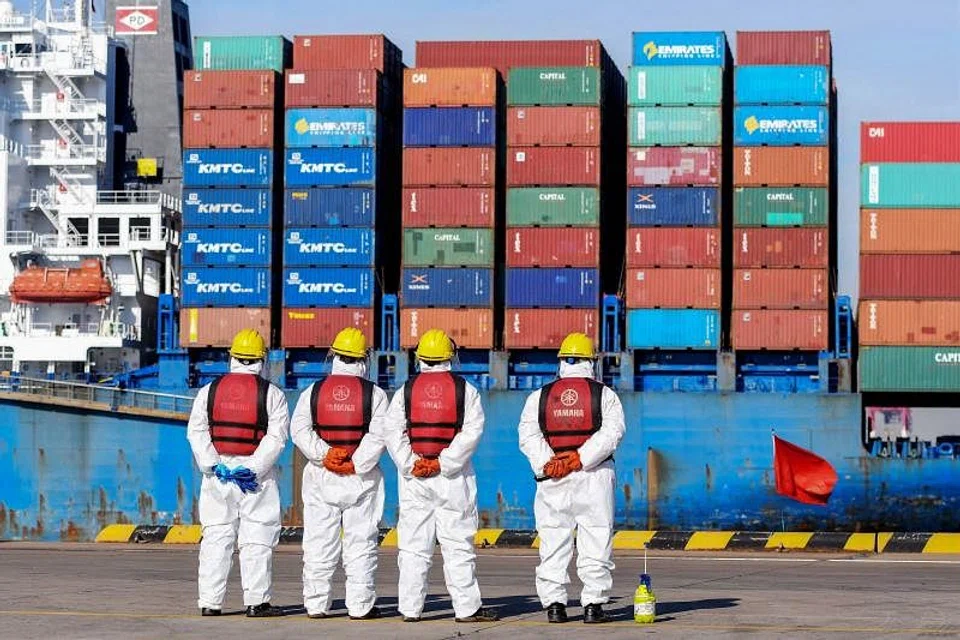
DeeperDive is a beta AI feature. Refer to full articles for the facts.
[LONDON] The number of container ships waiting off Qingdao, one of China's biggest ports, is continuing to rise as the country doubles down on its Covid-zero policy, adding more delays to a strained global supply chain.
About 70 vessels were spotted off Qingdao port in Shandong on Monday (Mar 14), almost double the number at the end of February, going by shipping data compiled by Bloomberg. The increased delays there and in other parts of China are expected to push up freight rates.
While there is usually a build-up of vessels seeking to enter China following the Chinese New Year holidays, volumes this year are being exacerbated by lockdowns aimed at curbing new coronavirus outbreaks.
Salmon Aidan Lee, head of polyesters at energy consultancy Wood Mackenzie, said: "The virus outbreaks are sprouting up in different parts of China, and lockdown measures do not seem as effective because the transmissibility of the new variants are higher. That leaves us with a situation that has worsened in the past few days at Qingdao."
He added that freight rates can be expected to rise because of increasing delays.
There is also a growing backlog of vessels off the ports of Shanghai, Ningbo and Zhoushan. There were 262 ships counted there, up from 243 a week ago. However the situation off Shenzhen and Hong Kong has eased a bit, dropping to 162 vessels from 208 on Mar 7. The rapid spread of the Omicron variant in China is increasing the pressure on already strained supply chains reeling from Russia's invasion of Ukraine. Shipping lines like AP Moller-Maersk have cancelled services to Russia and halted some rail shipments from China into Europe.
Navigate Asia in
a new global order
Get the insights delivered to your inbox.
China has locked down Shenzhen city and Jilin province in the latest effort to contain the pandemic, threatening technology and auto manufacturing output. The Yantian container port, Shenzhen's largest, said Monday that operations are continuing normally. China's strict zero-Covid policy has led to several partial port closures over the past year, exacerbating concerns about disruptions to supply chains and the subsequent rise in production costs. Surging global oil and gas prices due to the Russian invasion of Ukraine are adding to inflation risks in China as factory costs remain elevated.
BLOOMBERG
Decoding Asia newsletter: your guide to navigating Asia in a new global order. Sign up here to get Decoding Asia newsletter. Delivered to your inbox. Free.
Copyright SPH Media. All rights reserved.