

Cosco Shipping, Orient Overseas could be staring at over US$2.1 billion in US port fees: HSBC
This could erode 74% and 65% of consensus Ebit margin forecast for FY2026 for Cosco Shipping Holdings and Orient Overseas (International), respectively

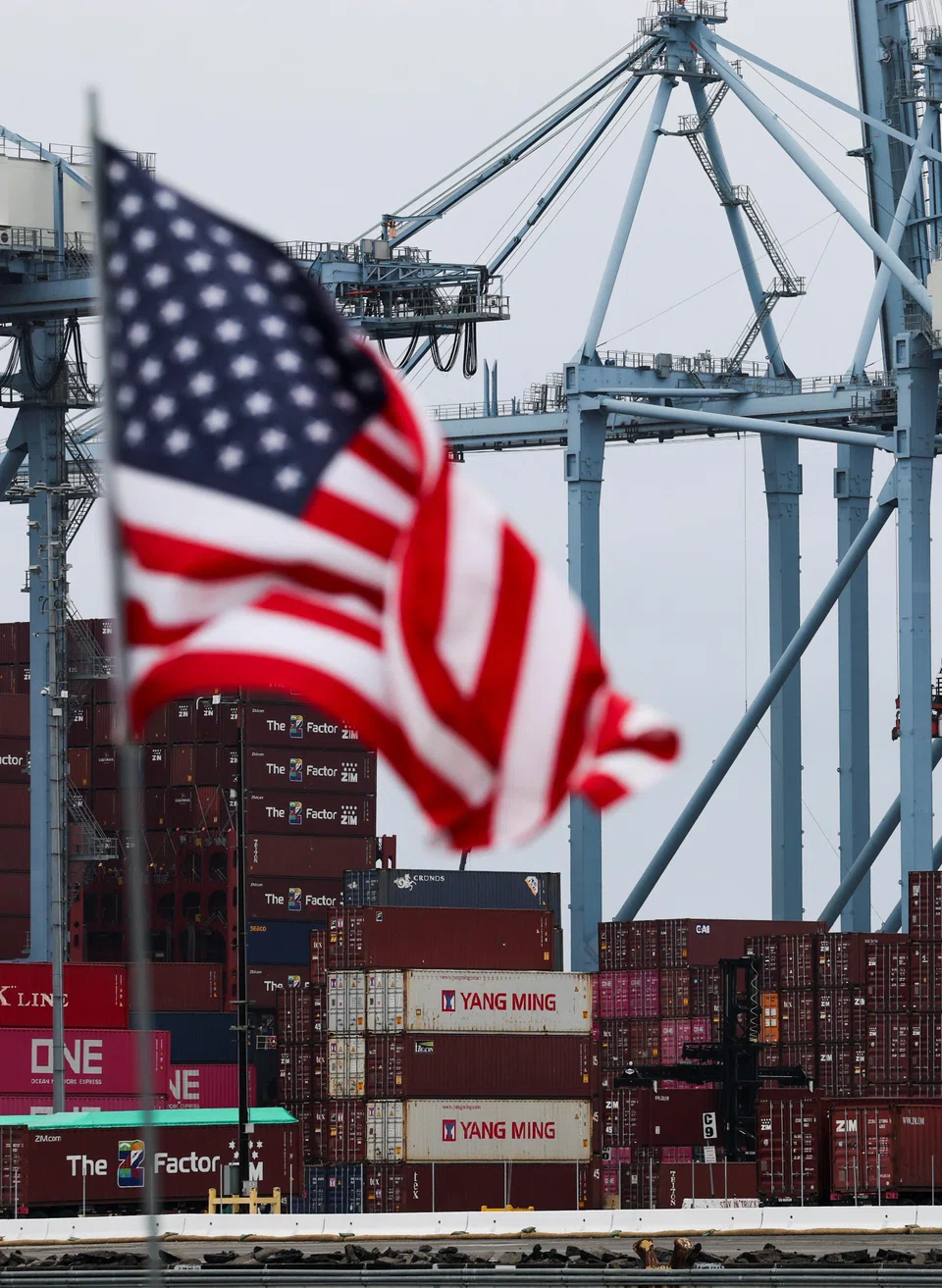
[SINGAPORE] China lines Cosco Shipping Holdings and Orient Overseas (International) could be hit by US port fees amounting to more than US$2.1 billion in 2026, a report by HSBC indicated.
The US Trade Representative’s new fees on Chinese vessels entering ports in the nation are scheduled to take effect from Oct 14, 2025. The fees will impact Chinese owners and operators, as well as ships built in China. Only smaller Chinese-built ships and those that make short-haul voyages will be exempted from fees.
In a research report on global container shipping released on Monday (Sep 8), HSBC forecast that Chinese sea carriers will be the worst hit by the fees. In contrast, the impact would be “negligible” for non-Chinese lines.
For listed Cosco Shipping Holdings, the hit would be about US$1.5 billion in port fees, which translates to 5.3 per cent of the consensus revenue estimate for FY2026. This could erode 74 per cent of its consensus earnings before interest and tax (Ebit) margin forecast for that financial year.
Meanwhile, its listed subsidiary Orient Overseas (International) could be slapped with US$654 million in port fees, or 7.1 per cent of the consensus revenue estimate for FY2026. This could reduce its consensus Ebit margin forecast for FY2026 by 65 per cent.
HSBC maintained its “reduce” call on both Cosco Shipping Holdings and Orient Overseas (International).
In its interim earnings report in August, Orient Overseas (International) acknowledged – without quantifying the financial hit – that these fees would have an impact. “The additional port charges levied by the US on Chinese carriers will have a relatively large impact on the group,” it said.
But Orient Overseas (International) and Cosco Shipping Holdings could have their alliance partners, CMA CGM and Evergreen, deploy more non-Chinese-built ships on the transpacific route – which crosses the Pacific Ocean – while they themselves add capacity in other routes. “They could also resort to services that bypass the US and rely on transshipments from Canada, Mexico or the Caribbean, which could increase demand for feeder services,” noted HSBC.
Non-Chinese lines will be subject to the US port fee only if they deploy Chinese-built ships for US port calls.
“We believe they have sufficient non-China-built ships to deploy to avoid the fees,” said HSBC, noting that 71 per cent of the global container capacity by 20-foot equivalent unit (TEU) is not China-built.
TEU is a unit of measurement used in the shipping and logistics industry to quantify the capacity of container ships and ports.
In 2024, 15 per cent of US port calls by tonnage were made with Chinese-built vessels.
Maersk and Hapag-Lloyd have reportedly already started deploying South Korean-built ships on the transpacific route.
The network realignment by Chinese and non-Chinese carriers could temporarily reduce services and tighten capacity, the HSBC research team said.
TRENDING NOW

Once staunchly pro-China, Malaysian Chinese businesses are now distancing themselves from Beijing

Looking beyond looming CEO succession, should UOB potentially pursue a transformative merger?

Could stablecoins be the future of money?

Grab CEO’s wife Chloe Tong on life with Anthony Tan and finding her purpose

