Dearth of data making evaluation of driverless cars in America a tough job
Washington
PRESIDENT Barack Obama says that automated vehicles could cut the yearly death toll on US roads by tens of thousands. His highway safety chief talks about "a world where we could potentially prevent or mitigate 19 of every 20 crashes on the road". Uber says self-driving cars "can help save millions of lives" worldwide.
Their message is clear: Robots will be better drivers than we are. But despite the excitement and the hype, top engineers and federal regulators face a basic problem. They're still struggling with exactly how to compare man (or woman) with machine.
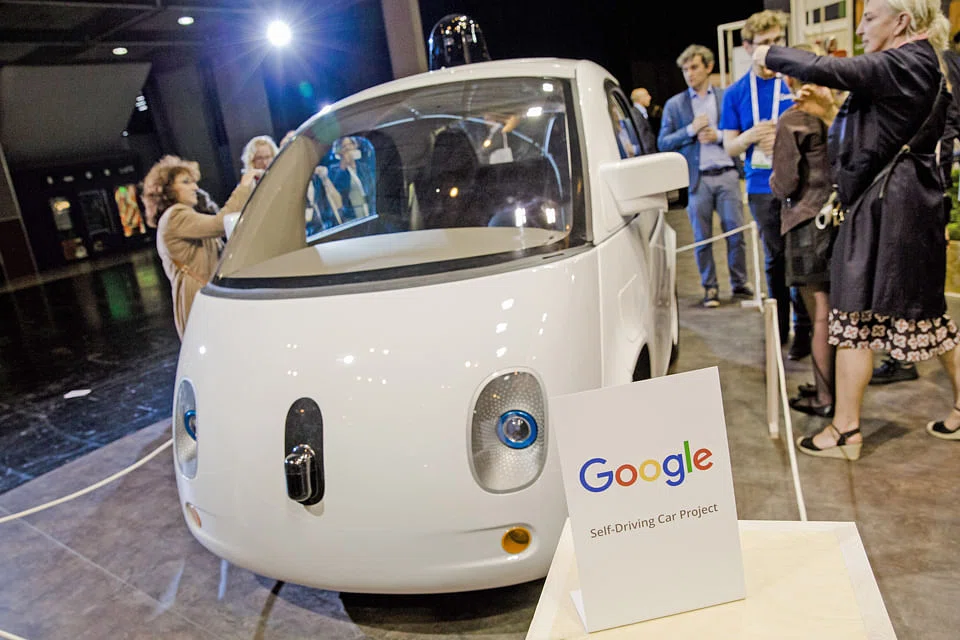
"One of the hardest questions to answer is, 'How do these cars compare to human drivers?'," Chris Urmson, then the chief of Google's self-driving car project, told transportation engineers in Washington, DC, this year. "And part of the reason why that's hard is we don't actually have a good understanding of how good human drivers really are."
One problem is that the US government keeps no comprehensive database of crashes. That complicates what otherwise might seem to be a simple task: figuring out which vehicles are more likely to crash, human-driven ones or those run by software and sensors.
Researchers at the Virginia Tech Transportation Institute, in a study funded by Google, dug into the data and discovered just how incomplete the federal numbers are.
An annual national tally of crashes relies heavily on those reported to police. It understates the actual total of crashes with injuries by at least a quarter and "property damage only" crashes by 60-84 per cent, they concluded. And they consider those numbers conservative, given the mishmash of state reporting requirements and holes in the local data used by federal agencies.
"It is crazy," said Myra Blanco, a senior Virginia Tech researcher who was lead author on the study. "We knew there were going to be some discrepancies" with other sources, but not that many.
Many drivers prefer to keep crashes off the books, either because they can't be bothered to report minor run-ins or to avoid insurance premium hikes.
The researchers cited an earlier federal analysis and telephone survey for the lower-end estimates of the underreporting.
A bigger shortfall was revealed by in-car cameras that captured thousands of motorists in the wild as part of a major federal safety study. Even though they had volunteered to cooperate - and be recorded - some of those drivers failed to notify researchers when they crashed as they were told to. "As human beings, we don't want people to think poorly of us," Dr Blanco said.
But the cameras didn't lie: 84 per cent of crashes weren't reported to police. Based on general accident data, Google's self-driving cars appeared to crash more often than cars operated by humans. But once the underreporting was factored in, they performed better than people. The researchers also noted that the self-driving cars were not at fault in any of 11 crashes studied. The small numbers made it statistically tough to identify "true differences", the researchers said.
"We understand this is just directional, and we understand it's not definitive. But it's exciting and interesting," said Dr Urmson, a long-time driverless-car leader who left Google this summer.
Police-reported crashes reached 6.3 million last year, according to US figures, about half the number reported to insurers. One federal study estimated 13.6 million total crashes in a year; Virginia Tech used an upper estimate of 29 million.
Google wants the National Highway Traffic Safety Administration to cut through the noise and create a comprehensive database or provide reliable sampling "in order to accurately benchmark the performance of self-driving vehicles".
NHTSA chief Mark Rosekind said this summer that "equivalency" between human and machine is far from good enough. "We should not move forward when automated vehicles are just as safe - or really, as dangerous - as human drivers. They need to be much safer," Mr Rosekind told industry leaders in San Francisco. He made it clear that how much safer was enough remains an open question: "Two times safer? Five times? Ten times? And what does 'safer' actually mean?"
Road deaths, tracked in a detailed census, climbed 7 per cent to 35,092 last year, and alarmed federal officials this month said that they soared an additional 10 per cent in the first half of 2016. Mr Rosekind has been travelling the country asking manufacturers, software developers and safety specialists some version of the same question: "What are the new safety metrics we need to be using now? Do we count by crashes? Do we count by fatalities?"
He also pressed for ways to "count the lives saved" by the technology.
In policy guidance for tech and car companies released last month, federal officials laid out a 15-point safety assessment. Companies are asked to describe where and under what conditions their cars are designed to drive: for instance, in daylight on dry roads or in a particular city. Then they're asked to document how they know the cars will be safe.
But officials didn't set out actual safety measurements, saying the federal government first needs to do more research, including gaining real world insights from the companies.
Coming up with "performance metrics" was put on the list of "follow-on actions." Sceptics see this as a bad sign. "It actually speaks volumes when an agency says: 'Help us. We don't even know how to measure you.'," said Missy Cummings, head of Duke University's Humans and Autonomy Lab. She has warned that self-driving cars have been unleashed before being proven safe.
Others called that an unfair swipe at a federal effort to tap the expertise of private industry in a fast-changing area. Federal officials say that they want to avoid imposing half-cocked standards that end up stymieing innovation. They also say the regulator's traditional job description needs to be reexamined. "There's a tremendous power in harnessing this technology for good," said Transportation Secretary Anthony Foxx.
Regulations will come later, as industry and the department learn more, Mr Foxx said. Although regulations in the past have generally been put in place after technologies have gone to market, he said, the department is trying to shape safety on the front end. "But you can only begin at the beginning, and that's where we are today."
For now, the lifesaving promise of automation often gets boiled down to a single statistic: 94 per cent. Mr Obama, safety regulators, Google, Tesla and Uber all cite the number.
It's the share of US car crashes that, as Mr Obama put it, are "the result of human error or choice", a catch-all for the combination of imperfections, idiocies and tragic mistakes that hurt millions every year. It's a basis for the broad safety claims made by industry and officials. WP