

Discounted ticket bonanza unlikely to hit SIA’s yield, earnings: Phillip

Tay Peck Gek
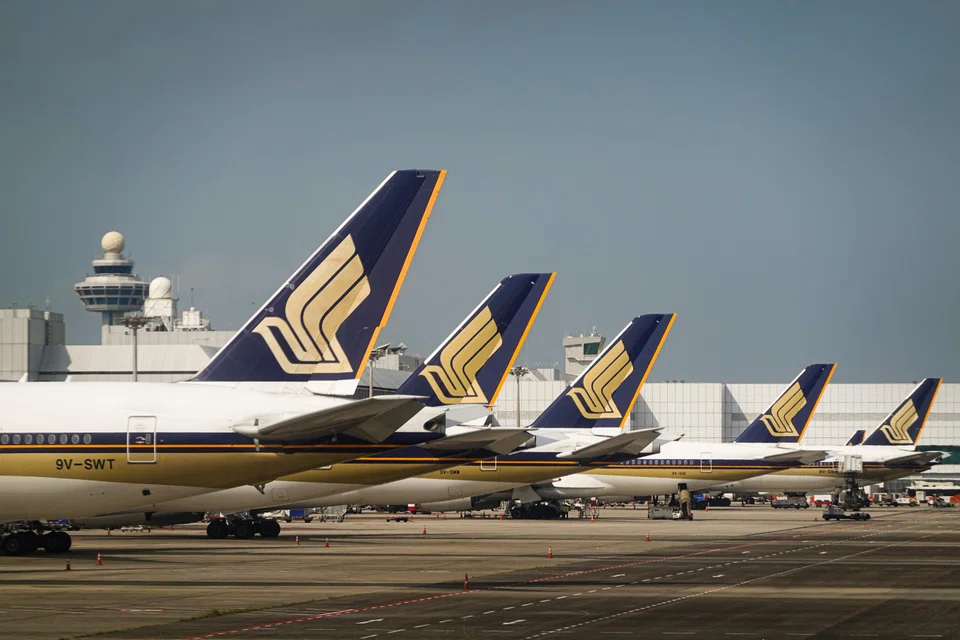
SINGAPORE Airlines’ upcoming discounted ticket bonanza is possibly a move to gauge demand and lock in sales further out into 2024, Phillip Securities Research told The Business Times.
As the tickets on offer account for only about 1 per cent of Singapore Airlines (SIA) annual sales, and if most of the destinations are short-haul, the yield and earnings of the national carrier might only see negligible impact, Phillip’s research manager Peggy Mak said.
More than 170,000 discounted SIA tickets and some 200,000 discounted Scoot tickets will go on sale between Nov 3 and Nov 16, with the travel period between January and September 2024. But the quantum of the discount and the destinations for the over 370,000 discounted tickets have not been unveiled.
The offer is part of the carrier’s Time To Fly travel fair, which SIA told The Straits Times is in its third run, the largest to date and with the most number of discounted air tickets.
The move might be for SIA and Scoot to assess consumers’ travel interest and would help them in their planning of capacity and resources such as staff and landing slots. That determination would be useful for the flag carrier’s decisions on hedging of fuel and currencies as well.
Mak said: “This is also positive for cash flow.”
She assumes that China could be one key market for which the SIA group would be offering the discounted tickets, because the Chinese carriers are preparing to bring back their international routes. International flight capacity of the Chinese carriers reached only 25 per cent to 30 per cent of pre-pandemic levels in the first half of this year.
“We think the discount will bring SIA’s fares closer to those of the Chinese carriers, but still at a premium,” said Mak.
Assuming the tickets are mainly for short-haul routes and given the small number of discounted tickets available and the small increment to the available seat-kilometres, Mak thinks the discount would make only a negligible dent in SIA’s yield.
Available seat-kilometres is a measure of an airline’s carrying capacity to generate revenue, with the available seats multiplied by the distance flown.
SIA’s fares are substantially higher than during pre-pandemic, Mak noted. For example, the yield for SIA flights in terms of per available seat kilometre in the first quarter of FY2024 to June was S$0.096 compared to S$0.082 for FY2020.
Phillip expects fares to correct from the current high levels as travel demand normalises, and it estimates the yield for SIA’s FY2024 to be S$0.092 per available seat kilometre.
Similarly, the discounts will have minimal impact on SIA’s earnings, if her assumption is correct.
But if fuel prices do not dip, there might be a greater impact on the group’s earnings instead, Mak noted. The Middle East conflict could also cause its operating costs to rise if the war escalates or expands beyond Hamas and Israel, because there would be disruptions and diversions to flights.
SIA shares were down 1.4 per cent to S$6.19, while its mandatory convertible bonds slipped 0.1 per cent to S$1.082 as at market close on Wednesday (Oct 18).
TRENDING NOW

Easy to rent out, hard to sell: Are buyers losing interest in Singapore’s one-bedroom condos?

GovTech retrenches another 38 staff in second round of layoffs

Stocks to watch: Seatrium, CapitaLand Investment, Keppel DC Reit, Suntec Reit, CLCT, TSH Resources

World’s largest offshore wind platform by Seatrium consortium on track to be completed by 2028

