

Europe pushes on with gigafactory plan to rival Tesla and China
 Add BT as a preferred source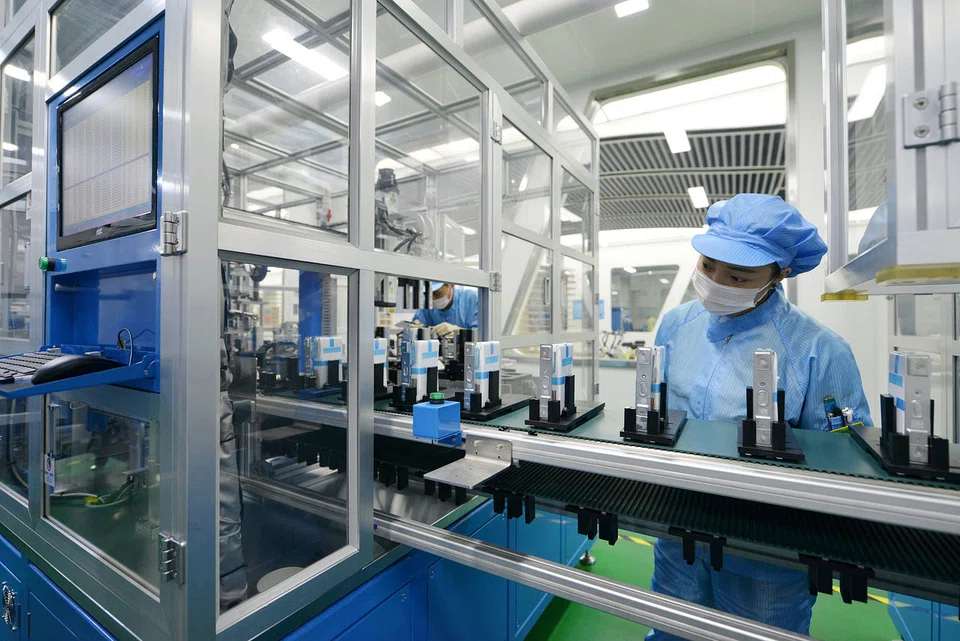
[BERLIN] Germany and France set out a blueprint for a giant battery factory, advancing Europe's 5 billion euro (S$7.6 billion) bid to rival the capacity of Tesla Inc China to supply the key part for electric vehicles.
The announcement at Germany's Economy and Energy Ministry units underscores determination by European Union nations to catch up with Asian competitors that dominate battery making. Battery cells and add-on electronic devices and software make up as much as half the value of EVs.
The facility at Groupe PSA-Opel's home base in Kaiserslautern involves Total SA's Saft Groupe in a plant that will be named the Automotive Cell Co. The plant will cost about 2 billion euros and will complement a French factory in the Hauts de France region.
Germany and France "want to build the best and most sustainable batteries" in Europe, Economy and Energy Minister Peter Altmaier said in a statement from Berlin on Friday. "I'm convinced that battery cells made in Kaiserslautern will set new standards in their CO2 footprint."
Together, the factories will cost about 5 billion euros add production capacity to 48 gigawatt-hours of batteries.
Backed by the European Commission, France and Germany dangled subsidies to win over sketics within the auto industry about investing in the technology. While German companies such as Volkswagen AG and BMW AG dominate car manufacturing in Europe, they've allowed Asian companies and Tesla to take the lead on making batteries.
Contemporary Amperex Technology, or CATL, and BYD of China are among the leaders in making lithium-ion battery cells, while Tesla has invested in a string of "gigafactories" to supply its luxury electric cars.
The European governments also aim to incorporate tighter emission standards in production and recycling stipulations, which may create hurdles for Asian products. European battery cells "won't be comparable with cheap Chinese products," Mr Altmaier said last year.
The Kaiserslautern factory will be up and running by 2024 and employ 2000 people, Opel's management board head Michael Lohscheller said. The German and French cell production sites may serve 10per cent to 15 per cent of demand in Europe, said Mr Altmaier. Germany alone is targeting 7 million to 10 million electric cars on its roads by 2030.
Some 13.8 million jobs representing 6.1 per cent of the workforce may be linked to auto manufacturing in the EU. The market for battery cells may be worth as much as 250 billion euros by mid-decade, the EU Commission said.
Still, the competition from Asia is likely to be tough.
CATL has gained a foothold in Germany in a factory in Thueringia state with a plant with 16 gigawatt-hours of capacity. In 2018, the Chinese company said it aims to be close to the market for for production sites of BMW AG, Volkswagen AG and Daimler AG.
LG Chem Ltd is building a battery cell gigafactory in Poland, close to Eastern German car production sites. Tesla said in November that it will open an electric car production site on the outskirts of Berlin, and Northvolt AB is building a plant in Sweden.
BLOOMBERG
Share with us your feedback on BT's products and services
TRENDING NOW

Johor property old hand KSL readies family handover amid market boom
Seatrium eyes S$28 billion in project opportunities amid global race for energy security

China targets offshore billions in biggest crackdown in decades

Trek 2000 shares jump 26% after Osim founder Ron Sim drops claims, sells 7.3% stake to Azure Capital

