

Europe wants combustion engines banned, but Italy says 'Not so fast'
 Add BT as a preferred source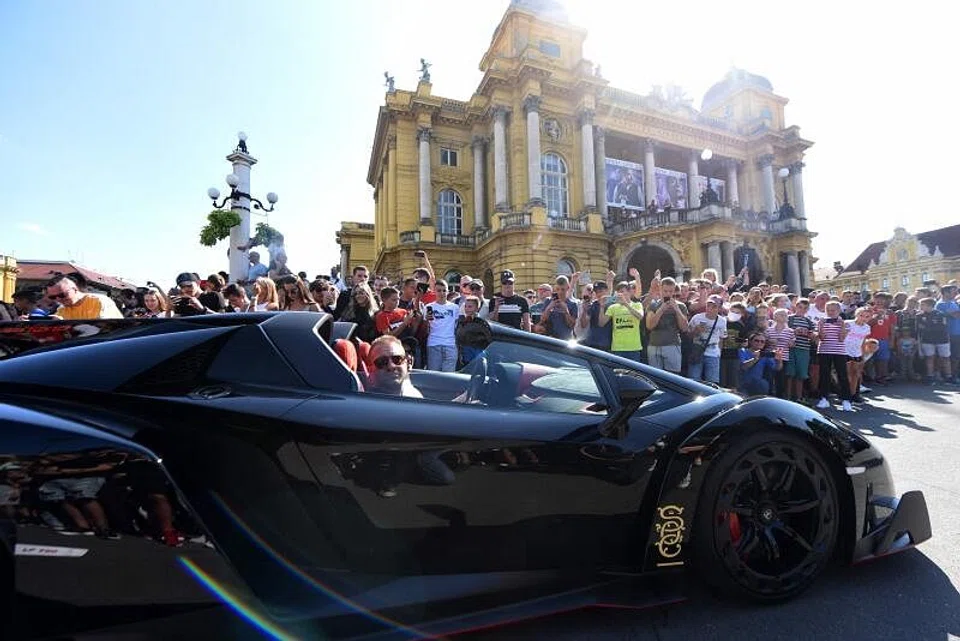
[ROME] As Europe prepares to ban combustion engines, Italy, home of high-powered, high-testosterone sports cars made by Ferrari and Lamborghini, is already looking for ways around the proposed restrictions.
Mario Draghi's government is in talks with the European Union on shielding supercar makers from the phase-out, planned to go into effect by 2035, said Roberto Cingolani, minister for ecological transition.
While Rome backs Europe's commitment to cut emissions by phasing out the most-polluting engines, the supercar sector "is a niche, and there are ongoing discussions with the EU Commission" on how the new rules would apply to high-end car-makers who sell far fewer vehicles than mainstream producers, he said in an interview with Bloomberg TV.
"These cars need very special technology and they need batteries for the transition," Mr Cingolani said. "One important step is that Italy gains autonomy in producing high-performance batteries," he said, which is why the country is set to launch a "giga-factory programme" for large-scale battery production.
The Commission announced the phase-out plan in July as part of the region's effort to cut emissions that contribute to global warming. But the timeline could be challenging for luxury producers that make cars whose powerful engines emit above-average levels of pollution. Their lower sales volumes cap possibilities for economies of scale from converting plants.
The EU is still in the early stages of considering the plan, as the proposed rules will now be discussed by member states and the European Parliament. The process is likely to take as long as two years, with some countries likely to propose amendments to protect their companies and industries.
An EU spokesperson on Monday declined to comment on the Italian minister's remarks, noting that "all car manufacturers will have to contribute to this reduction" in emissions.
France has already shown signs of resistance to the new plan, advocating for more lenient targets. Paris backs a goal of reducing emissions from cars 55 per cent by 2030 and for hybrids to remain on the market for longer, an official in President Emmanuel Macron's office said in July.
European Automobile Manufacturers Association President Oliver Zipse said he supports the Italian effort, given the "special situation" supercar makers face. "For very small manufacturers, who in the bigger picture of overall emissions play almost no role, there are good arguments for considering these exemptions," he said at the IAA car show in Munich.
Mr Cingolani, a former non-executive director at Ferrari, argues that the number of vehicles affected by an exemption would represent a mere fraction of a market that numbers in the millions. Ferrari sold around 9,100 vehicles in 2020; Lamborghini's sales numbered around 7,400.
BLOOMBERG
Decoding Asia newsletter: your guide to navigating Asia in a new global order. Sign up here to get Decoding Asia newsletter. Delivered to your inbox. Free.
Share with us your feedback on BT's products and services
TRENDING NOW
Xi Jinping has just rewritten the rules of US-China rivalry

Singapore developer in limbo after Timor-Leste scraps major township project

‘Whole deck of cards just toppled’: FoodXervices’ Nichol Ng on how a 92-year-old family business unravelled – and what’s next

Indonesia plans to beat global commodity trading giants at their own game

