

Europe's airlines increase jet fuel hedges to benefit from falling oil prices
London
EUROPEAN airlines are exploiting a collapse in oil prices by hedging more of their fuel needs further into the future, but those that kept their powder dry before the rout are emerging as clear winners, industry sources say.
At a time of heightened price volatility, carriers are also considering using more options contracts to access lower prices should they fall further.
Many airlines, however, lack the manoeuvrability to benefit; before oil slumped they locked themselves into much higher costs, with some approaching US$1,000 per tonne of jet fuel, roughly double current rates on the spot market.
Global crude prices have fallen around 60 per cent over the last 15 months and European jet fuel prices have halved.
This seems like great news for cost-conscious travellers and profit-hungry airlines, which burnt through 5.4 million barrels per day (bpd) of jet fuel - 6 per cent of all oil products globally - in 2012, the most recent US government data shows.
With fuel accounting for 46 per cent of Ryanair's 2014 operating costs, 33 per cent of British Airways' and 21.5 per cent of Lufthansa's, price fluctuations can seriously impact company profits.
To reduce price-fluctuation risk on projected operating costs, many airlines hedge a proportion of their future fuel needs six to 24 months in advance by buying jet fuel or crude oil contracts from banks or on an oil futures market. But hedging strategies differ and not all airlines - and therefore consumers - will profit from today's low prices.
Budget carrier Norwegian Air Shuttle stands to benefit. Many European airlines were 70-90 per cent hedged going into 2015, but Norwegian was largely unhedged. "Typically we have not done much hedging," Norwegian Air's chief financial officer, Frode Foss, said. "But in the last month we have started accumulating, relatively speaking, a lot of hedging to lock in fuel at very favourable levels." The airline has hedged 23 per cent of its fuel needs for the rest of this year, and 28 per cent for 2016, with the potential to increase and extend hedges out to 2017, Mr Foss said. "You might see us at 50 per cent or more, depending on the forward curve," he added.
Norwegian has one of the lowest hedge coverings of the major European airlines, and can buy around three quarters of its fuel for this year and next on the spot market; good news if prices fall further.
But airlines that entered the current price decline heavily hedged cannot benefit in the same way.
With 93 per cent of its 2015 fuel needs hedged, according to an analyst note from HSBC, Air Berlin, Germany's second-largest airline, has been stung by falling prices. "Our hedges come from a time when fuel was at US$900 a tonne. Now it's at US$500-600. So it's a negative impact," the carrier's finance chief, Arnd Schwierholz, said in August.
Large hedges at prices significantly higher than the spot market can make airfares less competitive by forcing carriers to pass on the extra cost to passengers.
In March, British low-cost airline Flybe had 70 per cent of the next 12 months' fuel hedged at US$919 per tonne. September's European jet fuel spot price has so far been around US$500 per tonne. "Some airlines that cannot afford to be as well hedged as Flybe have been reducing their prices," Flybe said in its results for the year to March.
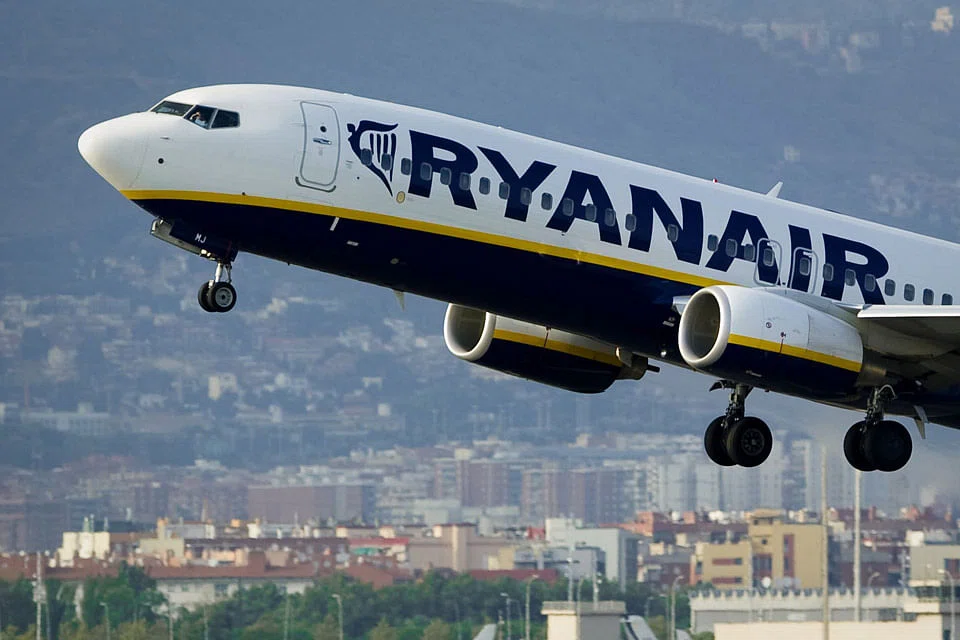
Ryanair has the largest publicly declared hedging percentage among European airlines. It is 90 per cent hedged for the year to March 2016 at US$910 per tonne, and 70 per cent hedged at US$657 per tonne for the next year.
Ryanair's chief executive said that while low prices are beneficial, price certainty is as important a reason to hedge. "We don't need to be the best in the world at buying fuel, we don't need to be the one that gets the lowest price at the bottom of the cycle. We just want certainty for the next 12 months," Michael O'Leary.
To achieve this, most major European airlines hedge regularly throughout the year. Large airlines do not significantly add hedges on falling or rising prices and hedging managers commonly have little leeway to increase hedges, Commerzbank analyst Johannes Braun said. Nevertheless, third-quarter results for this year are expected to show carriers hedging larger amounts of fuel and further out into the future than usual, industry sources say. REUTERS
TRENDING NOW

Nvidia reinstates Jensen Huang as CEO; Trump says move poses no national security risk

Beyond the greenback, Vietnam’s big borrowers turn to Asian-currency bonds

Indonesia’s coal tycoon Low Tuck Kwong replaced as Bayan Resources president-director

Six workers file employment claims against Crystal Jade Food Manufacturing

