

Ferrari recalls over 2,000 cars in China on brake risk
 Add BT as a preferred source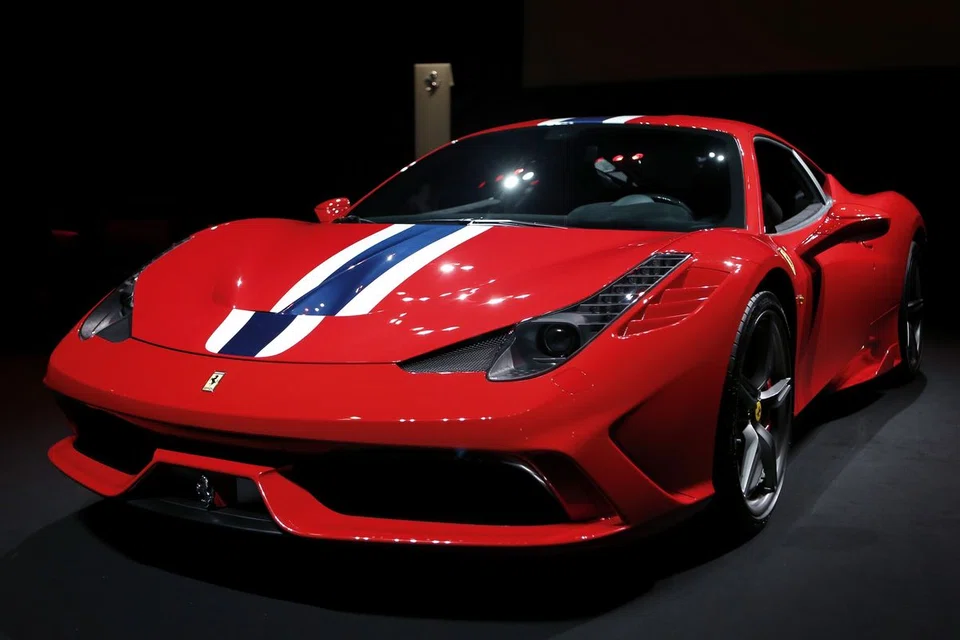
DeeperDive is a beta AI feature. Refer to full articles for the facts.
FERRARI has issued a recall for 2,222 of its luxury sports cars in China, telling owners there may be some problem with the brakes.
According to Bloomberg Intelligence data, that's the equivalent volume of almost every car Ferrari has sold in the country since 2018 up to March 2022.
A notice posted on the State Administration for Market Regulation's website on Friday (Apr 22) said the recall covered imported 458 Italia, 458 Speciale, 458 Speciale A, 458 Spider, 488 GTB and 488 Spider series cars made between Mar 2, 2010 and Mar 12, 2019.
"Vehicles covered by this recall may potentially increase the risk of brake fluid leakage, resulting in reduced braking performance or brake failure," it said.
It advised users to drive the vehicle with caution and, if the low brake fluid level warning light comes on, stop immediately and arrange a tow truck. The recall starts May 30.
Ferrari didn't immediately respond to a request for comment.
Navigate Asia in
a new global order
Get the insights delivered to your inbox.
Bestinver Securities analyst Andrea Trovarelli said the recall was negative news for Ferrari but noted any impact would be short term. "We remind readers that in FY21, Ferrari shipped around 3,700 vehicles in APAC, that is around 33 per cent of total shipments," Trovarelli wrote.
According to a US local media report last year detailing a similar recall of Ferraris in the US, the 458 and 488 models have a braking system made by Robert Bosch that can malfunction due to an oil leak from the master cylinder or brake booster assembly.
For the cars in China, Ferrari International Trading (Shanghai) will replace the brake fluid reservoir cap free of charge for vehicles within the scope of the recall, according to Friday's notice. BLOOMBERG
Share with us your feedback on BT's products and services
TRENDING NOW
Autobahn Rent A Car directors declared bankrupt over S$50 million each owed to DBS
Higher costs, lower returns: Why are Singaporeans still betting on real estate?

Richard Eu on how core values, customers keep Singapore’s TCM chain Eu Yan Sang relevant
Loyang Valley sold for S$880 million to SingHaiyi-led consortium

