Forecast for boxship freight rates draws mixed views from industry watchers
Meanwhile, containership capacity is projected to rise by 6% a year, or 10-15% should the Red Sea become safe for sailing through

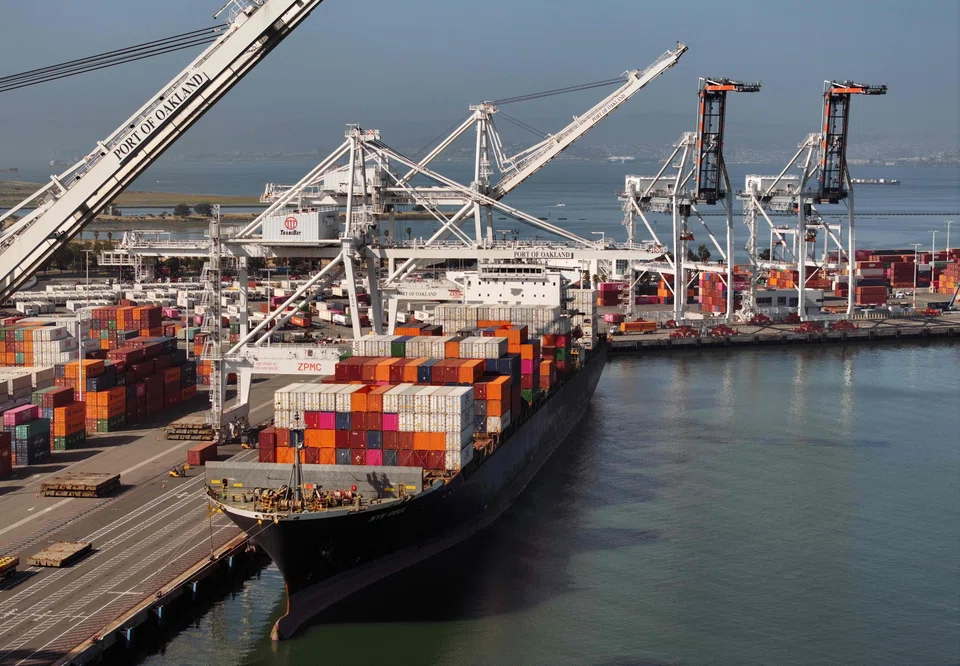
[SINGAPORE] Would boxship freight rates, which have dipped more than 40 per cent year to date, rebound or extend their declines? Industry watchers are divided on the direction, with some expecting the cost of shipping containers to rise as early as May – provided that the Red Sea remains unsafe for voyages.
Pelaris Cheng, managing director of Singapore-based freight forwarder Hermes Logistics, told The Business Times that she has been able to enjoy 40 to 50 per cent lower rates this year for shipments to Europe and South America. This is because the demand from China – which competes for container space – has eased, even after the Chinese New Year holiday break.
She heard that China is shipping less because of US tariffs, but freight rates to the Middle East have ticked up as Chinese companies increase their shipments ahead of Ramadan.
Both the Drewry’s World Container Index and the Shanghai Containerized Freight Index have slid more than 40 per cent since January to US$2,264 per 40-foot container and US$1,292.75 per 20-footer, respectively, as at Mar 21.
The composite Drewry’s World Container Index tracks weighted average spot rates on eight east-west routes, and its latest reading was the lowest in 15 months. The Shanghai Containerized Freight Index, meanwhile, follows 13 export trades out of Shanghai, and is the world’s most widely used benchmark for spot-market ocean-freight rates for shipments out of China.
Shipping research and consulting services provider Drewry expects boxship rates to decrease slightly in the coming weeks.
Tan Hua Joo, container industry analyst at data provider Linerlytica, also believes that there is further downside for boxship rates in the next 12 months. This is because the front-loading of shipments seen last year – to avoid US tariffs and potential port congestion caused by workers’ strikes – is expected to ease in 2025.
“I think the projection as we move ahead is going to be a lot more negative, because I don’t expect that volume is going to match the same level that we have seen last year, especially in the absence of further front-loading,” the industry veteran with 30 years of experience said at a seminar on Monday (Mar 24).
He believes that demand will be hit by more tariffs from the US, citing weak China export data post-Chinese New Year.
In contrast, containership capacity is projected to rise by 6 per cent a year, or 10 to 15 per cent should the Red Sea become safe for sailing through – which the market thinks will not happen this year.

Noting the dipping freight rates, Tan said: “What’s interesting is that even at current levels, most of the shipping lines are still profitable. And what does that mean?... There is further room for rates to drop.”
But Lars Jensen, another seasoned pundit with some three decades of industry experience, holds a different view. He pointed out in a webinar last Thursday that the presently low freight level is a result of several factors.
For one, there is always a lull after Chinese New Year. But this seasonal factor aside, major liners want to protect their market share as several of them team up with new partners, and these alliances phase in their new networks.
“When you change to new partners, one of the things the carriers are prioritising is trying to hang on to their market share during this turmoil. That, in itself, creates a downward pressure,” said Jensen, who is also the chief executive of Vespucci Maritime.
Moreover, these liners’ priority is to get their new networks up and running. This makes it “much more difficult” than usual to “blank” sailings, therefore leading to too much capacity, he added.
Blank sailings arise from a shipping line skipping a certain port or an entire leg of a scheduled sailing route, and are typically used to manage supply in accordance with low demand.
Jensen said: “The current decline is going to be temporary, because when we get into April, all the new services will be in place. That means that the competitive pressure for maintaining market shares abates, and the carriers will again become better at managing capacity, and on top of that, we are likely going to see an early peak season.”
HSBC Global Research expects Maersk, for one, to exercise capacity discipline; it maintained its “buy” call on the Danish carrier’s shares in a report on Mar 21.
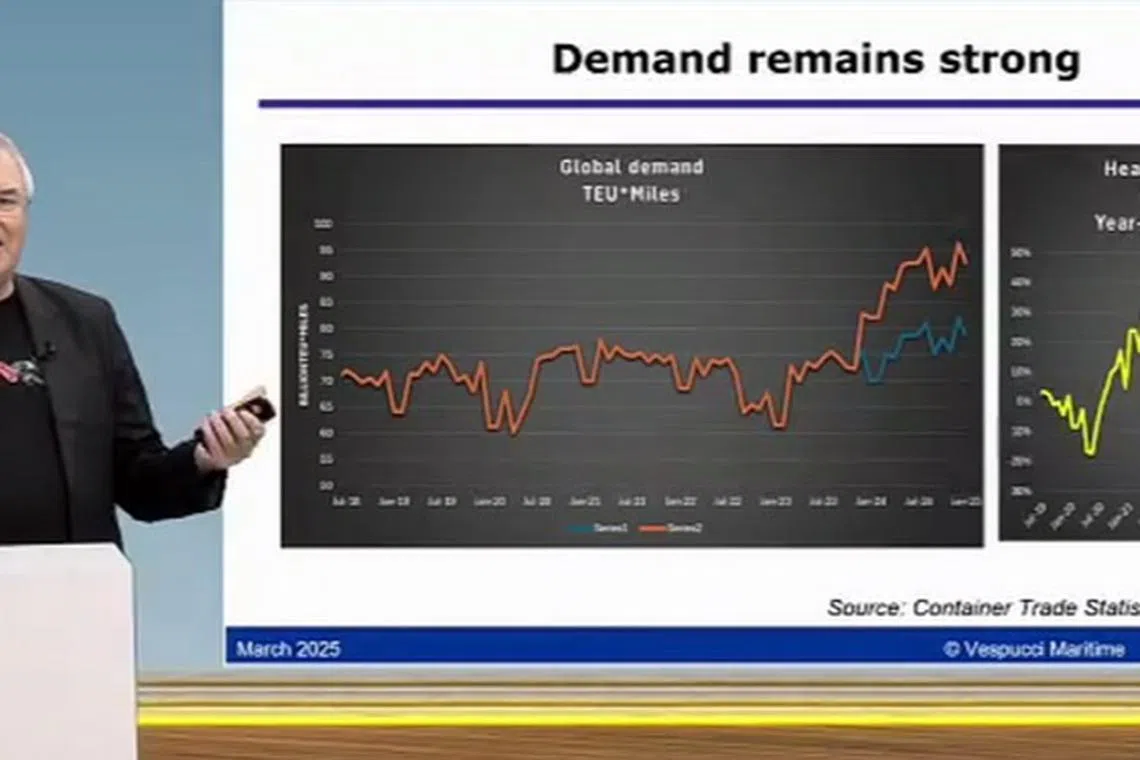
The extent of the rebound depends on several factors, one of which is shipping schedule reliability, which Jensen expects to be better this year than last. However, improved reliability translates into more capacity being released into the market, likely reining in freight rates.
Another factor is when the Red Sea would be deemed safe again by major liners to pass through.
Yemeni Houthi militants began attacking merchant ships in the vicinity of the Red Sea in mid-November 2023, forcing containerships plying the routes between Asia and Europe to detour around South Africa, adding 10 to 14 days and expenses to their voyages.
Jensen also cautioned that port congestion is likely when boxships first return to the Red Sea, leading to spikes in freight rates.
Both he and Tan of Linerlytica said a crash in freight rates would follow as there would be overcapacity, with about 10 per cent of boxship fleets freed up from no longer having to re-route around South Africa.
Jensen believes the correction would last several quarters, while Tan thinks that it would be difficult for the container market to avoid a correction, even if the Red Sea continues to be a no-go zone for years.