Foreign rail firms shunted as 'Made in China' mantra gathers pace
Shanghai
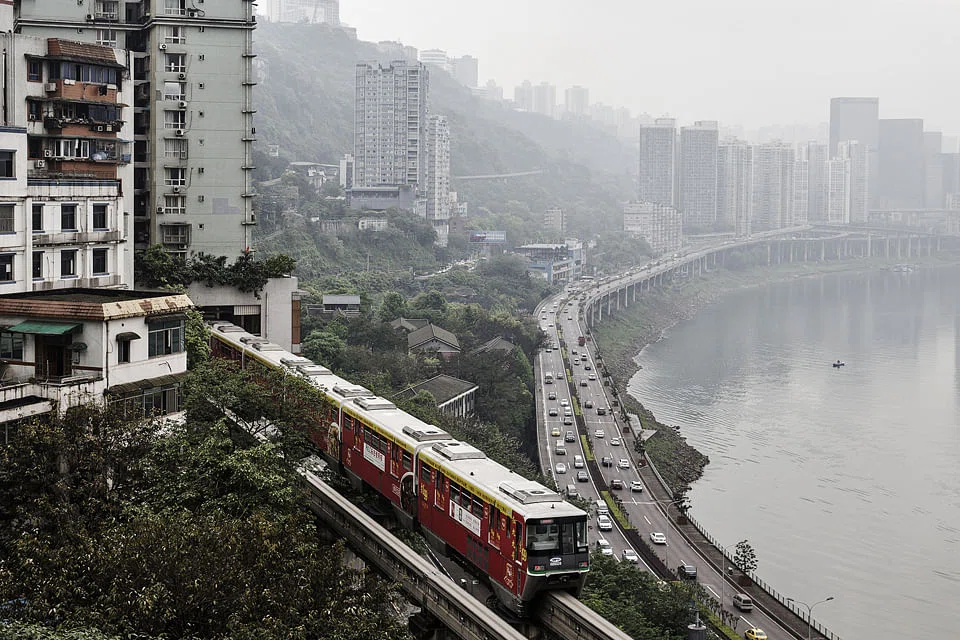
FOREIGN firms say they are struggling to gain access to China's vast railway market as the country, seeking to transform its domestic industry into an export powerhouse, tightens the bidding criteria on rail tenders.
The complaints echo similar concerns raised in other industries including technology and renewable energy, and highlight what some foreign companies see as an uneven playing field when operating in China.
Four rail suppliers with offshore funding said that they were finding it harder to win contracts thanks to the proliferation of government-supported rivals, with at least one saying it was already experiencing discrimination.
"In the last one to two years there have been tendencies to disregard foreign-invested companies as Chinese companies, and to prefer Chinese-invested companies versus foreign-invested companies," Ansgar Brockmeyer, board chairman of German brake-maker Knorr-Bremse's Asia-Pacific arm, told Reuters.
Foreign participation in China's rail market has for the last decade been limited to minority stakes in joint ventures or as sub-suppliers of domestic players, often with the condition that they transfer technology to local partners.
Many, like Germany's Siemens AG and Canada's Bombardier did and consequently helped build the world's biggest railway network by both length and revenue.
Beijing now wants to help many of these local partners such as CRRC Corp become globally competitive behemoths which will export home-grown technology. Its "Made in China 2025" plan released last year described railways as a priority sector. Some industry insiders say this is causing concern that wholly local firms are being increasingly favoured at the expense of foreign-invested companies.
Knorr-Bremse, which has been supplying braking systems to metro operators for 25 years, said that it had received tender documents from 11 Chinese cities in 2015 that stipulated new bidding rules which scored down foreign-invested firms versus purely local names. It lost out on three as a result, it said.
"We are concerned that . . . this might become a trend, but on the other hand we can't really imagine because this would clearly infringe any World Trade Organization agreement," Mr Brockmeyer said. "We are in discussions with the local governments and the NDRC (National Development and Reform Commission) on this."
The 11 Chinese cities including Kunming, Urumqi and Guangzhou have begun to score companies on whether they are foreign-invested or 100 per cent local firms. In the past, firms simply had to prove that at least 70 per cent of their supply chain was in China. Metro operators award bidders on different categories such as price, which they later add up to determine a winner.
The metro operators of Kunming, Urumqi and Guangzhou as well as the NDRC did not respond to Reuters' requests for comment.
The European Chamber of Commerce in China has also raised concerns over tougher conditions for companies with foreign investment. REUTERS