France celebrates 40 years of TGV trains
 Add BT as a preferred source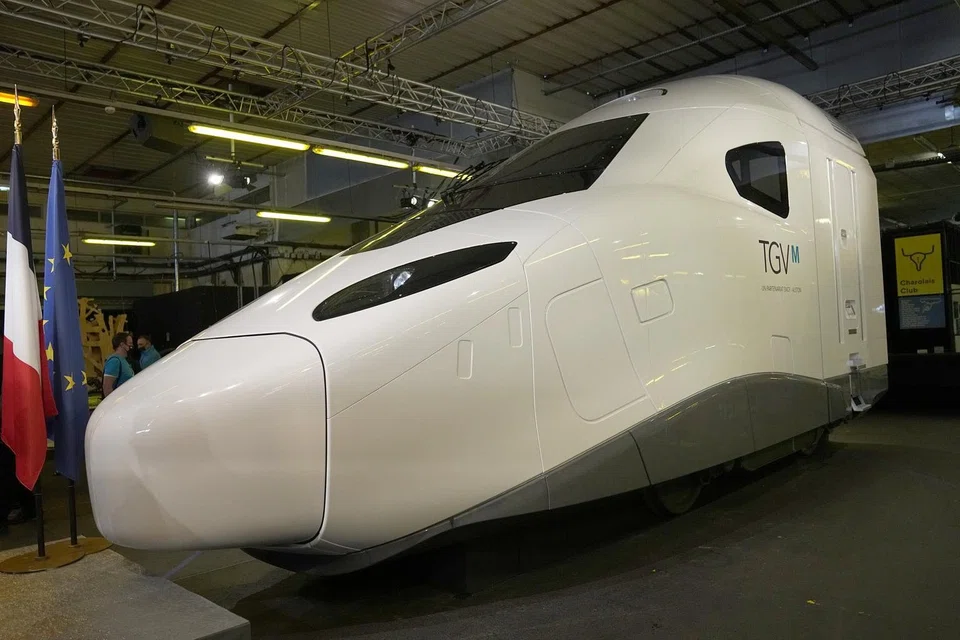
Paris
FRANCE last Friday celebrated four decades of flying across the countryside on ultrafast TGV trains, while getting a glimpse of the next-generation locomotives set to hit the rails in 2024.
President Emmanuel Macron was on hand at the Gare de Lyon in Paris, where the first voyage of a Train a Grande Vitesse was inaugurated by former president Francois Mitterrand in 1981.
In front of a full-scale model of the new TGV M, he hailed a prime example of "French genius" and promised to unlock 6.5 billion euros (S$10.3 billion) to develop the TGV network, including new lines serving cities such as Nice and Toulouse.
"We're going to continue this grand adventure with new industrial commitments," since more people are looking beyond metropoles to smaller cities - an apparent allusion to post-Covid prospects.
"We see clearly that life and work are going to be restructured, and that our fellow citizens today want to organise their time for living and time for working differently," he said.
The streamlined version of the bullet train promises to carry more passengers - up to 740 passengers from 600 - while using 20 per cent less electricity.
It will continue to whiz people between cities at a top speed of 320 kmh, making most door-to-door trips shorter and cheaper than on airplanes.
A revered symbol of the country's engineering prowess, the TGV network spreading out from Paris was a revolution for generations of French, with far-flung cities now just a few hours away instead of requiring a day or overnight trip.
The trains, made by Alstom, have since been exported to countries including Spain, Italy, South Korea and the United States.
But huge investments in both the trains and tracks saddled the state rail operator SNCF with billions of euros in debt that continues to weigh decades later.
Critics say an infatuation with high-speed rail also led to broad neglect of regional lines that had kept countless smaller towns and villages alive, accelerating the country's "desertification". The legacy debt prompted Mr Macron to take on the SNCF's powerful unions in 2018 to push through an overhaul that stripped employees of job-for-life and pension guarantees, while promising to revive slower lines.
Labour chiefs called it the first step towards privatisation and staged massive transport strikes but failed to derail the reform. AFP
Decoding Asia newsletter: your guide to navigating Asia in a new global order. Sign up here to get Decoding Asia newsletter. Delivered to your inbox. Free.
Share with us your feedback on BT's products and services