Giving turbocharged engines a boost - with water
New York
FOR decades, carmakers have relied on turbocharging, which uses energy captured from exhaust gases to force additional air into the cylinders, to increase the power and efficiency of some petrol engines.
But turbocharged engines are in a bind, caught between increasingly stringent fuel economy and emission standards and consumers unwilling to sacrifice performance to achieve those environmental benefits.
That's why a prominent automotive supplier has developed a counterintuitive technology that could enhance turbocharged engines for passenger cars by improving fuel economy with no reduction in power.
How? By spraying water into the cylinders as the engine is operating.
The basic principle is that by cooling combustion temperatures and reducing the tendency of the fuel-air mixture to fire erratically, water injection allows engineers to increase an engine's compression ratio, or reduce engine size, that way increasing its efficiency. The developer, German auto supplier Robert Bosch, calls its system WaterBoost.
It is not a new concept. Water-injection technology came to prominence during World War II, when it was used to enhance the performance of supercharged, piston-powered fighter planes during takeoffs and strenuous combat manoeuvres.
Water injection appeared again in one of the first turbocharged production cars - the 1962 Oldsmobile Cutlass Turbo Jetfire - where, instead of the sophisticated anti-knock sensors that are standard equipment in modern cars, a mixture of water and methanol was added to the air-fuel mixture to control combustion.
Water injection made another appearance in the 1980s in some turbocharged Formula One cars, which did much to burnish turbocharging's public appeal. But the approach has never caught on for mass-market cars.
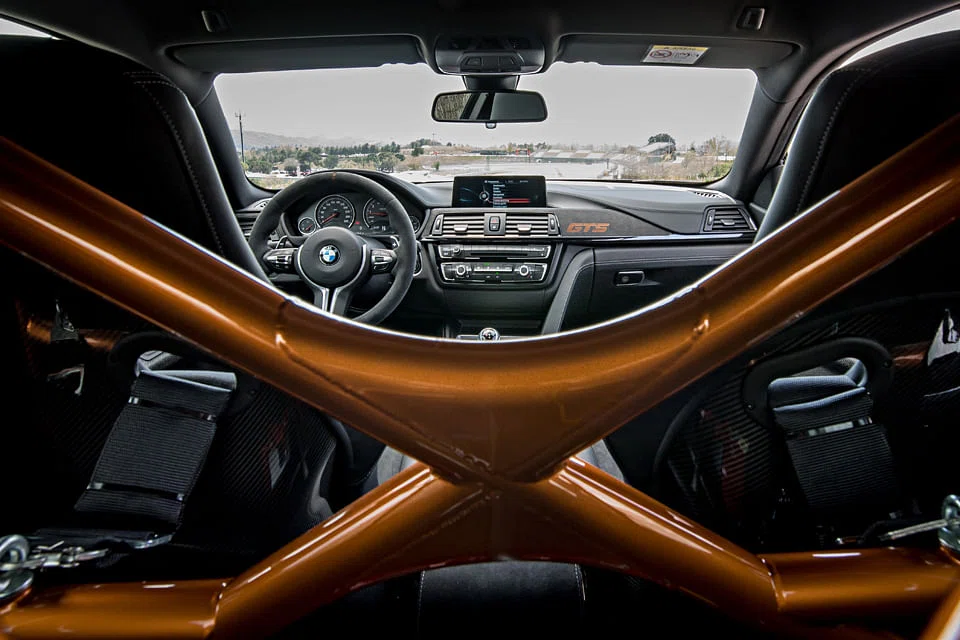
Whether it can take hold now is a big question for Bosch. But BMW, one of Bosch's customers, is using a version of the technology in its high-performance M4 GTS cars, and company officials say they like the results.
"We are highly convinced about the performance of the M4 GTS and very delighted about the enthusiastic feedback we get from our customers," Dirk Haecker, vice-president of engineering at BMW's M Division, wrote in an email exchange.
He said BMW was considering adopting the water-injection technology for other M-series cars.
But Bosch, which plans to have a commercial version of WaterBoost available by late 2019, faces some market challenges.
The drawbacks include the need for carmakers to redesign the intake ports and many other components of their turbocharged engines, and the need for consumers to periodically refill a tank with distilled water.
Some experts predict that other less disruptive technologies will emerge that can bring similar efficiency gains to turbocharged engines.
"If today's turbocharging were the future technology, I would say it is likely that manufacturers will pick this up in the future," said John German, a senior fellow at the International Council on Clean Transportation, an independent non-profit group. "But it's the potential to achieve similar efficiency improvements in other ways that I think is the biggest challenge to WaterBoost technology, in ways that don't require the consumer to refill the water tank."
Bosch says WaterBoost can reduce fuel consumption by as much as 4 per cent in regular driving conditions and by as much as 13 per cent in high- load situations, like accelerating on a freeway or making long uphill climbs.
While Bosch has extensive experience in the development of water-injection systems for motor sports, where minimising weight and maximising performance are primary considerations, developing a version for passenger cars presented a challenge.
"Systems for race cars are really different than for passenger cars," said Martin Frohnmaier, general project manager at Bosch. "For passenger cars you need to focus much more on endurance, much more on durability and so on."
The power of modern turbocharged engines is limited by a number of variables, including knocking and heat stress on the exhaust components. By cooling the fuel-air mixture under high-load conditions, water injection reduces the knocking tendency and also reduces the need to inject additional fuel into the cylinders to protect the exhaust components through evaporative cooling. This allows the engine to produce more torque without a corresponding increase in fuel consumption.
"We see water injection as very important technology to help our customers reach their emissions targets in the near future," said Fabiana Piazza, head of project management at Bosch. She declined to speculate on what WaterBoost would cost carmakers - and ultimately car buyers - saying the specifications of the system and the complexity of incorporating it into vehicle lines would vary. NYTIMES