

Global airlines set for record US$41 billion net profit next year: Iata
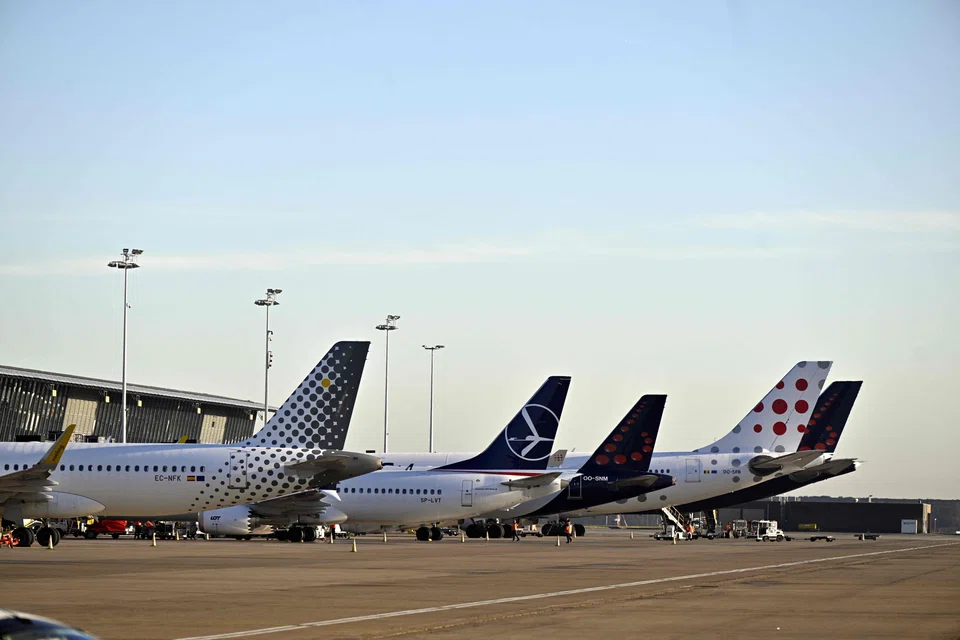
[GENEVA] Global airline trade body Iata said on Tuesday the airline sector would post record profits next year despite ongoing supply-chain issues leading to slower aircraft deliveries and a delay in rolling out more fuel-efficient jets.
The projection comes as plane manufacturer Airbus cut its plane delivery target for 2025, citing a quality issue with some metal fuselage panels on its A320 planes.
The world’s leading jetmakers Airbus and Boeing have both faced delivery delays to their airline clients in recent years.
Without newer, more efficient planes, airlines say they cannot cut back fuel costs while flying more people. Still, Iata struck an optimistic note for the year to come, pointing to Europe in particular as it overtakes the US as the region with the highest net profit per passenger.
Europe’s profitability surpasses US
“Airlines have successfully built shock-absorbing resilience into their businesses that is delivering stable profitability,” said International Air Transport Association director general Willie Walsh in a statement.
He later added that a dip in jet fuel prices could offer some relief, but regulatory costs, notably in Europe, as well as uncertainty tied to global conflict, drone incursions and GPS interference are hindering even greater profitability.
Walsh said confidence in Airbus had weakened, while Boeing’s performance has improved amid ongoing supply-chain issues.
Earlier this month the European planemaker was forced to slash delivery targets when defects surfaced in some of its fuselage panels, days after recalling 6,000 A320-series planes over a software glitch linked to cosmic radiation.


“I think we are seeing a shift where it’s generally recognised that Boeing’s performance has significantly improved. People have a lot more confidence in Boeing delivering the commitments that they have made, and we’re seeing people having less confidence in Airbus,” Walsh stated.
“It’s disappointing for the industry, because we will have fewer new aircraft being delivered than was expected,” he added.
Airbus cut its target by 4 per cent and confirmed deliveries had already slowed in November, weeks after the A320 series, including the best-selling A321, surpassed the recently troubled Boeing 737 MAX as the most-delivered passenger jet in history.
Walsh also blamed engine makers for holding up deliveries, saying they lag behind airframe manufacturers in supplying new and repaired engines, forcing planemakers to push back timelines.
“It has appeared to us, given the way pricing has evolved on the supplier side and the margins that we see for these OEMs that they’re much higher than you would expect given the issues that have been encountered,” Walsh said.
At a journalists’ roundtable, Walsh said engine makers’ margins remain “far too high” given ongoing difficulties, pointing to GE Aerospace as an example.
GE Aerospace was not immediately available for comment, but its CEO Larry Culp told Reuters in October that efforts to resolve supply chain challenges were paying off, enabling progress in reducing jet engine delivery delays to Airbus during the third quarter.
Culp added that the company’s pricing strategy reflects the value it delivers to customers.
Engine makers argue that they are entitled to adequate returns given the risks involved in developing new technologies and offering insurance-style contracts to cover repair costs. REUTERS
Decoding Asia newsletter: your guide to navigating Asia in a new global order. Sign up here to get Decoding Asia newsletter. Delivered to your inbox. Free.
Share with us your feedback on BT's products and services






