

Growth in online retailing is an opportunity, not a threat: UPS chief
Delivery service projects e-commerce shipments will grow four times faster than the US economy
Atlanta
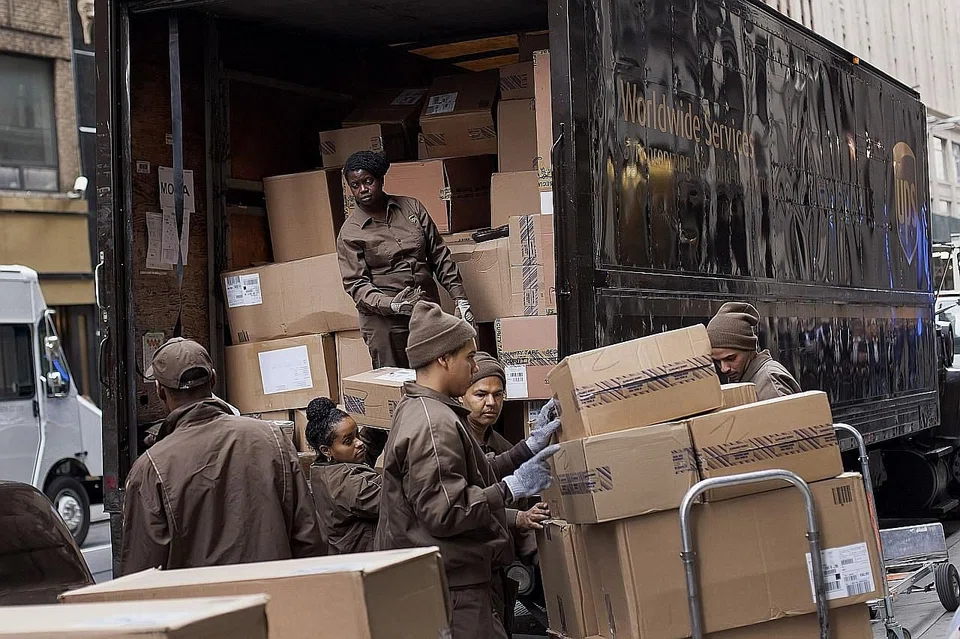
UNITED Parcel Service Inc (UPS) sees the boom in online retailing as an opportunity, not a threat, as the delivery company devises new tactics to make e-commerce more profitable, CEO David Abney says.
UPS is exploring methods such as consolidating packages from multiple retailers and delivering them to the same home once, and dropping off goods at corner stores after a failed home attempt. Atlanta-based UPS is bracing itself for e-commerce shipments that it projects will grow four times faster than the US economy, CFO Kurt Kuehn said last Thursday at an investor conference.
The company sees opportunity in e-commerce even though profit margins are lower for residential deliveries than for commercial drop-offs. While business-to-business shipments once accounted for 75 per cent of UPS's volume, Mr Abney said deliveries to homes will equal those to businesses by 2019.
"This past quarter, the great majority of our growth was driven by e-commerce, and our margins grew by 30 basis points," Mr Abney said on Thursday.
To save costs, UPS is testing a programme to consolidate shipments from multiple retailers and deliver them all at once to a home. UPS will give retailers a price break if they agree to delay delivery for a day or two to catch up with all the orders.
Such a system probably will work better for products such as dog food and diapers than for high-tech gadgets, which are eagerly awaited by consumers, Mr Kuehn said. "The vast majority of our shipments aren't all that urgent," he said.
Other ideas include unstaffed delivery sites being tested at nine locations in Chicago, the company said, as well as expanding its Access Point service, which drops packages at designated pickup points like UPS shops or a convenience store. With the customer's permission, Access Point also allows a driver to drop a package at the designated alternate location if a person isn't home when a delivery is made, instead of having to return to the residence the next day.
One of the key developments for UPS's deliveries lies in its Orion software, which helps drivers plot the shortest route between deliveries. The technology, already being used by 22,000 drivers, will save the company as much as US$400 million by 2017. So far, Orion has cut 11-13km a day off the average route, Mr Abney said, leading to savings in fuel costs.
UPS has been rejiggering its delivery methods as it heads into the crucial holiday season. The company has said it plans to spend US$175 million improving its operations during the holiday rush, hoping to avoid the problems of last year when harsh weather and a crush of last-minute online orders left it unable to deliver some packages by Christmas. It has also budgeted US$500 million to prepare the network for peak and future volume growth.
UPS forecasts it will deliver more than 585 million packages in December, up 11 per cent over last year. To deal with the challenge, it plans to hire 95,000 seasonal workers - it already has more than 80,000 on board - and is deploying groups of modular buildings for sorting packages. Failure to improve upon last year could force the company to spend heavily again next year and strain relations with major customers.
UPS is changing its pricing structure starting Dec 29 to charge for ground-shipped packages by size, not just by weight. The move could contribute as much as US$270 million to the company's earnings, RBC Capital Markets analyst John Barnes said in a Nov 10 research note.
The company also forecast on Thursday that 2015 earnings per share will be US$5.45 to US$5.70. The midpoint of that range trailed the average projection of US$5.70 a share, according to analysts surveyed by Bloomberg. UPS predicted revenue will increase 5-6 per cent next year.
In addition to the challenge from online shopping, UPS is facing weak demand in foreign markets, with sluggish economic growth in Europe and Asian customers shifting from next-day air delivery to cheaper deferred delivery. Mr Abney said UPS will enter 20 new markets in China, beyond the 33 it already serves. In Europe, UPS plans to spend US$1 billion over the next five years to expand operations, he said. WP
TRENDING NOW

Despite the de-dollarisation debate, demand for dollar liquidity in Asia is growing

URA to review guidelines on floor space to give developers more design flexibility: Chee Hong Tat

He built the Vingroup empire. Now South-east Asia’s richest man is handing some key roles to his sons

Can a first-time homebuyer couple earning S$18,000 a month afford a new EC unit?

