

High-speed trains give way to cut-rate buses in France
Paris
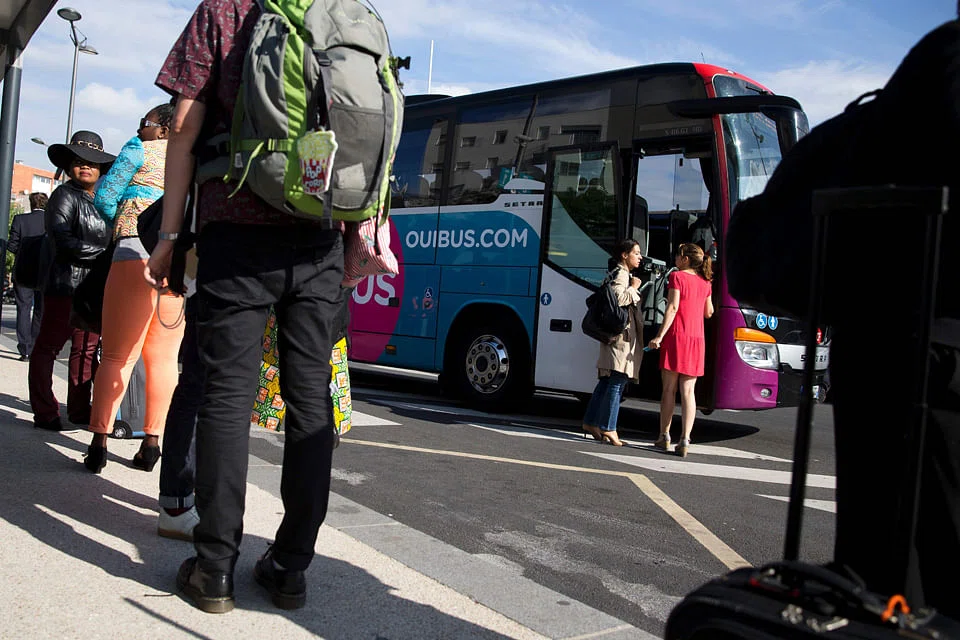
IT'S 8am at the height of vacation season in a parking lot on the western edge of Paris. A few hundred people are dragging around luggage as they hunt for the coaches that would take them to Toulouse, Biarritz, Amsterdam and beyond.
Bus travel in the country that popularised high-speed trains is booming, with almost four million passengers transported in the past 12 months and companies expecting the number to double in the next year.
Optimists in France point to the deregulation legislation pushed through a year ago by Economy Minister (and possible presidential candidate) Emmanuel Macron and say growth isn't impossible. One of the changes in the package known as "Macron's Law" included liberalising intercity bus services.
"It's an important symbol," Christopher Dembik, chief economist at Saxo Bank's French unit. "It's something that can send a positive message to international investors."
The law abolished limits on long-distance bus travel, made it easier to obtain a driver's licence, and deregulated some professional fees. It also allowed more Sunday shop openings.
Until a year ago, the SNCF national railroad had a monopoly on all domestic transport of more than 100 km. In the first two months after the law was passed, 250,000 people had travelled on France's newly opened bus routes, growing to more than 3.8 million in the first year, with 3,300 departures a day and 1,500 jobs created, according to Mr Macron's ministry. He has said that 22,000 jobs could be created by bus travel by 2025.
The law has been a success, Mr Macron said in an Aug 5 statement. "One year later, and everywhere in the country, things have changed," he said. "Bus lines have opened and allowed millions of French to travel."
Still, it's capitalism with French characteristics: two of the three bus companies that dominate the markets are government owned.
FlixBus, which is based in Munich and was founded in 2013 when Germany deregulated its own market, is the biggest; next is Ouibus, a unit of the SNCF. Number three is Isilines, a unit of Transdev, which is 60 per cent owned by state holding company Caisse des Depots et Consignations.
Isilines spokeswoman Isabelle Pons said the company receives no government subsidies. Ouibus said it doesn't receive subsidies and expects to break even in 2-3 years. While FlixBus's French operations are expected to break even in 2017, Isilines hopes to be profitable in 1-2 years.
There's plenty of ground to make up. The economy has barely grown since Francois Hollande won the presidency in 2012, promising to fight big finance, raising taxes to 75 per cent for top earners and cutting the retirement age for some. Last year, GDP expanded just 1.3 per cent, the most since the socialist took office.
He's the most unpopular president in French history, having spurned centrist voters with his initial policies and then losing the support of much of his Socialist Party base with a 2014 U-turn that saw him cut payroll taxes, move to loosen labour protections and roll back the 75 per cent tax rate.
It will take more than tweaking around the edges to turn things around. Mr Macron's 2015 package was "important for the image it projects and as a trial balloon for further reforms, but the actual growth impact is marginal", said Philippe Waechter. chief economist at Natixis Asset Management in Paris.
In the meantime, authorities need to catch up to buses' new popularity. The long-distance station at Paris's Porte Maillot convention centre has no shelter, no toilet, and nowhere to sit. "You'd think you're in Cairo, not Paris," said FlixBus director-general Pierre Gourdain.
He said up to 40 per cent of FlixBus passengers wouldn't have travelled at all if it hadn't been for cheap bus tickets. Tickets are particularly popular for young people, and on night routes, which the SNCF is increasingly abandoning, he said.
This month, FlixBus was offering tickets at 15-40 euros (S$22.50-60) for the next day on its six daily departures for the six-hour ride from Paris to the western city of Nantes. The cheapest train ticket was 66 euros, but the trip takes half as long. WP
TRENDING NOW
Singapore expects all parties to honour commitments, says PM Wong after Indonesia cuts gas exports

China’s US$3.5 trillion stock rout deepens as profits sink, major stimulus stays elusive
Gas supply cut from Indonesia accounts for less than 2% of Singapore’s daily gas demand: EMA

Singapore’s central gas buyer affirms Indonesia’s role as ‘important partner’ amid export review warning

