

Hong Kong airport completes third runway as pandemic keeps city isolated
 Add BT as a preferred source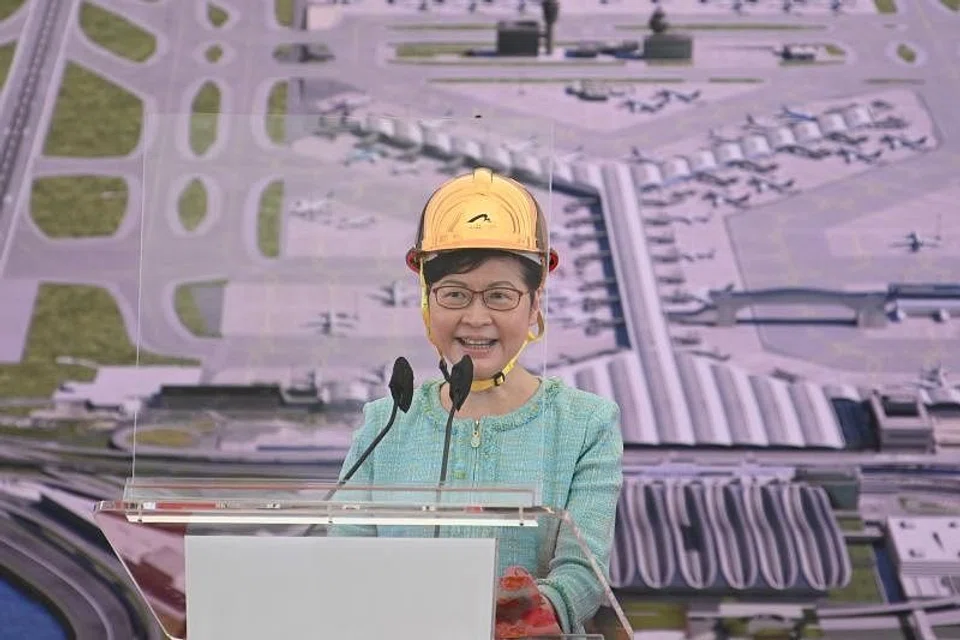
DeeperDive is a beta AI feature. Refer to full articles for the facts.
[HONG KONG] Hong Kong marked the completion of a third runway at its airport on Tuesday, at a time when the once thriving international travel hub remains cut off from most of the world.
City leader Carrie Lam presided over a topping-off ceremony for the 3.9-km runway, which took five years to construct on reclaimed land.
Thanks to its location and comparatively relaxed entry requirements, Hong Kong has long hosted one of the world's busiest international airports. But it faces increasing competition from regional rival Singapore, as well as rapidly expanding airports in mainland China.
The city's reputation as a travel hub was also dented by months of political unrest in 2019 and China's subsequent crackdown on dissent.
The business hub currently remains inaccessible to most people during the coronavirus pandemic, because it maintains some of the world's strictest quarantine measures.
Almost all arrivals must complete one to three weeks of mandatory hotel quarantine, a move that has kept the coronavirus at bay but hammered the travel industry and left the city isolated.
Navigate Asia in
a new global order
Get the insights delivered to your inbox.
The construction of new runways often faces strong opposition from environmental groups in western nations, but Hong Kong's airport expansion drew little protest.
Before the coronavirus, the two runways were already operating well beyond their capacity of receiving and sending 420,000 flights per year. The third runway is expected to start operations sometime next year.
It is unclear whether Hong Kong will have loosened its travel restrictions by then.
AFP
Decoding Asia newsletter: your guide to navigating Asia in a new global order. Sign up here to get Decoding Asia newsletter. Delivered to your inbox. Free.
Share with us your feedback on BT's products and services
TRENDING NOW
Autobahn Rent A Car directors declared bankrupt over S$50 million each owed to DBS

Higher costs, lower returns: Why are Singaporeans still betting on real estate?

Richard Eu on how core values, customers keep Singapore’s TCM chain Eu Yan Sang relevant
Loyang Valley sold for S$880 million to SingHaiyi-led consortium

