

Hyundai accelerates US output to lighten profit hit from tariffs
The CEO has been pushing the premium Genesis brand, hybrids and sport utility vehicles to capture higher-margin sales
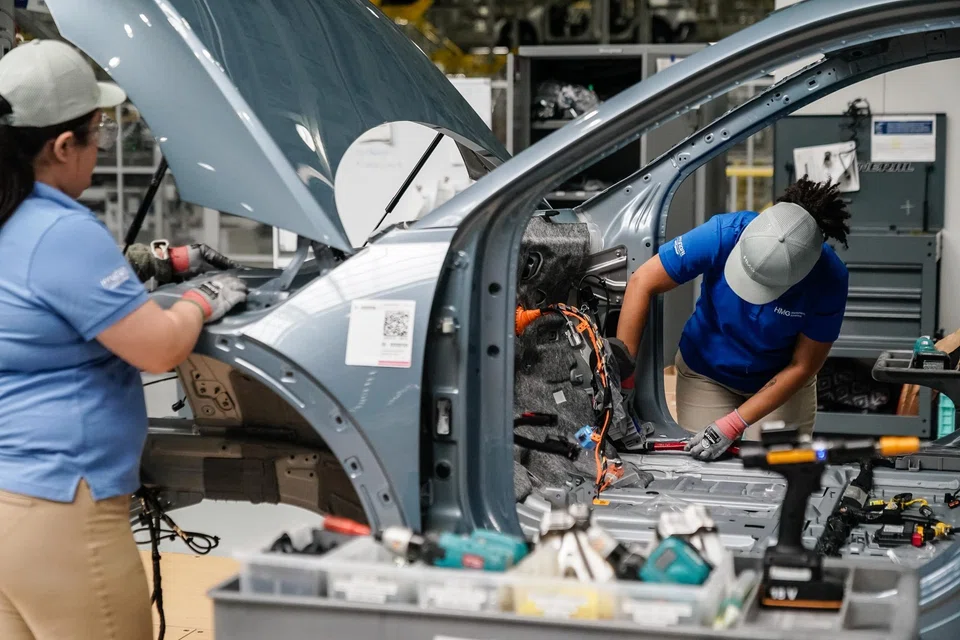
[MILAN] Hyundai Motor plans to ramp up US production and cut expenses to shield the South Korean carmaker from tariffs that are eating into profit in its biggest market.
“Tariffs are hurting,” CEO Jose Munoz told reporters at an event in Milan on Monday (Apr 20). “In the short term, it is really tough.”
Like the rest of the global auto industry, Hyundai has grappled with US tariffs, along with supply disruptions and uneven demand for electric vehicles, since Munoz took over as CEO at the start of 2025. The South Korean company reported its lowest quarterly profit in more than three years during the fourth quarter.
Increasing the number of cars Hyundai makes in the US will avoid extra costs, Munoz said. The company currently makes about half of US-sold vehicles locally, importing the rest at an official tariff rate of 15 per cent.
“We need to make efforts to avoid minimise the cost,” he said. “One of the easiest and straightforward ways to do that is to accelerate localisation.”
Munoz cautioned that localisation “takes years”, and will force Hyundai to cut costs aggressively in the meantime, and adjust prices to offset the immediate financial blow.
Munoz has been pushing the premium Genesis brand, hybrids and sport utility vehicles to capture higher-margin sales. The company has continued to gain ground in the US, which he has described as a pillar of growth.
The comments underscore the intensifying pressure on global carmakers to overhaul their supply chains as trade barriers threaten margins.
The 60-year-old CEO said that the war in Iran is creating a significant “hiccup” in the Middle East, Hyundai’s highest-margin market. Both demand and logistics are affected, forcing the company to shift more capacity to North America.

“We are trying to offset with other regions,” he said. “Because we are a little bit limited on capacity, I can tell you that there are many volunteers now that try to get those cars. One of the regions that can accommodate is the North America region.” BLOOMBERG
Decoding Asia newsletter: your guide to navigating Asia in a new global order. Sign up here to get Decoding Asia newsletter. Delivered to your inbox. Free.
Share with us your feedback on BT's products and services
TRENDING NOW

LTA proposes combining car COE categories, adding rebate-surcharge system

StarHub to acquire MyRepublic’s mobile business amid ongoing telco consolidation

DBS, OCBC, UOB rout lops billions off STI as inflation, rate concerns spook investors

Grab CEO’s wife Chloe Tong on life with Anthony Tan and finding her purpose

