

Hyundai says India tax reforms a 'setback'
 Add BT as a preferred source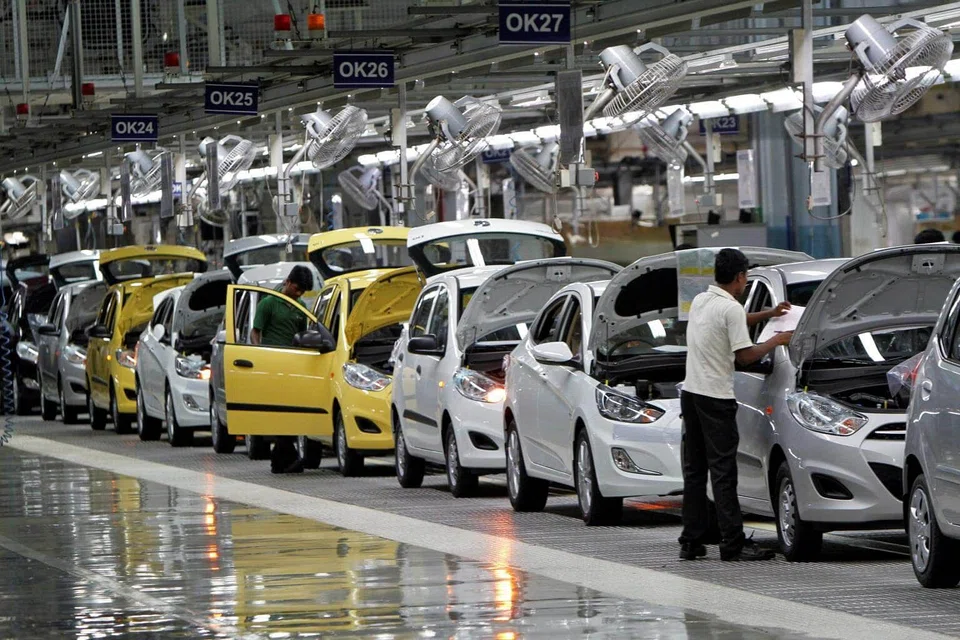
DeeperDive is a beta AI feature. Refer to full articles for the facts.
[NEW DELHI] South Korean auto giant Hyundai Motor says that fresh changes to India's new national tax had shaken industry confidence in the country with firms already struggling to boost sales.
The Indian government launched a new national goods and services tax in July to replace more than a dozen separate levies and transform the US$2 trillion economy into a single market for the first time.
The goods and services tax (GST) sets out four different rates of between five and 28 per cent for businesses instead of the one originally envisioned.
However, the government has made several changes to the tax regime regarding some products including sports vehicles, and luxury and hybrid cars, which auto makers complain have forced them to alter their pricing strategies.
"The recent rolling back to multiple rates with pre-GST classification has come as a setback to the industry, shaking the confidence of auto manufacturers," Hyundai said in a statement.
"We expect the coming festive season (Diwali) will witness low customer sentiment on new purchase decision.
Navigate Asia in
a new global order
Get the insights delivered to your inbox.
"Further, in the absence of consistent and long-term policy the investment for new products and new technology will be adversely impacted," it added.
India's economic growth slumped to 5.7 per cent in the first quarter of the financial year owing to a controversial ban on high-denomination notes in November as well as the GST roll-out.
Auto makers have also complained about a recent government push to switch cars to electric by 2030.
This would require them to make massive fresh investment and manufacturing plans including setting up new plants and supply lines.
AFP
Share with us your feedback on BT's products and services
TRENDING NOW

StarHub hands Ensign InfoSecurity control back to Temasek in S$115 million deal, books S$200 million gain
Singaporeans can now buy record amount of yen per Singdollar

Air India asks Tata, Singapore Airlines for funds after US$2.4 billion loss

Keppel DC Reit posts 13.2% higher Q1 DPU of S$0.02833 on strong portfolio performance

