Indian airline SpiceJet booking income from grounding of Boeing 737 Max jets
Most major markets have cleared the Max to fly again, but the budget carrier is in no hurry to follow suit
 Add BT as a preferred source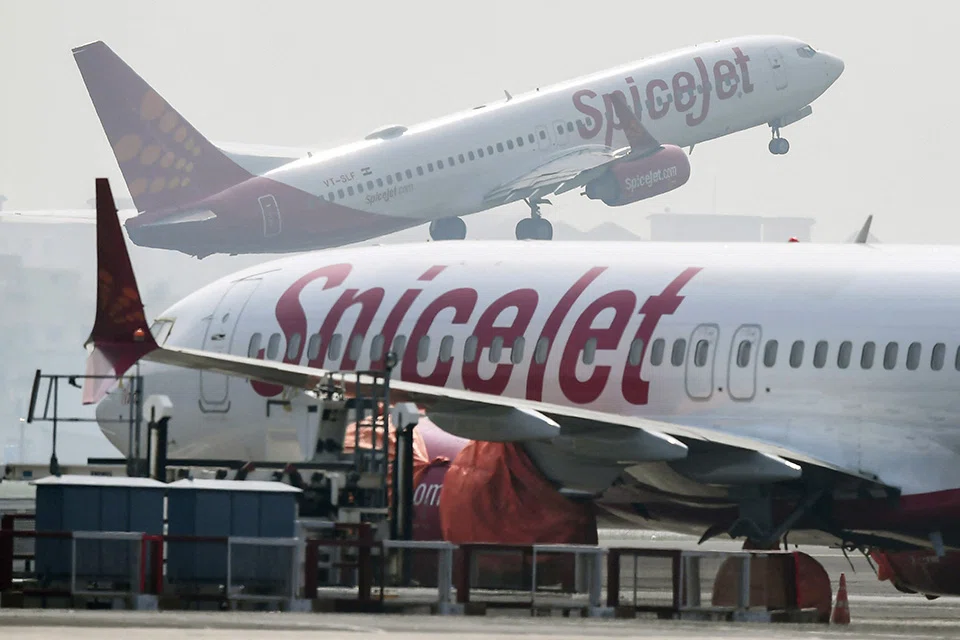
DeeperDive is a beta AI feature. Refer to full articles for the facts.
New Delhi
AIRLINES follow a pretty simple formula for success: fill as many seats and fly as many hours as possible, and keep a young fleet. One Indian budget carrier is going another way to drum up income - not flying.
SpiceJet has not flown any of its Boeing 737 Max jets for more than 27 months, after two deadly crashes operated by other airlines led to a global grounding. While most other major markets apart from China have cleared the Max to fly again, SpiceJet seems in no hurry to get it back in the air, and not just because there is less demand to use the jet amid the pandemic.
India's second-biggest budget carrier booked other income of 10.9 billion rupees (S$197 million) in the seven quarters up till December. That was the amount it expected to get in compensation from Boeing for not being able to fly its 13 Max aircraft, helping the company to trim its losses during deeply challenging times. Given that the planes remain grounded, the figure is likely to rise when SpiceJet reports results for the year up till March on Wednesday.
SpiceJet is the only Indian airline that operates the Max. With firm orders for 142 more, it is also one of its biggest customers globally. Yet the carrier has not asked regulators to lift the flying ban in India, a source familiar with the matter said. There is no clarity on why it has held back, and it would take at least a month after applying to get approvals in place, the source said, asking not to be identified as the matter is confidential.
SpiceJet declined to comment. Boeing said it continues to work closely with aviation regulators in India and elsewhere about returning the Max to service, but does not comment on talks with its customers.
Navigate Asia in
a new global order
Get the insights delivered to your inbox.
In its previous quarterly results, SpiceJet said management was confident of collecting the compensation from Boeing. At the time, however, auditor Walker Chandiok & Co LLP said there was "no virtual certainty" the other income would be recognised, meaning there was no guarantee that the figure would materialise.
"SpiceJet is using this accounting method to shore up their results, and obviously to make sure that they don't need to bring in solvency capital of a magnitude which would dilute the current ownership," said Shailesh Haribhakti, a chartered accountant and chairman of Shailesh Haribhakti & Associates, adding that such an approach is allowed under Indian regulations.
Analysts expect SpiceJet to post a loss of 10 billion rupees, which would be its third straight annual loss. The carrier almost shut down in 2014 after running out of money, only to be rescued by co-founder Ajay Singh, who as chairman has changed its network, renegotiated vendor contracts and diversified into businesses including a dedicated cargo service, retail and health care.
SpiceJet shares were up nearly 1 per cent at 83 rupees as of 9.30am in Mumbai. They have fallen 13 per cent this year, while the benchmark S&P BSE Sensex index has risen more than 10 per cent.
SpiceJet's fleet includes other Boeing 737 models and Bombardier Q400 turboprops, though it is not operating near its pre-Covid capacity. The airline carried just 3.9 million passengers in the first five months of 2021 as the outbreak in India worsened, a slump of more than 52 per cent from the same period in 2019.
The 737 family has been the backbone of SpiceJet's fleet, with the company previously saying the "highly sophisticated" Max would allow it to compete better and expand profits.
While those profits are not expected now, the Max - even when grounded - might offset some of the pain from last year. BLOOMBERG
Decoding Asia newsletter: your guide to navigating Asia in a new global order. Sign up here to get Decoding Asia newsletter. Delivered to your inbox. Free.
Share with us your feedback on BT's products and services