

Japan firms seek role in S'pore's LNG bunkering
Mitsui OSK Lines confirms interest in Republic's pilot LNG bunkering ops; Marubeni potentially tying up with NYK for joint application with MPA for third LNG bunkering licence
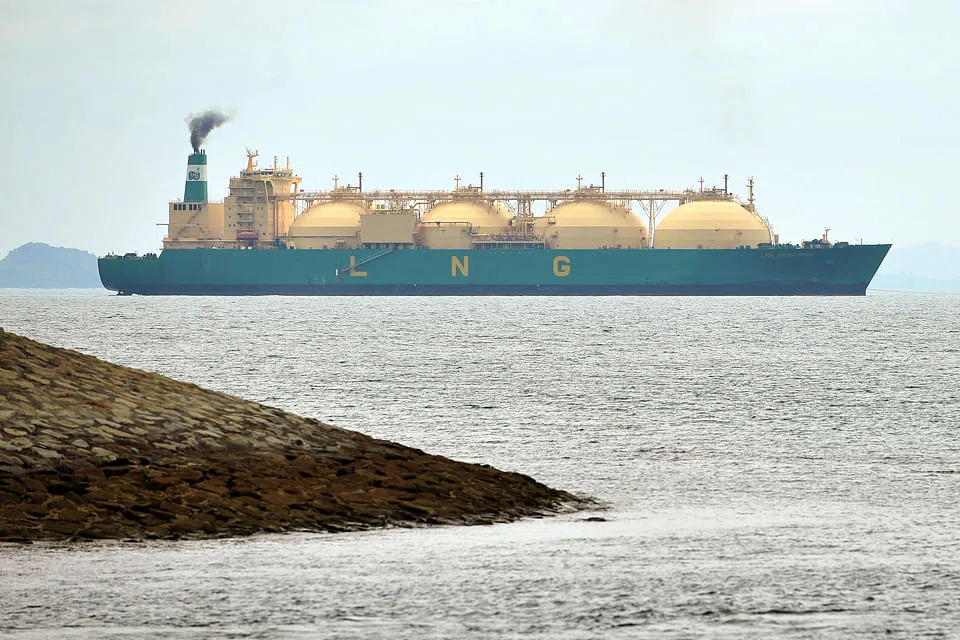
Singapore
JAPAN'S top shipping and trading companies are eyeing an early foothold in Singapore's nascent LNG (liquefied natural gas) bunkering market.
Close observers of the LNG bunker trade have identified top Japanese shipping firms Mitsui OSK Lines (MOL) and NYK Line and a third conglomerate, Marubeni, as actively pursuing LNG bunkering opportunities here.
Banking on their vast experience in either trading or shipping the super-chilled fuel, these Japanese companies are proactively engaging the relevant authorities and businesses in Singapore in their efforts to partake in the first development of an LNG bunkering value chain here.
When contacted, MOL confirmed its interest in Singapore's pilot LNG bunkering operations.
"We have the know-how in the LNG cargo trade as a leading LNG transport company, so we can play a key role in the promotion of LNG bunkering," an MOL spokesman said. MOL "has taken a proactive approach to this field, as a leader in LNG transport for many years and in the future our other vessels will require LNG bunker fuel, thus contributing to demand", he added but gave no further details on the shipping company's plans.
BT understands MOL may look to tap Singapore's LNG bunker licence holder, Pavilion Energy, for supplies towards pilot operations in Singapore.
Without naming the involved counter-parties, Pavilion Energy said it has been working with the Maritime and Port Authority of Singapore (MPA) and its partners to develop the necessary infrastructure and encourage LNG bunkering demand in Singapore.
Sources also said MOL has already held talks with Keppel Offshore & Marine and Sembcorp Marine to explore conversions of existing containerships to run on LNG fuel. The company is also said to be working with a regional shipbuilder on developing a new LNG-fuelled containership design.
It could not be ascertained whether MOL is looking to apply for the S$2 million per vessel LNG-fuelled vessel shipbuilding incentive with MPA.
Marubeni is believed to be separately exploring a joint application for a third LNG bunkering licence with MPA. The trading house is potentially tying up with shipping company NYK Line for the licence application, although this could not be verified with either party as at press time.
Marubeni may also be keen to cultivate an alternative distribution channel ahead of excess LNG cargoes that could be released from contracted volumes to Japan from 2017 to 2021. Data compiled in a leaked report by Japan's Ministry of Economy, Trade and Industry projected Japan's LNG demand will fall about 30-62 million tonnes by 2030.
A licence with MPA would represent an extension of NYK Line's global LNG bunkering footprint. NYK Line has already put in place a joint venture with Fluxys and Engie to own an LNG bunkering vessel that is envisaged to kick off operations at the Port of Zeebrugge.
Marubeni's move to secure an LNG bunkering licence would also be in line with a shift in its focus to naphtha and LNG as it seeks to mitigate its exposure to a drastic decline in oil prices.
Back in October 2014, Marubeni's general manager Yasuaki Suzuki had acknowledged in an interview with Reuters that the Japanese trader no longer had fuel oil storage capacity in Singapore and has been "withdrawing from the (conventional bunkering) market".
Unlike Singapore, Japan as a nation is not seen as aggressively pursuing LNG bunkering infrastructure development, although the government of Prime Minister Shinzo Abe had in June 2015 set out to convert 10 per cent of long-distance trucks in the country to run on the cleaner fossil fuel.
Japan has taken smaller but significant steps towards LNG bunkering. With the backing of the local government, NYK Line had in September 2015 took delivery of Japan's first LNG-fuelled tugboat that was supplied by a tanker truck at a pier in Yokohama.
Shipping companies with global footprint such as MOL and NYK Line are also racing against the clock to explore bunkering alternatives that will help comply with the International Maritime Organization's (IMO) global sulphur cap.
The world's largest containership company, Maersk Line, said LNG is "an obvious fuel alternative" because it "emits significantly less SOx (sulphur dioxide) and is estimated to carry a potential reduction in CO2 (carbon dioxide) emissions of 25 per cent compared to the use of conventional shipping fuels".
For Maersk Line, "LNG-powered container vessels is more a question of when, not if, as LNG holds clear benefits", but to get there, the "industry must develop and introduce an economically feasible propulsion technology and establish solid fuel distribution (networks)", a spokesman said.
To smaller containership operators, however, LNG bunkering may not be the most cost effective avenue to comply with IMO's global sulphur cap. Investment in LNG bunkering is far from the top agenda for these shipping companies, the majority of which are operating under a survival mode to tide over a protracted downcycle, Pacific International Lines' (PIL) managing director S S Teo told BT.
Not helping is the sizeable investments required in dual fuel engines for containerships to run on LNG, the bulk of which is still out-of-the-pocket cost, even after taking into account the S$2 million per vessel incentive on offer from MPA, Mr Teo explained.
The PIL senior executive pointed out one further logistical hurdle: "Even if Singapore were to offer LNG bunkering, the challenge for ships servicing long-haul trades is where do they next bunker?"
Mr Teo said LNG bunkering is still an option at PIL, although it is likely the Singapore-based shipping company will start introducing the fuel into its regional feeder services first.
The Port of Singapore plans to launch the pilot LNG bunkering programme in 2017. MPA has awarded a second LNG bunkering licence to a business unit of Keppel Corporation and BG Group. The regulatory body has also offered a maximum of S$12 million of incentives, which are capped at S$2 million per vessel, to go towards the construction of LNG-fuelled ships.
TRENDING NOW
Motoring tycoon Peter Kwee is back in court: Here are his previous legal battles

Demand, tech capabilities position Apac and AI as Skyscanner’s next growth frontiers: CEO Bryan Batista

Beyond the greenback, Vietnam’s big borrowers turn to Asian-currency bonds

Nvidia’s outlook cut to stable by Moody’s on governance concerns

