

Keeping Singapore open, investing in people are key to the city-state being competitive: DPM Gan
The minister encourages governments to speak up for better connectivity to facilitate trade that will benefit all

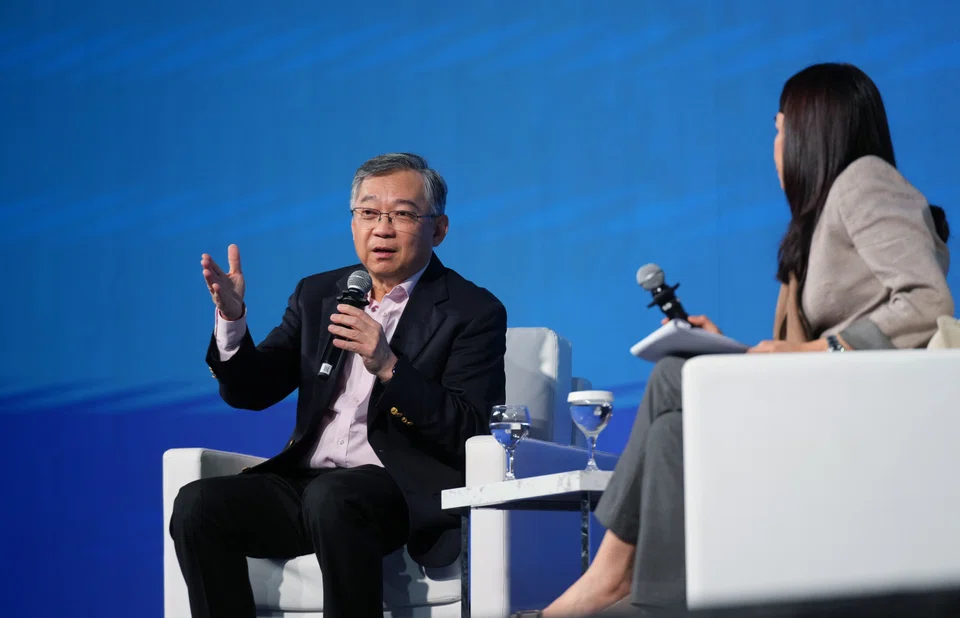
[SINGAPORE] The key for Singapore to remain competitive in a world where rules are increasingly shaped by national security is to be nimble and adapt very quickly to the new environment, said Deputy Prime Minister Gan Kim Yong on Tuesday (Apr 21).
DPM Gan, who is also the minister for trade and industry, added that keeping Singapore open to trade, shipping, ideas, talent, data flow and capital has allowed the city-state to be more nimble, more flexible and to adapt more quickly.
“And that’s one key strength we must preserve.”
He was sharing his insights at a fireside chat during Singapore Maritime Week, with the session moderated by Yong Hsin Yue, managing director at Kuok Group Singapore.
He elaborated that Singapore set up the economic strategic review to think about the long term, with more details to be shared soon.
Another strategy to keep Singapore agile is to continue investing in people.
“Because our people are our most critical resource and the only resource that we have. So you must continue to invest in them, train them, upgrade them so that they’re able to seize this opportunity.”
“Work in progress”
Someone asked how governments can keep the maritime industry and seafarers at the centre of policymaking, so that they are not just reacting to situations they have no control over.
To this, Gan said that governments around the world can continue to work together to ensure the safety and free passage of ships, so that countries can trade with each other.
SEE ALSO
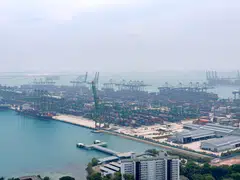
“We also have to be realistic because countries will have their national concerns, national interest and some (matters of) national security. And, from time to time, ... these issues (will) take precedence for these countries, and they will introduce measures and rules that may not be favourable to a free passage,” he added.
But he encouraged governments “to stand up and to speak up so that we continue to push the boundary and to extend our connectivity to facilitate trade that would eventually benefit all countries”.
“So I think this is something that’s always work in progress. But even as they push hard for freedom of navigation and transit passage, they will always push back, (from) time to time, because of various considerations...” He also noted that the safety and well-being of the seafarers on board Singapore ships stuck in the Middle East war zone “are at the top of our mind”, and that the Maritime and Port Authority of Singapore (MPA) is working “very hard” to maintain contact with the shipowners and operators.
“At the same time, we have also been working very closely with the ports along the coast to render support and assistance when necessary.”
He reiterated that Singapore will not negotiate with Iran for safe passage through the Strait of Hormuz as this is a matter of principle and right. This stance was made known earlier by Foreign Minister Vivian Balakrishnan in Parliament a fortnight ago.
Singapore Maritime Week, which is taking place at Suntec Singapore Convention and Exhibition Centre until Friday, is organised by MPA.
Decoding Asia newsletter: your guide to navigating Asia in a new global order. Sign up here to get Decoding Asia newsletter. Delivered to your inbox. Free.
Copyright SPH Media. All rights reserved.
TRENDING NOW

Once staunchly pro-China, Malaysian Chinese businesses are now distancing themselves from Beijing

Grab CEO’s wife Chloe Tong on life with Anthony Tan and finding her purpose

Could stablecoins be the future of money?
ST Engineering opens tech-focused aircraft maintenance facility in Changi; to create over 500 jobs

