Li Auto's heady EV sales target rests on winning over chipmakers
 Add BT as a preferred source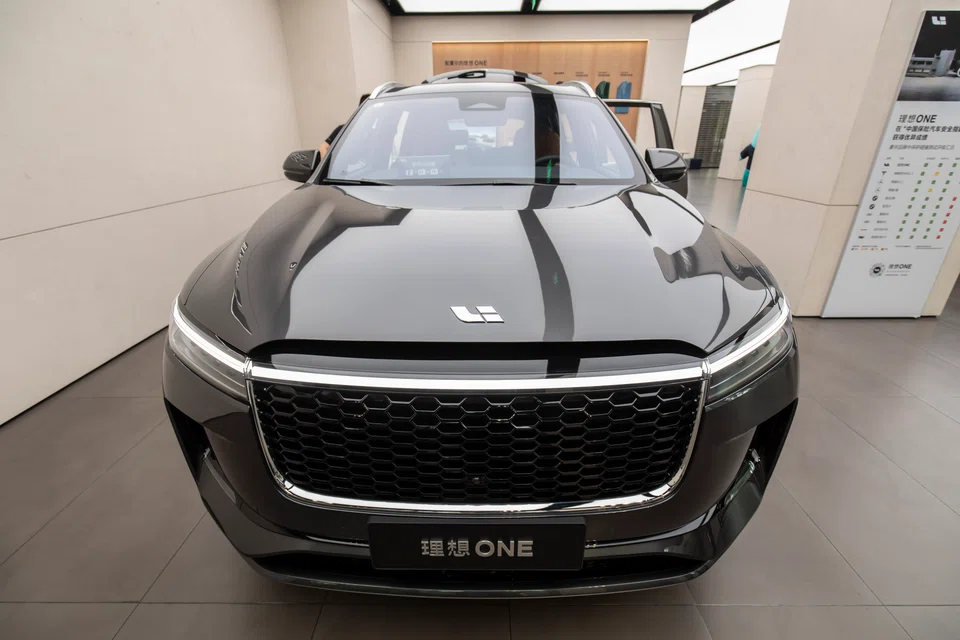
IT'S not the best known of China's US-listed electric car upstarts, but Li Auto has lofty ambitions - an audacious target of conquering 20 per cent of the world's biggest EV market, or selling 2 million cars a year, by 2025.
To get there will require the Beijing-based maker of luxury e-SUVs to go where no automaker, let alone a startup, has gone before.
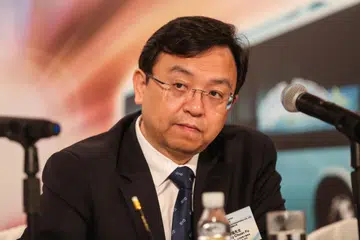
"We're very serious about this 20 per cent and we're building everything around the target," President Kevin Shen said in an interview with Bloomberg TV. That includes shoring up the carmaker's supply chain, developing a more comprehensive vehicle lineup, boosting manufacturing capacity and accessing more funding.
It would seem a challenging goal for the 7-year-old upstart, which only launched its second model last month - a premium SUV - and delivered around 60,000 cars in the first half of 2022.
Li Auto will have to surge past China's No 1 new-energy vehicle maker BYD, which shipped around 584,000 cleaner cars last year. It'll also have to outrun SAIC-GM-Wuling Automobile, whose US$5,000 pint-sized EV is a mass-market winner, and Elon Musk's Tesla, which sold about 320,000 vehicles in the nation in 2021.
Tiny Li Auto would even have to top the world's best-selling carmaker, Toyota Motor, which delivered 1.94 million automobiles in China last year.
"That's why releasing more new products into the market is important," said Shen, who is also Li Auto's co-founder.
All price points
The plan is to have at least 2 models at every 100,000-yuan point between 200,000 yuan (S$41,575) to 500,000 yuan, one extended-range electric vehicle (with a petrol-fuelled engine to generate electricity to power the battery) and one pure-battery electric car, all on the market by 2025.
To that end, Shen said he is spending around a fifth of his time working with suppliers, trying to convince, in particular, global chip giants of the company's sales projections.
Li Auto is talking directly with chipmakers including Infineon Technologies, NXP Semiconductors and STMicroelectronics to secure supplies, rather than solely relying on distributors and component makers, Shen said.
The supply chain is "at least one of the biggest challenges" in achieving the 2 million sales target, he said.
The goal, predicated around Shen's forecast for new-energy vehicle sales of 10 million in 2025, is grand but Li Auto does have a proven track record of making cars, unlike other Tesla wannabes like China Evergrande New Energy Vehicle Group, which is yet to mass produce a car 3 years after saying it would take on Musk.
Plant capacity
Shen's vision for overall EV sales in China seems reasonable, considering the China Passenger Car Association estimates sales will top 5.5 million this year, regardless of the extreme disruptions caused by Covid-19 lockdowns.
Morningstar forecasts Li Auto can reach sales of more than 540,000 units in 2025, taking close to a 7 per cent share of China's passenger new-energy vehicle market.
"We like Li Auto's precise product positioning," analyst Vincent Sun said, noting that once it enters into more segments and competition heats up, "other automakers can offer similar value proposition cars".
Li Auto is also still struggling with some key chip supplies and will continue to face problems given the number of semiconductors required by tech-laden EVs, Shen said. However, prices are coming off their peaks and aren't "as crazy as last year", he added.
Meeting the target will also require a steep increase in manufacturing capacity. Li Auto currently has one factory in Changzhou with an annual capacity of around 100,000 cars and is readying a second factory in Beijing and another in Chongqing in southwestern China.
More money
To help fuel the expansion, Li Auto will continue to raise money from the market when it "is in good shape", Shen said. "Economies of scale are very important and we have to be prepared with enough ammunition."
The automaker last month announced it will raise US$2 billion through the sale of American depositary receipts after its shares rallied more than 50 per cent in June. The US-traded stock is up 15 per cent this year, outperforming local rivals Xpeng Inc. and Nio. Li Auto raised a further US$1.5 billion via a Hong Kong listing last year.
Other funding options include selling stock or issuing debt, and Li Auto will also work with suppliers and other partners to maximise cash flow, Shen said.
Unlike some of its domestic competitors that have moved to gain a foothold outside of China by exporting batches of cars to Europe, Li Auto has a "slightly different strategy and philosophy", Shen said.
"We have to figure out how to win before we enter the war, rather than enter the war and then try to figure out how to survive," he said. BLOOMBERG
Decoding Asia newsletter: your guide to navigating Asia in a new global order. Sign up here to get Decoding Asia newsletter. Delivered to your inbox. Free.
Share with us your feedback on BT's products and services