

Life on board a professionally run ship
The crew of Norwegian Cruise Lines' Norwegian Jewel tick the boxes on safety, hygiene and professionalism. A good time was had by all on a recent cruise to Alaska
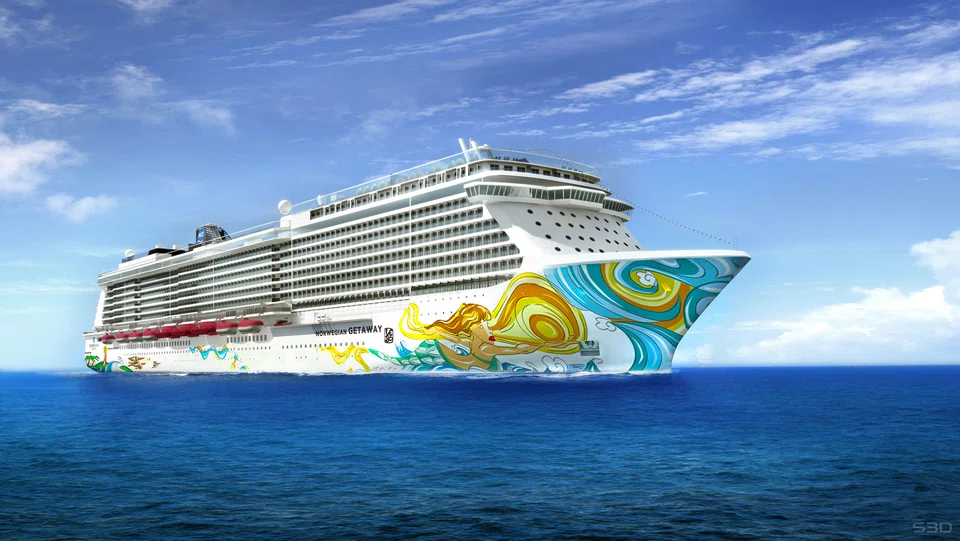
AFTER an incredibly relaxing week spent cruising to Alaska on Norwegian Cruise Lines (NCL)'s Norwegian Jewel recently, here are some more or less random observations.
The predominant impression was that it was a slick, professional operation in every respect. Superficially, the vessel was a brash money-making machine. While unlimited food and free entertainment was included in the basic price of the holiday, there were a lot of other revenue streams.
For those who preferred some very classy dining, the vessel had a range of restaurants for a modest additional charge.
Of course, the sale of alcoholic drinks was a major earner, to the extent that any booze taken on board from ashore was seized at the gangway and held until the end of the cruise, ensuring that all drinks were purchased in the ship's bars or restaurants.
And it was almost impossible to move around the ship without having your photograph taken several times. These photos were taken and presented highly professionally and cost something like US$15 each. Many passengers spent hundreds of dollars in the photo gallery.
Then there were the shore excursions, arranged by the cruise line and costing significantly more than the going rate on the quayside.
And of course, there was the gambling. I have no idea how much came in through the casino, bingo and scratch cards during the cruise, but it must have been a substantial amount.
Now, I say all this not to criticise. All these things were part of the deal and the overwhelming impression was that the passengers thoroughly enjoyed themselves. NCL knows its business and delivers a top-class product.
It was interesting though, at a question-and-answer (Q&A) session with the captain, chief engineer and hotel services director, to see what concerned the passengers.
Several questions were about crew pay and welfare. The very first was about tipping - how much to give to whom. NCL is different from most cruise ship operators in that it charges US$13.50 a day as "gratuities", which are divided among the hotel staff. There was quite an interesting exchange between a passenger and the hotel director on this subject, during which it became clear the money became part of the crew members' salaries. Additional tipping was still welcomed.
Also on the subject of crew conditions, passengers wanted to know how many hours a day the crew worked. The hotels director's answer: "a maximum of 10".
And how many days a week? The obvious answer, seven, clearly shocked some passengers, especially so when they were told that most crew were on eight-month contracts.
Actually, from asking crew members directly, it was apparent that most were quite content with life on board, at least to the extent that many of them have come back on board year after year.
The amount of food prepared for us each day was staggering, so not surprisingly, someone asked what happened to food that wasn't eaten.
The chief engineer replied that it depended on local regulations. Some went ashore for disposal, some was incinerated and a lot was macerated and fed to fish in waters sufficiently distant from the shore.
I asked an environmental question: "Was the ship using low-sulphur fuel or was she fitted with "scrubbers" (emission abatement systems to clean the sulphur out of the exhaust gases)?"
The chief engineer said low-sulphur fuel was being used, but plans were in place to fit scrubbers next year.
Like all ships operating in International Maritime Organization-designated Emission Control Areas, the Norwegian Jewel has to comply with a 0.1 per cent sulphur-in-fuel limit while operating cruises from Seattle to Alaska and Canada. The plan to fit scrubbers made economic sense. Some quarters think the world's merchant fleet will switch to using distillate fuels such as marine gas oil, which almost certainly will not happen.
As for scrubbers - unless legal moves restrict their use, and there are environmentalists who do not like them - they seem set to be the way forward for most ships.
One particularly welcome facility on the Norwegian Jewel was a viewing room aft of the bridge, which is open to passengers during daylight hours. A large window there allows a clear view of the ship's bridge crew as they carry out their duties. Of course, they were aware they were being watched, but once again, the impression they exuded was one of calm, ordered professional competence.
With the trial of the Costa Concordia's master Francesco Schettino still fresh in the memory, it was reassuring to see the emphasis placed on safety and proper procedures on all aspects of the ship's operation, but especially on the bridge.
During the Q&A session, the captain stressed that the ship's management system required his officers to challenge his actions when conning the vessel if they believed he was making a mistake or putting the vessel in danger.
Finally, cruise companies are all too aware of the havoc an outbreak of norovirus can wreak on a cruise ship. Short of a fire or collision, having large numbers of passengers come down with this very unpleasant, highly infectious virus, also known as winter vomiting disease, is a cruise operator's worst nightmare. The virus is easily transmitted through contact with infected individuals from one person to another.
But a recent court case signalled that being able to show that all possible precautions have been taken will go a long way to protect cruise operators against compensation suits. Certainly, no passenger on the Norwegian Jewel could claim to be unaware of the need to maintain high hygiene standards. From the moment passengers boarded the vessel and in the main public areas, passengers were continually confronted by crew members with hand sanitisers at the ready; the hygiene message was continually pressed home with frequent announcements and notices placed all over the vessel, together with fixed sanitiser stations.
All in all, the Norwegian Jewel cruise demonstrated very high operating standards with a crew, particularly the hotel staff, prepared to go to great lengths to keep often-very-demanding passengers happy, safe and well.
TRENDING NOW

Motoring tycoon Peter Kwee is back in court: Here are his previous legal battles

Demand, tech capabilities position Apac and AI as Skyscanner’s next growth frontiers: CEO Bryan Batista

Beyond the greenback, Vietnam’s big borrowers turn to Asian-currency bonds

Nvidia’s outlook cut to stable by Moody’s on governance concerns

