

London Heathrow best option for new runway, says commission report
London
LONDON's Heathrow airport has been selected as the best option for a new runway in southeast England by a state-appointed commission, leaving a final decision on the controversial expansion with British Prime Minister David Cameron.
A third Heathrow landing strip northwest of the two existing ones "presents the strongest case and offers the greatest strategic and economic benefits", the Airports Commission said on Wednesday. Alternative plans to extend one of Heathrow's runways or add one at Gatwick, south of the capital, are "credible" but have weaknesses, the report said.
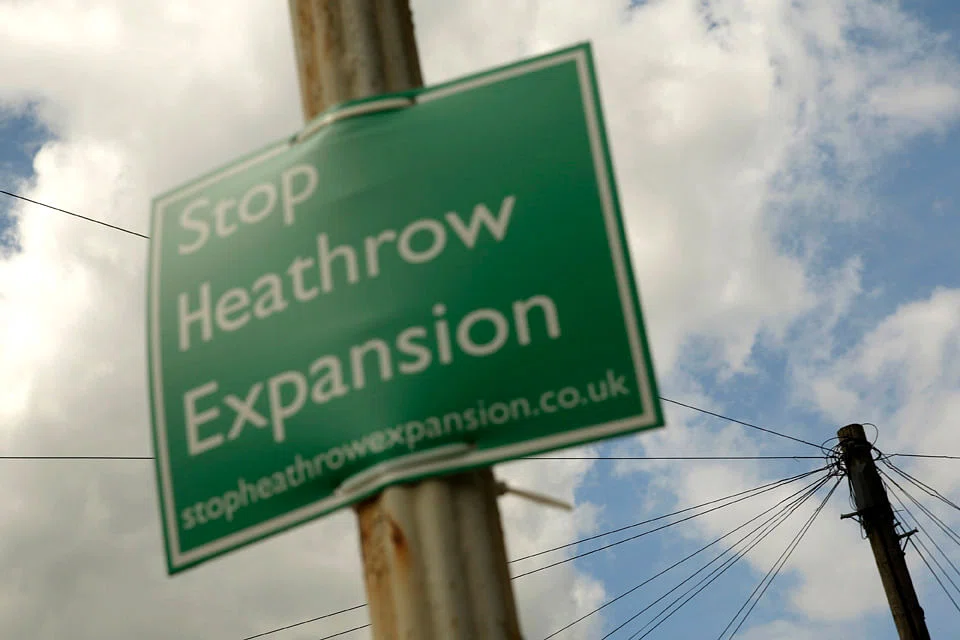
Extra capacity at Heathrow, Europe's largest air hub, would add about 40 new destinations and create 70,000 jobs by 2050, the commission said. A decision on whether to expand Heathrow now lies with Mr Cameron, whose ruling Conservative Party is split on the issue, with London Mayor Boris Johnson among senior members who say the increased noise and pollution would affect too many people.
"The government will need to review our analysis carefully" while at the same time moving "as quickly as it can to a decision", commission chairman Howard Davies said in the statement. "Heathrow is best placed to provide the type of capacity which is most urgently required."
The debate over Heathrow's future comes after the airport last year lost its status as the top hub for international passengers, with Dubai toppling it from a position the London base had held for decades. Airports in European cities such as Paris and Frankfurt also have more runways.
Already operating close to the limits of its two strips, Heathrow attracted 73.4 million people in 2015 as airlines used larger jets to maximise capacity.
A third runway could be built at Heathrow for £17.6 billion (S$37.3 billion) and be completed by 2026, bolstering the UK economy by £147 billion over 60 years, the commission said - while firmly recommending against the construction of a fourth strip at the site.
A longer Heathrow runway would deliver a smaller increase in capacity, Mr Davies said. A second strip at Gatwick - located in a more rural area where fewer people would be affected by the jump in aircraft movements - offers less economic benefit since growth would most likely come from short-haul European routes.
Single hubs generally have more routes as passengers switching between planes make new destinations viable.
Mr Davies said his report is a "fundamentally different proposition" to previous studies and that it should end years of wrangling. Anti-Heathrow campaigners are already concerned that Mr Cameron, once an opponent, has come round to the plan after watering down opposition before the May 7 election.
Recommended measures for reducing the impact of a bigger Heathrow on people nearby or under aircraft flight paths include a ban on all night flights, a legally binding "noise envelope", and the creation of a fund to finance mitigation programmes such as home insulation. The study also says commitments should be made on air quality and suggests that an independent aviation noise authority be created. BLOOMBERG






