

Maersk reveals details of historic split into oil, transport
 Add BT as a preferred source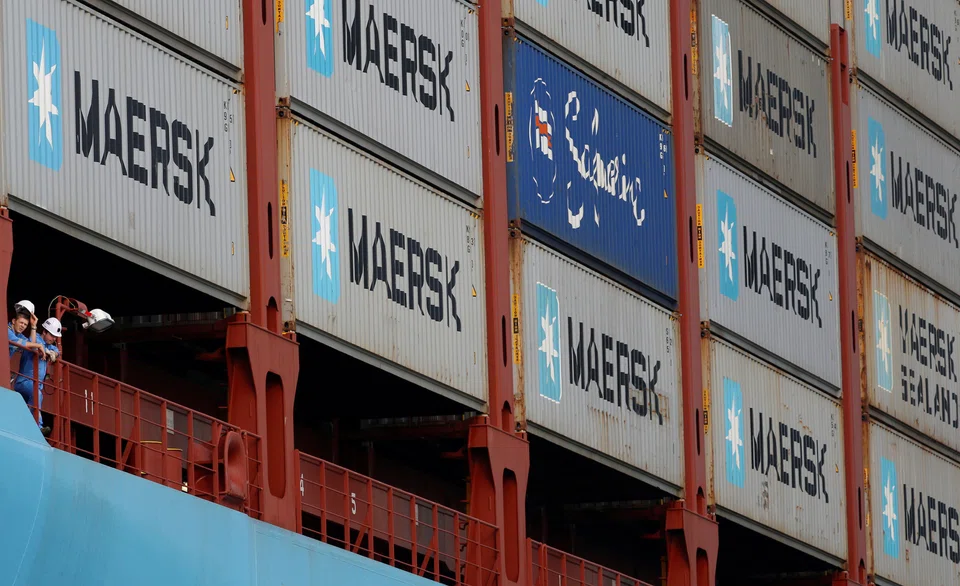
[COPENHAGEN] A P Moeller-Maersk said it will split into separate transport and energy businesses as Denmark's biggest company moves ahead with an historic shake-up of the conglomerate.
Maersk, owner of the world's biggest shipping company, will become a transport and logistics company, the Copenhagen-based group said on Thursday.
Oil and oil related businesses, "either individually or in combination," will be separated from the group, it said.
Goldman Sachs characterised the move as a "clear opportunity to unlock value," in a note to clients.
"Refocusing capital and management attention on transport, where we believe Maersk has clear competitive advantages, should lead to higher growth and return on capital in the medium term."
Exiting oil could also "unlock significant" sum-of-the-parts value, Goldman said.
"We continue to see Maersk's valuation as attractive, failing to reflect either ongoing shipping market repair or the increasingly evident scope for unlocking SOTP value," Goldman said.
The shares rose as much as 4.2 per cent and traded 1.3 per cent higher at 10,030 kroner as of 9.55am in Copenhagen, bringing this year's gains to 12 per cent.
Maersk also said its chief financial officer, Trond Westlie, will be replaced by Jakob Stausholm, who's currently in charge of strategy at Maersk Line. The switch was part of a broader management reshuffle.
Chairman Michael Pram Rasmussen first revealed Maersk was assessing the merits of splitting up the group on June 23, the same day he dismissed Nils Smedegaard Andersen as chief executive officer.
The prospect of a structural reorganisation sent the shares up as much as 12 per cent on the day, as most investors expect the company to be worth more once its different parts are freed from the conglomerate structure.
Maersk's board expects the oil and oil related businesses "will require different solutions for future development including separation of entities individually or in combination from A P Moeller-Maersk in the form of joint-ventures, mergers or listing". A solution is expected to be found within 24 months, it said.
Under Mr Andersen, the 112-year-old group sold off a number of units that weren't related to oil or shipping, including a stake in Danske Bank and shares in a supermarket chain.
But he had repeatedly defended the conglomerate structure, arguing the various business units benefited from the synergies that the group structure brought with it.
Soren Skou, who replaced Mr Andersen, said both businesses have "strategies positioning them for growth and strategic agility".
BLOOMBERG
Share with us your feedback on BT's products and services
TRENDING NOW
Yeo’s, Tiger Beer and now Gardenia – flight of food manufacturing from Singapore might be just as planned

Shanda co-founder sells Tanglin Hill bungalow for S$76 million

Nearly half of Apac’s wealthy expect market crash or correction, plan to rotate to cash: study
Jumbo Seafood to close flagship East Coast Seafood Centre outlet on Sep 30

