

Maersk says outlook hit by uncertainty due to coronavirus
 Add BT as a preferred source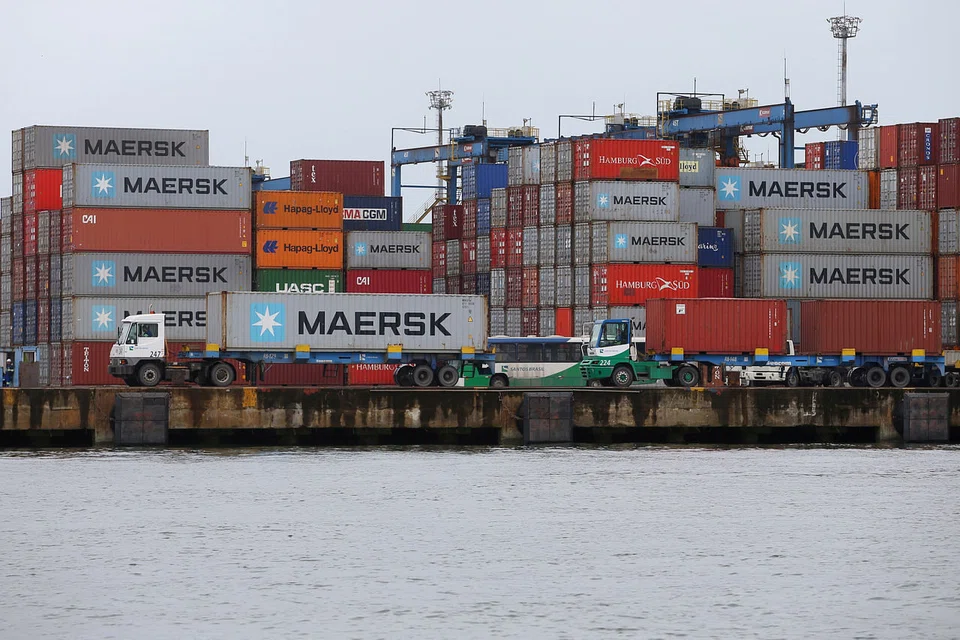
[COPENHAGEN] AP Moller-Maersk, the world's largest container shipping company, said 2020 will be marred by "considerable uncertainties" due to the outbreak of the coronavirus and its impact on global trade.
The Copenhagen-based company expects its operating profit, or Ebitda, to reach about US$5.5 billion this year, less than the US$5.94 billion estimated by analysts.
Maersk acknowledged it was seeing a "weak start to the year," due to the fallout of the virus. "The outlook for 2020 is impacted by the current outbreak of the coronavirus in China, which has significantly lowered visibility," it said in its fourth-quarter report on Thursday.
Shares in the company were about 1 per cent lower when trading started in the Danish capital. Denmark's benchmark index opened slightly higher.
Per Hansen, an investment economist at Nordnet in Copenhagen, called Maersk's outlook "disappointing," and said the fourth-quarter numbers were also "worse than expected." He pointed to "loads of uncertainties," including US-China trade disputes and the fallout of the coronavirus on freight rates.
In an interview with Bloomberg Television's Matthew Miller, Chief Executive Officer Soren Skou said Maersk has already had to cancel more than 50 departures from China in the past two weeks. Looking forward, he says "a lot will depend on what happens with the virus in the next few weeks."
Navigate Asia in
a new global order
Get the insights delivered to your inbox.
"What we are looking at right now is, over the last two and a half weeks, we have seen a steady decline in the number of new cases," Mr Skou said. "That is positive. It means very well we could be set for a peak within the next two weeks. If that were to be the case, then we would expect a very weak March and a rebound in April, a sharp rebound in April," he said. "But there is still a lot of uncertainties out there.
In 2019, Ebitda reached US$5.71 billion, just shy of the US$5.78 billion analysts had predicted.
Mr Skou said the company's "financial performance improved" last quarter, "albeit only marginally," in the report.
"Despite weaker market conditions we were able to improve profitability and cash flow," he said.
The coronavirus adds to a litany of challenges for the container shipping industry, which is already grappling with the fallout of US-China trade tensions as well as persistent oversupply.
Since its outbreak, the coronavirus has disrupted global supply chains and hurt shipowners, as China grows into the maritime industry's main source of cargo with 90 per cent of all global trade moving by sea.
Maersk said it expects global sea-borne container growth to be 1-3 per cent in 2020 compared with 1.4 per cent in 2019. The company expects its own growth rate to be in line "or slightly lower" than the market.
Maersk also listed new low-sulfur fuel that the industry has been forced to use from last month as an uncertainty that could impact bunker fuel prices and freight rates in 2020. It noted "weaker macroeconomic conditions" as an external uncertainty factor.
Maersk shares are down 11 per cent this year compared with a 4 per cent gain in the Stoxx Europe 600 Index.
Maersk, which operates a fifth of the world's container fleet, has in recent years tried to reduce its reliance on sea-borne shipping.
On Wednesday, the company said it agreed to buy US warehousing and distribution company, Performance Team, as part of its strategy to expand land-based transport services. The deal is valued at US$545 million.
BLOOMBERG
Decoding Asia newsletter: your guide to navigating Asia in a new global order. Sign up here to get Decoding Asia newsletter. Delivered to your inbox. Free.
Share with us your feedback on BT's products and services
TRENDING NOW

US-China rivalry and the Kindleberger Trap: Why inaction – not escalation – is the biggest risk

Strengthening Asean’s economic resilience through RCEP’s 2027 review

Thai and Vietnamese farmers may stop planting rice because of the Iran war. Here’s why
Will the Philippines hit the brakes on a deregulated oil industry amid fuel pain?

