

Maersk’s 2026 earnings drop with gradual opening of Red Sea, cuts jobs
It expects its underlying Ebitda to be between US$4.5 billion and US$7 billion this year, down from US$9.6 billion in 2025
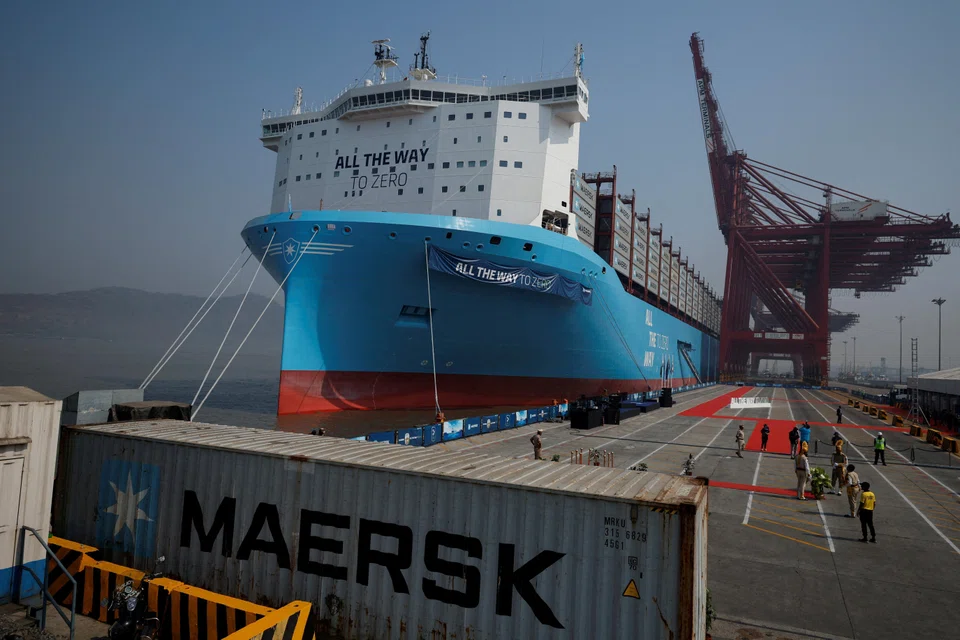
[COPENHAGEN] Danish shipping company Maersk plans to cut jobs and focus on cost discipline this year, as the container giant seeks to insulate its earnings against deteriorating freight rates with the Red Sea routes reopening.
It said on Thursday (Feb 5) that it expects its underlying earnings before interest, taxes, depreciation and amortisation (Ebitda) to be in the range of US$4.5 billion to US$7 billion this year, down from US$9.6 billion in 2025. Analysts on average estimated the Ebitda to be US$5.8 billion.
In the fourth quarter of 2025, its Ebitda nearly halved to US$1.8 billion against the same period the year before, it said. Its revenue fell almost 9 per cent to US$13.3 billion.
Its shares fell as much as 8.1 per cent as trading started in Copenhagen, the most in three weeks.
The 2026 guidance is based on a gradual reopening of the Red Sea, which will free up global vessel capacity.
The container line industry had benefited from the extra transport time needed to sail the long route south of Africa, which effectively lowered the capacity worldwide by 7 to 8 per cent, at a time of fierce competition among shipowners for cargo.
Maersk chief executive officer Vincent Clerc said: “We expect more and more services to go through the Red Sea again, which will free further capacity... we expect (that) this will create a pricing environment that will be under pressure for the shipping division.
“We have quite a lot of opportunities on cost, to do more (as) we head into this down cycle on shipping.”
It is planning to cut 1,000 jobs, which is equivalent to 15 per cent of the roles in its corporate functions but under 1 per cent of its total workforce. It added that the annual cost cuts will be US$180 million.

He noted that there will be a “very sharp focus on productivity”, including the use of artificial intelligence applications.
The shipping line forecasts that the global container trade will grow 2 to 4 per cent this year, and it expects to grow in line with the market.
It also said that it will start a share buy-back programme of as much as 6.3 billion Danish kroner (S$1.3 billion), and it will run it over the next 12 months.
Danske Bank credit analyst Brian Borsting said of Maersk’s financial guidance that “the low end of the range should be possible, even with a full reopening of the Red Sea”.
In December, Maersk made the first transit in almost two years through the Bab el-Mandeb Strait, after the attacks from Yemen-based Houthis had faded.
The container rates out of Shanghai have dropped more than 40 per cent since a June peak, and are set to weaken even further in the coming weeks, said Bloomberg Intelligence.
At the same time, the world’s five largest container lines have vessels on order to come in over the next few years, with a combined capacity of nearly seven million standard 20-foot containers. This accounts for about 20 per cent of the current global fleet, said industry consultant Alphaliner. BLOOMBERG
Decoding Asia newsletter: your guide to navigating Asia in a new global order. Sign up here to get Decoding Asia newsletter. Delivered to your inbox. Free.
Share with us your feedback on BT's products and services






