Market watchers view SIA-Air India’s commercial cooperation favourably
SIA’s brand premium is unlikely to be diluted as both carriers continue to maintain their respective brands

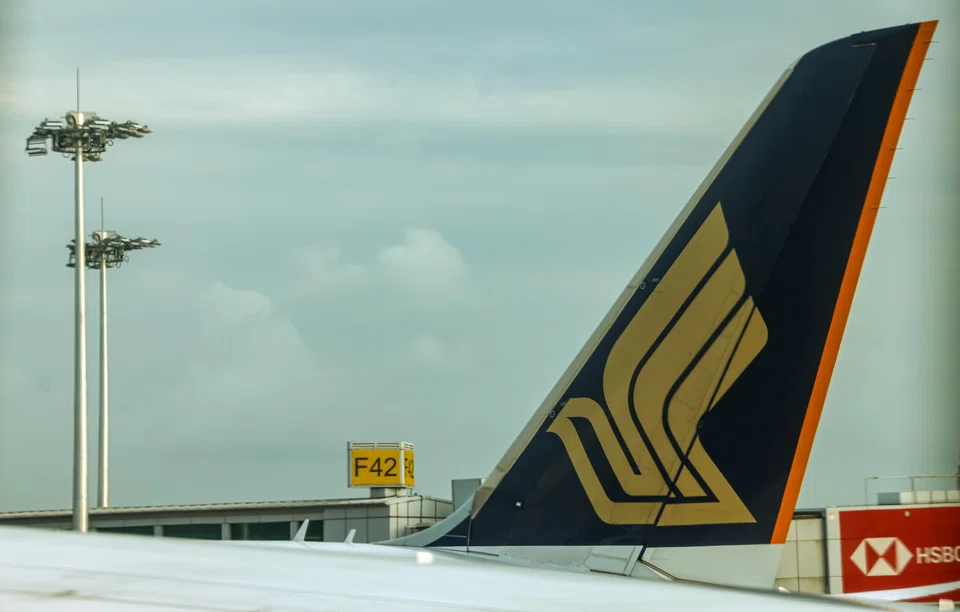
[SINGAPORE] Industry watchers view favourably the recently announced commercial cooperation of Singapore Airlines (SIA) with its 25.1 per cent-owned associate Air India that will allow the two airlines to improve connectivity between Singapore and India.
SIA’s brand premium is unlikely to be diluted as a result of the tie-up as both carriers continue to maintain their respective brands.
Lorraine Tan, director of Asian equity research at Morningstar, said it probably makes sense for SIA to be involved in the raising of Air India’s reputation, given the investment that SIA has sunk in.
The Singapore group paid about S$322.1 million in addition to its 49 per cent stake in Vistara for the shareholding in the merged Vistara-Air India, and has agreed to contribute its share of any funding previously provided by partner Tata Sons prior to the completion of the merger, up to S$880 million.
DBS analyst Tabitha Foo commented that as SIA’s international network is far more extensive compared to Air India, this cooperation could thus translate into feeder traffic for the Singapore carrier’s long-haul routes from Indian cities that it currently does not cover.
Hashim Osman Jamsheed, Phillip Securities Research analyst, noted that SIA’s equity stake in Air India was driven by its objective of gaining a foothold in the Indian aviation market.
“We see this new commercial agreement as the next step, as it enables SIA to realise greater operational synergies due to the increased connectivity and cross-participation initiatives,” he said.
He added that the cooperation will also mean shared risks and rewards inherent in a joint business agreement. This, in his view, is an indication of SIA’s conviction in Air India’s transformation plan.
Rico Merkert, a professor of transport at the University of Sydney, said the potential of India – with its population of more than 1.4 billion people, of which many are expected to experience higher disposable income – is just too large to ignore for a hub carrier such as SIA.
He expects the tie-up be favourable for the Singapore carrier. “If you see it as an advanced codeshare agreement that not only allows both airlines to coordinate and cross-promote their flight operations and networks but to expand their corporate and frequent flyer programmes, it has to leverage efficiencies and grow yields and ultimately profits for SIA.”
SIA and Air India currently code-share on 61 points in 20 countries and territories. This follows the October 2024 expansion of their code-share partnership, which added 51 international and domestic destinations in both networks.
After regulatory approvals and potential definitive joint business agreements, SIA and Air India aim to expand their product and service offerings.
Other goals include enabling connections with more route options and allowing customers to book flights across both airlines under a single journey.
The airlines also intend to have a “closer coordination of flight schedules… and greater cross-participation” in their corporate travel programmes. The airlines will explore plans to enhance privileges beyond the current Star Alliance benefits for members of Air India’s Maharaja Club and SIA’s KrisFlyer frequent flyer programmes.
Risk of dilution to SIA’s branding is limited
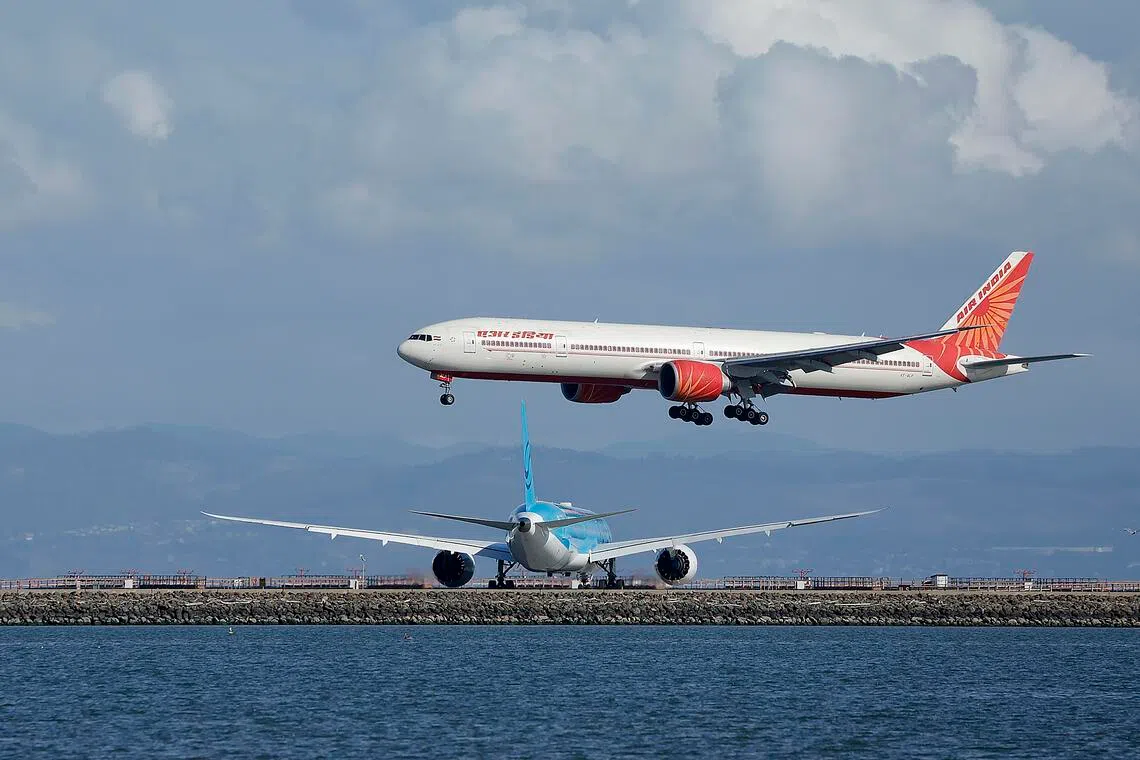
Tan of Morningstar believes that the cooperation will not diminish SIA’s brand premium although Air India is grappling with a host of problems, including tarnished reputation after a crash that killed hundreds in 2024 and poor compliance culture that led to a plane fly without safety permit.
The two carriers maintain separate brands, with SIA’s customers being aware that the two airlines are run independently, she explained. SIA’s brand premium will still be driven by its service, cabin features and young fleet.
Foo said SIA-Air India cooperation is focused on incremental network and revenue benefits through improved connectivity and customer choice, rather than brand integration.
Commercial cooperation between the two airlines will deepen but the DBS analyst expects the two airlines to maintain distinct brand identities, limiting the risk of dilution to SIA’s positioning.
Prof Merkert commented that Air India is making attempts to improve safety, as it is currently modernising its fleet with more than 500 aircraft on order.
Tan added: “Air India certainly has a challenged history but we believe that the Tata group’s ownership and stewardship, alongside SIA’s operational track record, should provide the airline with the best management chance to improve its future performance.
“We note that this will take time as the fleet is being renewed and operational processes may need to be overhauled while the cultural shift from a state-owned to a private sector entity may also need to be digested.”
On Monday, SIA shares closed at S$6.37, up 0.3 per cent or S$0.02 – compared with a 0.3 per cent decline in the blue-chip barometer Straits Times Index.