

Mercedes-Benz aims for more luxury in model line-up
 Add BT as a preferred source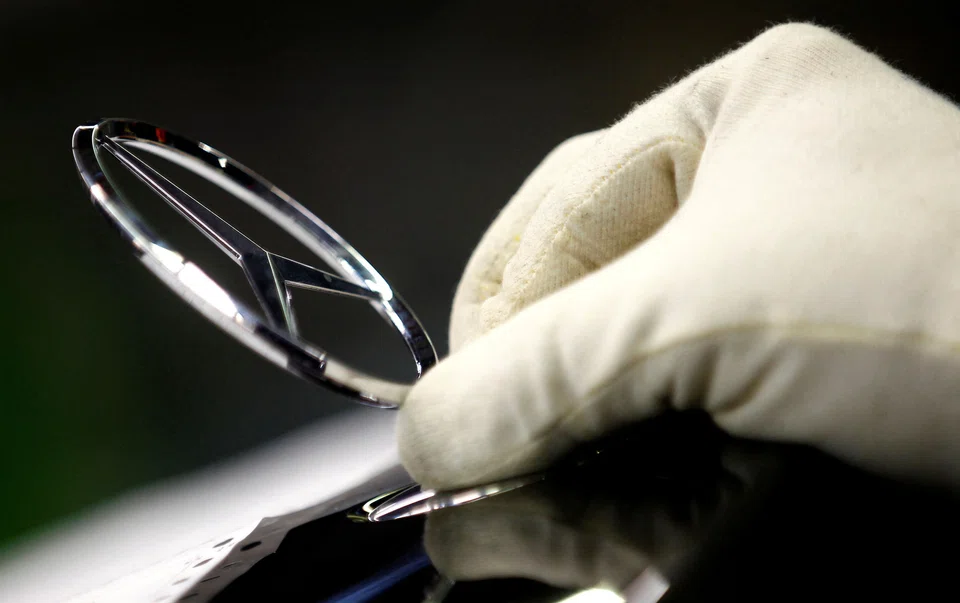
DeeperDive is a beta AI feature. Refer to full articles for the facts.
MERCEDES-BENZ is honing its identity as a luxury company, its chief technology officer (CTO) said on Thursday (May 19), cutting out entry-level models and releasing limited collectibles.
The premium carmaker is reducing the number of models in its entry level segment to 4 from 7, and will bring up its lowest segment by a minimum of “half a class”, CTO Markus Schaefer said in an interview at the carmaker’s strategy day.
The carmaker is also focusing on simplifying some of its production processes, saving costs and making the company less vulnerable to supply chain bottlenecks for specific parts.
“We will reduce complexity in many areas ... that dramatically changes logistics,” Schaefer said, with factories set up differently in different regions depending on the most preferred types of vehicles in each market.
Customers will be offered pre-set packages when configuring their cars based on regional preferences, according to a statement released on Thursday, simplifying production in comparison to build-to-order models.
Mercedes-Benz announced a move to put 75 per cent of investment into top-end vehicles and its highest-selling segment of C-Class and E-Class models. It projected a 60 per cent rise in the sales share of its top-end cars to 17-18 per cent by 2026 from 2019 levels.
Navigate Asia in
a new global order
Get the insights delivered to your inbox.
“The willingness to pay is there,” Schaefer said. “Many, many customers are ready to pay the extra price for luxury.”
Bringing down the cost of batteries for electric cars remains a top priority, Schaefer said.
“I’d like to halve the size and weight of batteries in cars,” Schaefer said, citing energy efficiency and cost.
Taking more control of the supply chain through direct supply contracts and being more strategic about material choice would also help lower costs, he said, predicting that cobalt, a common battery material, was likely to be phased out of production.
Rising prices for cobalt, sourced mostly from Democratic Republic of Congo, are pushing battery makers to explore cobalt-free technologies.
Mercedes-Benz earlier this week announced it was the first automotive customer of battery startup Sila Nanotechnologies’ silicon anode chemistry. REUTERS
Decoding Asia newsletter: your guide to navigating Asia in a new global order. Sign up here to get Decoding Asia newsletter. Delivered to your inbox. Free.
Share with us your feedback on BT's products and services
TRENDING NOW
Air India asks Tata, Singapore Airlines for funds after US$2.4 billion loss

Beijing’s calculated silence on the Iran war

China pips the US if Asean is forced to choose, but analysts warn against reading it like a sports result

Richard Eu on how core values, customers keep Singapore’s TCM chain Eu Yan Sang relevant

