

Mercedes seeks to regain China luxury lead with new S-Class
Germany’s automakers have already lost the battle in the Asian nation on mass-market EVs
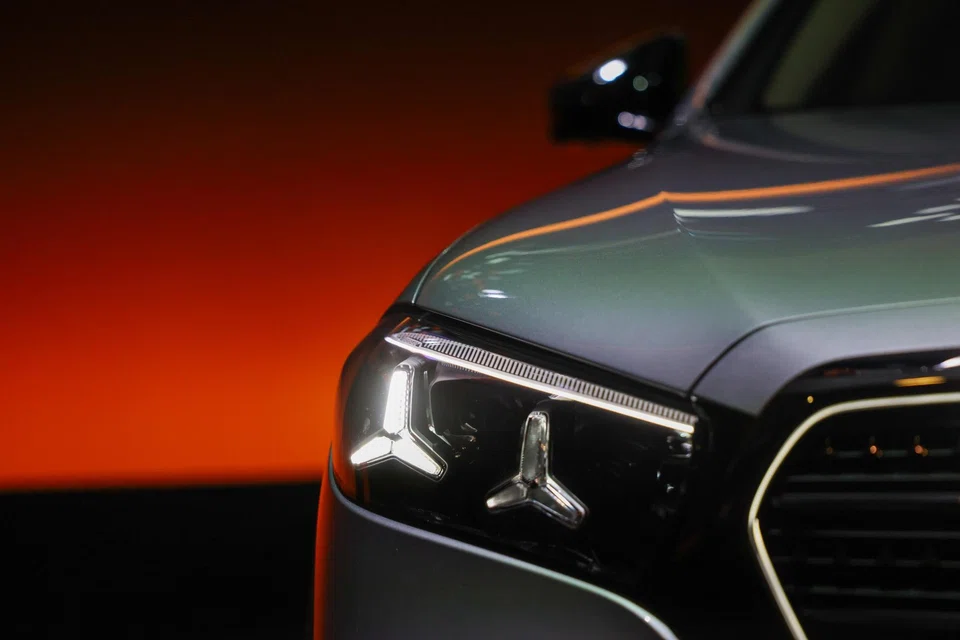
[FRANKFURT] Mercedes-Benz Group unwrapped a refreshed S-Class, pitching its flagship sedan as a rolling, hyper-connected boardroom to reassert its luxury edge amid intensifying competition from Chinese rivals.
Priced from around 121,000 euros (S$182,166), the updated model combines a new V8 engine with expansive in-car entertainment and more than 150 exterior paint options. The vehicle is meant to help Mercedes halt a sales slump in China, the largest market for the S-Class, where local manufacturers are offering premium cars at lower prices.
“This is no normal mid-cycle update,” chief executive officer Ola Kallenius said on Thursday (Jan 29) at the launch event in Stuttgart, Germany. “What we are doing here for a so-called refresh is actually a revolution.”
Dating back to Germany’s postwar economic boom, the S-Class has long anchored Mercedes’ claims as an automotive technology leader. Innovations first introduced on the model range, including driver airbags, later became industry standards, justifying the premium price.
That reputation is being challenged by models including Huawei Technologies’ Maextro S800. Introduced last year, the ultra-luxury saloon has already surged past the S-Class and similarly priced vehicles such as Porsche’s Panamera and BMW’s 7-Series in China’s recent luxury sales rankings. The car comes with crystal seat adjustment buttons and doors that open automatically but starts at just 708,000 yuan (S$129,338), undercutting its Western rivals.
The development highlights how Chinese buyers are increasingly willing to opt for domestic models even at the top end of the market, prioritising technology and comfort over brand heritage. Germany’s automakers have already lost the battle in China on mass-market electric vehicles (EVs), and now risk losing out also on higher-margin models.
Western brands long dominated the Chinese market for premium cars, generating healthy profits as the population became richer. But the emergence of fast-moving local automakers such as Huawei and BYD and the country’s rapid shift to EVs has upended the competitive landscape. A real estate slowdown has weighed on overall luxury spending, contributing to a slump in sales for Mercedes, BMW and Volkswagen’s Porsche.
“The entire premium and luxury market in China has collapsed by around 80 per cent in a short period of time, and we do not expect a recovery,” Volkswagen CEO Oliver Blume, who until last month also ran Porsche, told reporters this week in Berlin.
While Porsche is shrinking its dealer footprint in China, Mercedes is not giving up. As part of its fightback, the brand is trying to show it has not fallen behind on digital technology.

The updated S-Class introduces improved voice control and adds artificial intelligence features from companies including OpenAI, Microsoft and Google. Rear-seat passengers – the S-Class has long been a favourite of chauffeured politicians and chieftains of industry – get two 13.1-inch screens for videoconferencing as well as remote controls to steer anything from window blinds to massage seats.
The relaunch comes as pressure mounts on Mercedes’ flagship to help deliver on the CEO’s strategy to push the brand further upmarket.
The EQS, the electric counterpart to the S-Class, failed to gain traction with buyers, while demand has also disappointed for the plug-in hybrid version of the G-Class off-roader.
After abandoning V8 engines in parts of its AMG lineup, Mercedes has also lost market share to BMW’s M-performance division, prompting a rethink and plans to return to a next-generation hybrid V8.
Against that backdrop, the updated S-Class leans back into combustion power, offering new eight- and six-cylinder petrol and diesel engines alongside a plug-in hybrid version. Mercedes plans to introduce the next all-electric S-Class later this decade. BLOOMBERG
Decoding Asia newsletter: your guide to navigating Asia in a new global order. Sign up here to get Decoding Asia newsletter. Delivered to your inbox. Free.
Share with us your feedback on BT's products and services
TRENDING NOW

Government to bring forward raising of retirement age, give employers more financial support to create flexi-load jobs
If Europe goes to war, the fallout will be felt in East Asia

Indonesia stocks suffer worst plunge in nearly 30 years as MSCI proposes standalone status

Vietnam’s northern provinces, not Hanoi or Ho Chi Minh City, are powering near 10% GDP growth

