Money launderers likely to buy used cars, parallel imports

MONEY launderers are unlikely to buy new cars from authorised dealerships (ADs) due to existing anti-money laundering (AML) measures, and may instead look to used or parallel import car sales from smaller outfits.
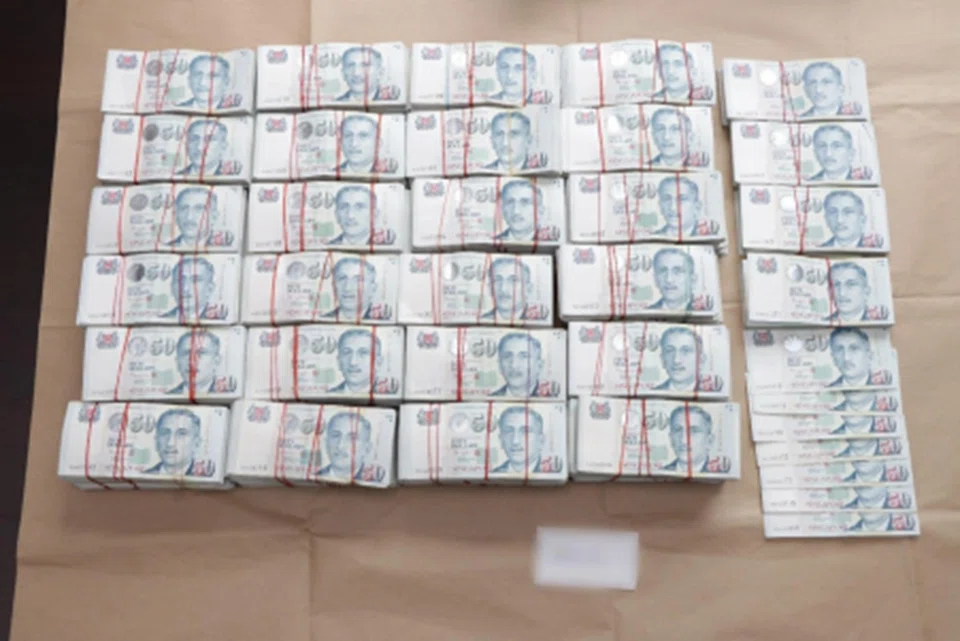
The role of cars in money laundering has come under the spotlight after a recent billion-dollar bust, in which the confiscated items included some 50 vehicles.
Major automotive authorised dealership groups all told The Business Times that they have AML measures in place. These are Inchcape Singapore, Jardine Cycle & Carriage , Eurokars Group, Wearnes Automotive and Komoco Holdings, which together represent more than 30 car brands and account for the majority of new car sales in Singapore.
Specific measures vary across the groups and their internal business units, but generally include guidelines on cash transactions.
Some will not accept cash payments at all while others have a limit of no more than S$30,000.
“Eurokars Group has internal policies in place to mitigate risk from illicit money activities. For all the brands under the group, we strictly do not accept cash or cash cheque and all transactions must be via the banking system,” said a spokesperson.
Inchcape Singapore, the dealer for Hino, Lexus, Suzuki and Toyota, does not accept cash for car sales either.
AML measures are ‘good business sense’
Industry experts told The Business Times that large amounts of cash are not accepted as their origin is difficult to trace, while in contrast, transfers made through the banking system would presumably have been vetted by the financial institutions involved.
“If someone plonks down a million bucks in a duffel bag for a new car, that’s gotta be a big red flag,” said Stefanie Yuen-Thio, joint managing partner at TSMP Law, adding that AML measures are simply “good business sense”.
She noted that if anyone – in the course of business dealings – has reason to believe that any property is from proceeds of criminal activity or is going to be used for criminal activity, then they have an obligation to report it.
However, because AML measures and reporting are voluntary for car dealers, the existence of such measures is not uniform across the sector.
“Unlike financial institutions and certain designated businesses which have AML requirements imposed by their respective regulatory authorities, car dealers are not subject to specific AML measures,” said the Eurokars Group spokesperson.
Parallel imports or used car sales by smaller outfits – which are subject to less scrutiny – are the most likely vehicle for money laundering to occur in the car trade, said industry players.
Granted, some do take AML measures. At least one major parallel importer, Vincar, has a zero-cash policy.
But most smaller dealerships would not have AML measures.
“If I’m a small dealership with say, five people employed, we don’t have the time to do these things, and I would say my bottom line is the most important thing,” said a pre-owned sales and fleet manager who previously owned a used car dealership.
The manager noted significant scope for money laundering in the used car segment.
For instance, used cars can be bought as a group, then sold off in batches.
Even if the sale of used cars are funded by approved loans, those loans could be settled earlier in cash, with kickbacks given to the borrower.
To reduce suspicion, money launderers could also engage someone to subcontract the laundering to other dealers for a commission, which ranges from 5 per cent to 20 per cent.
Using less expensive cars to launder money is a safer route, but more time-consuming, said the manager of a parallel import dealership, adding that this may be why luxury cars are involved in the recent billion-dollar case. Those cars are from luxury brands such as Bentley, Ferrari, Mercedes-Benz, and Rolls-Royce.
The value of a luxury car can be inflated easily – for example, with a special edition model or additional luxury equipment – and their extremely high prices in Singapore provide more latitude to fix prices as needed, added the manager.
Further latitude exists for parallel imports. As these do not come from their original manufacturer, dealers have more leeway to manipulate the open market value and the buying or selling price.
Luxury cars are a possible route for laundering, said TSMP’s Yuen-Thio, because “any asset whose value is skyrocketing is potentially a good money laundering vessel, and because the price of luxury goods is determined by demand rather than an objective valuation metric”.
“I think this recent money laundering bust would be a wake-up call for all businesses to be more vigilant,” she added.
The pre-owned sales and fleet manager added that not all the cars in possession of the accused are parallel imports or used cars, as some of those cars were purchased from ADs with clean money.
“Remember, their aim is not to make money, but to wash it and move it through multiple transactions to make it cleaner. And they don’t mind losing some of it to achieve that,” they said.
TRENDING NOW
Grab CEO’s wife Chloe Tong on life with Anthony Tan and finding her purpose
He built the Vingroup empire. Now South-east Asia’s richest man is handing some key roles to his sons
HDB reviewing ‘jumbo’ flat scheme after Telok Blangah unit listed for sale at S$2.18m
What role can Japan play in Asean’s future?