

MPA's first woman CEO wants to change perception of sector
Singapore
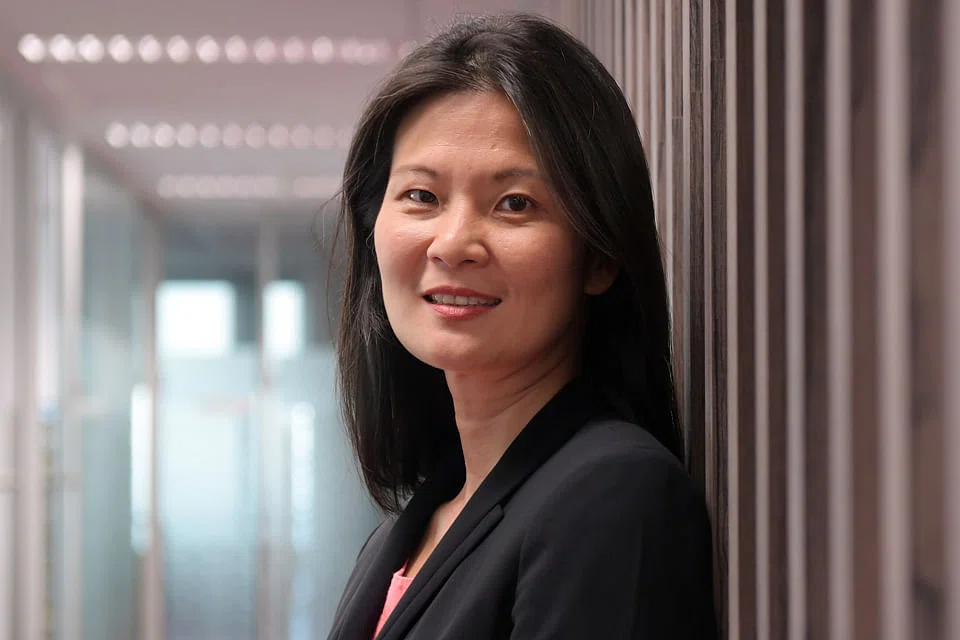
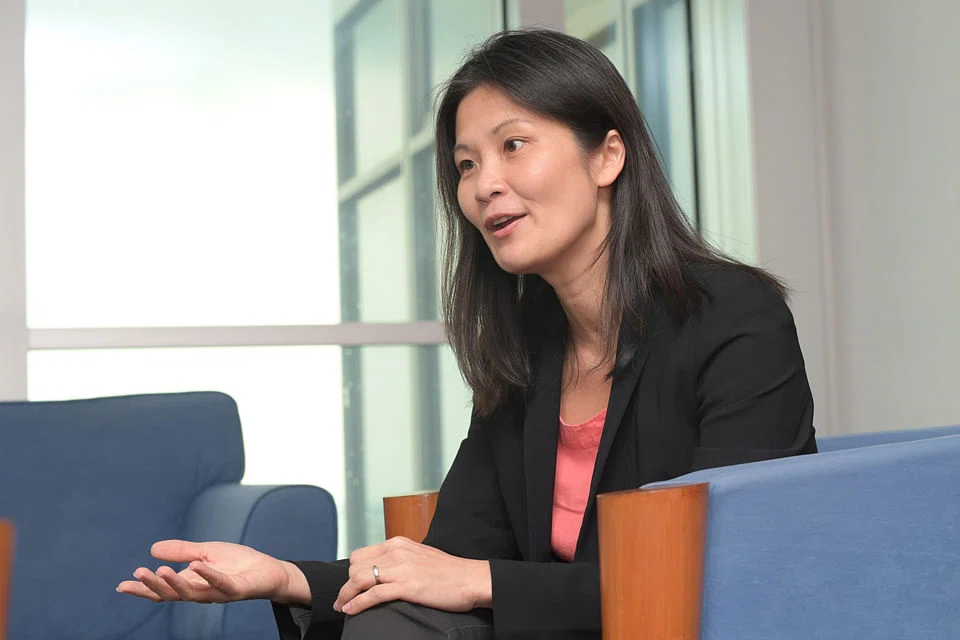
HER public relations handlers present her as the first woman chief executive of the Maritime and Port Authority of Singapore (MPA). What they ought to highlight is that Quah Ley Hoon is in charge of regulating and promoting a sector that's not only dominated by men, but also shunned by some men who find it too tough.
The maritime sector is seen as an industry where workers do heavy-lifting, blue-collar jobs in ports and on ships and spend months in rough seas. But Ms Quah, a 42-year-old mother of three kids, says such a perception of the industry is outdated.
The new MPA chief, who was appointed the statutory board's chief executive on January 1, believes the public largely does not have a clue of the significance of the maritime sector to Singapore.
"That's one thing that struck me during my first three months in MPA," said Ms Quah, a high-flying officer in the government's elite Administrative Service who had held leadership positions in the National Population Secretariat under the Prime Minister's Office, in the Ministry of Finance and in MediaCorp.
"Do you realise that our maritime sector contributes about 7.0 per cent to our GDP (gross domestic product) and has 5,000 international shipping groups and global maritime service providers employing more than 170,000 people?"
She added: "Actually, 90 per cent of trade is by sea. So objects you see around you, there's a high chance that it has come by sea. If maritime or sea trade is to lag or fall behind, the impact on the world is very serious."
The United Nations Conference on Trade and Development (UNCTAD) has tipped global sea-bound trade to grow by an average 3.8 per cent every year till 2023. This means the maritime industry is expected to continue to expand, which is good news for Singapore.
Ms Quah points out that Singapore was already a seaport when Stamford Raffles stepped onto its shores. Today, she adds, it still plays a key role in promoting Singapore's trade and providing its people a livelihood.
"When I give people these statistics, they're like, 'Really meh?'", Ms Quah says. "People think of seafaring as, 'Wah, it's really out there'."
The maritime industry is no longer what it was - where only men can do the jobs. "In the past, it's tough (for example) to be crane operators," she said. "You had to climb up the crane, operate the crane. Now you operate them from the control station. If you go into PSA (today), you'll see many female operators. With automation and digitisation, we will attract more females into the sector."
The industry now even offers careers in law, finance, insurance and accountancy. It requires talent in these areas - apart from those directly supporting it, like seafaring and port operations - to provide a complete eco system that helps the MPA to fulfill its mission "to develop and promote Singapore as a premier global hub port and an international maritime centre".
To maintain Singapore as an international maritime centre, Ms Quah said MPA must woo as many global maritime players as possible and anchor them in Singapore. So far it has attracted over 5,000 of them to base here. The number represents one of the world's highest concentration of shipping firms and maritime service providers in one place.
She said a big part of the carrot Singapore is dangling to hook multinational shipping firms to set up shop here is the talent it can offer to them, along with a "solid" eco system.
Drawing talent into the industry is a big challenge. Skilled workers are scarce in Singapore and the maritime industry has an image problem, one that discourages people to work there. Still, it's a big obstacle MPA must tackle if it wants to compete with other maritime hubs such as Shanghai, Shenzhen, Guangzhou, Busan and Hong Kong.
Currently, Shanghai is the top container port in the world, ahead of Singapore which is ranked second. But Singapore is the world's busiest port in terms of gross tonnage, the top transhipment container port, a top bunkering port and a major marine and offshore engineering centre.
"If we want our sector to be ahead of the curve, we must attract talent," Ms Quah said.
The Sea Transport Industry Transformation Map rolled out last year set a goal of creating more than 5,000 jobs in the industry by 2025, along with growing its value-add by S$4.5 billion by then.
The new MPA chief wants more of the jobs to go to women.
"When I joined MPA, I didn't think it makes a difference at all whether you're male or female," she said. "In the end, it's the leadership (quality that counts)."
Ms Quah is not bothered by the male-dominated environment in the maritime sector. "Actually I'm not conscious of it. In college (she went to Hwa Chong Junior College), I was the only girl in the all-male trekking team (called Gunung Tahan Mountain Trekking) and I grew up with brothers and cousins, many who are males."
But after meeting with the women in the industry, Ms Quah appears to have an awakening.
"They tell me, 'Wah, finally a woman CEO!' I seem to be living on a certain expectation that they have and I think they are telling me that I could do something to encourage more females to join the industry."
With only 2.0 per cent of the seafaring jobs and one-third of the onshore positions in the industry held by women, Ms Quah said "definitely there's scope to increase more female participation" in it.
"Having lived through the perspective of a female and a working mother with children, I could empathise more (with the women) and think from their perspective and to address the obstacles and challenges they face," she said.
Talent makes up one of the three pillars that underpin Singapore's standing as a leading global maritime hub. The other two are connectivity and innovation.
While MPA continues to build connectivity to maritime clusters overseas to make the most of the extensive network effects of such linkages, Ms Quah said it is also investing in new port capabilities to capitalise on new technologies to improve productivity and efficiency.
Unlike other industries, she said technological disruptions are only starting to appear in the maritime sector. "Therefore what we really need to do, from MPA's perspective, is to organise ourself and the industry to continue to stay ahead of the game ."
The MPA-PSA Port Technology Research and Development Programme provides MPA and PSA the resources to step up research and development and capability development in digitisation, connected community systems and automation and robotics.
The MPA Living Lab offers technology developers and industry partners a rich maritime data platform and a real operating environment at the port to co-develop and pilot innovative solutions.
But MPA's biggest move is the Next Generation Port 2030 initiative, which will see the development of the Tuas Terminal. The terminal will be the world's largest single mega container terminal.






