New lock-in rule for private-hire cars could moderate COE demand
Move will encourage fleet owners to be more cautious in bidding and reduce speculation

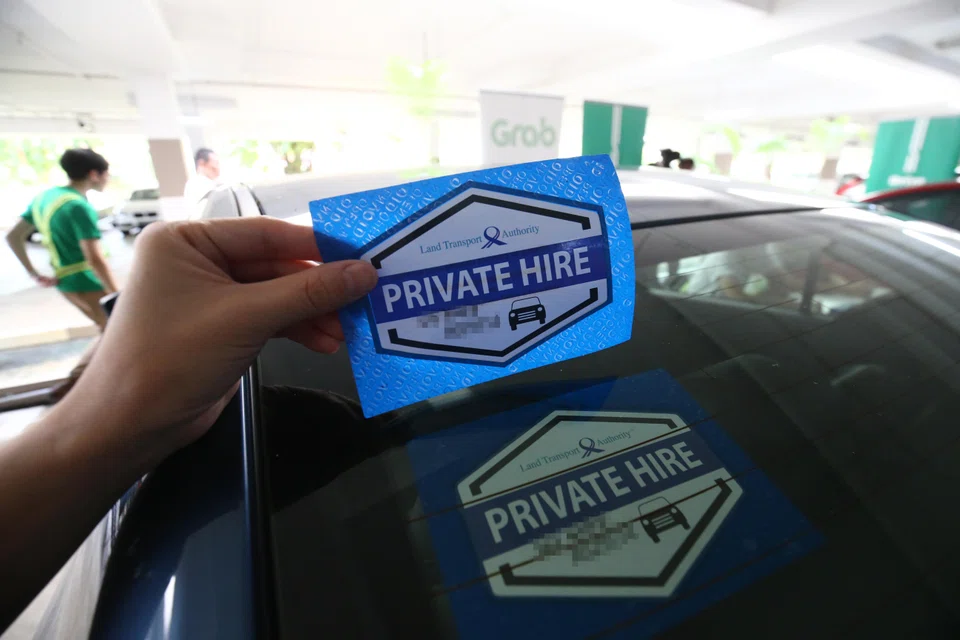
A NEW rule on private-hire car (PHC) ownership could moderate demand for Certificates of Entitlement (COEs), by making major PHC fleets more circumspect in bidding and reducing speculation by smaller players.
The new rule, which took effect on Wednesday (Feb 19), imposes a three-year lock-in period for PHCs newly acquired by businesses. In this time, these vehicles cannot be converted to regular passenger cars, nor sold to individuals.
This ensures that businesses which acquire PHCs do so “predominantly for the purpose of leasing them to drivers providing ride-hail services”, the Land Transport Authority (LTA) said.
It also “prevents the premature conversion of such PHCs out of the chauffeured PHC scheme, which will affect the supply of vehicles available for point-to-point services”.
While LTA did not mention COE premiums, observers said that the move would change how companies bid for the certificates.
Buy, not sell
Observers have cited Singapore’s rising PHC population as a contributing factor to high COE premiums.
In January 2025, the chauffeured PHC population reached a record 59,371, with industry sources estimating that about 80 per cent were owned by companies.
This growth has driven the rise in Singapore’s overall total car population in the last few years, more than making up for a fall in the private passenger car population.
Jonathan Koh, economist and foreign exchange analyst for Asia at Standard Chartered, said PHC companies, rather than private PHC owners, led the increase.
But now, these businesses may be more cautious about bidding for COEs as the new rule means they “cannot just sell their cars to individuals if there is no demand for their rental vehicles”.
“They basically have to take the risk of holding the potentially dormant asset on their balance sheet,” he said.
With this demand easing, so might premiums for COEs. Prices rose steadily from 2018 to a peak in late 2023, and have now cooled to levels similar to those in 2022.
Neo Nam Heng, adviser to the Automobile Importer & Exporter Association of Singapore, said: “I feel this is basically a measure for cooling the COE market, as it makes PHC fleet owners think more carefully about buying new cars.”
Second-hand profit
Before the new rule, offloading excess cars was not only easy, but potentially profitable.
Typically, when COE prices rise, second-hand cars are in greater demand as affordable alternatives to new cars – and their prices also increase.
This may prompt PHC fleet owners to sell their cars on the second-hand market. Industry sources told The Business Times that most fleet owners have probably done so in recent years.
The new rule should reduce the scope for such flipping.
Said Neo: “The takeaway from this ruling is: If you want to do this business (of PHC rentals), do it properly, for the long term; plan for capacity carefully, and do not simply sell the cars for profit when the COE is high.”
But Walter Theseira, associate professor of economics at the Singapore University of Social Sciences, noted that this cooling effect is limited in the current market as COE prices are expected to fall.
The car market is emerging from a COE supply trough, with quotas expected to rise until a peak in 2026 and 2027.
The new regulation’s effect on bidding behaviour may become more pronounced only after the COE supply has peaked, the academic added.
Keep focus
The ruling could also help lower COE price pressures by discouraging transient PHC fleets from acquiring vehicles for short-term gain.
Such fleets tend to be maintained by small companies with a range of businesses – which can therefore give up their PHCs for profit if needed, said automotive consultant Say Kwee Neng.
For them, a PHC fleet is “merely another avenue of their car operations that they can exploit to maximise their profits”, he added. “It’s not their main business or concern.”
Chiam Soon Chian, chief operating officer of dedicated PHC fleet owner Lumens, agreed that the new rule would reduce the number of “transient PHC suppliers in the market and promote a sustainable and stable PHC population”.
It will also reduce COE demand from motor traders and companies that acquire cars to lease as PHCs for a year or two before selling them, he added.
In contrast, the rule will not affect Lumens’ fleet acquisition or renewal strategy, as the company has “always been careful” in COE bidding due to high vehicle costs, he said.
Similarly, a Grab spokesperson said that there would be little effect on the ride-hail company’s rental arm, GrabRentals, as it “does not transfer vehicles to individuals”.