

New programme to develop advanced manufacturing applications, services for maritime sector
THE Maritime and Port Authority of Singapore (MPA) and the National Additive Manufacturing Innovation Cluster (Namic) have inked a memorandum of understanding to develop maritime applications related to digitalisation and advanced manufacturing in the private sector.
The partnership will help boost development of additive manufacturing (AM) - also commonly known as 3D printing - applications and services for the local maritime industry, and grow Singapore's position as a hub for digital manufacturing, testing and certification of advanced manufacturing technologies.
Namic is a national programme initiative in Singapore, led by NTUitive, the Innovation and Enterprise Company of Nanyang Technological University, to translate 3D printing research into commercial applications.
Separately, to develop skills in AM, Namic and SkillsFuture Singapore will partner schools like Nanyang and Singapore Polytechnic, as well as training providers TUM Asia and SIMTech to develop customised courses under the SkillsFuture series and programmes under SkillsFuture ELP.
A certification framework will follow thereafter, to "professionalise and recognise" the industry workforce.
Kenneth Lim, director of research, technology and industry development at MPA, said Singapore is well-poised to leverage its research and development capabilities and serve as a testbed for 3D printing technology for maritime applications.
"Developing this technological capability could create positive spinoffs, translating into efficiency and productivity gains for the wider shipping community," he said.
Share with us your feedback on BT's products and services
TRENDING NOW

Simba admits exceeding spectrum limits amid failed M1 deal; full-year profits surge 277%

He built the Vingroup empire. Now South-east Asia’s richest man is handing some key roles to his sons
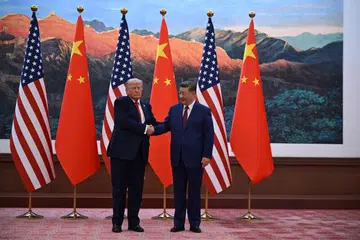
What’s on the agenda when Xi and Trump meet in Washington

Ex-execs of CW Group, Allied Tech charged with offences linked to lawyer’s S$76 million misappropriation

