Nio rises on cost cuts despite falling behind its sales goals
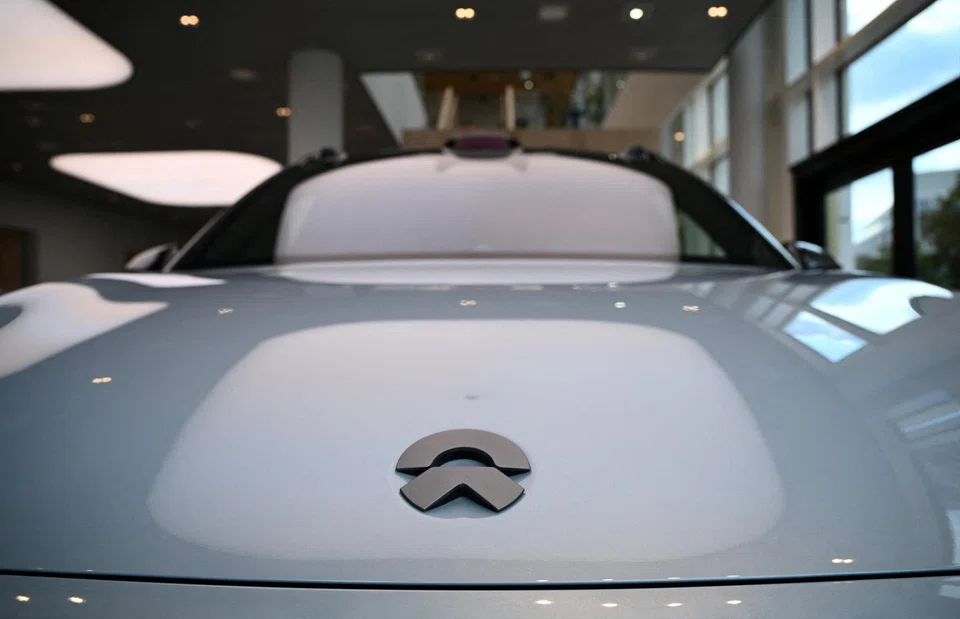
NIO reported a quarterly loss and an outlook on revenue and electric-vehicle (EV) deliveries that missed estimates, while the company is working on further cost-cutting and sales-boosting measures.
The Chinese EV maker now projects revenue of up to 16.7 billion yuan (S$3.13 billion) in the three months till December, short of the 21.4 billion yuan average estimate from analysts. It expects to sell as many as 49,000 vehicles in the quarter – well below analysts’ average forecast of 59,426.
Once considered one of the brightest rising stars in China’s EV market, Nio has yet to post a profit and is falling behind its targets. It had a goal of shipping 250,000 EVs this year, but till November it had only shipped 142,026.
“We have identified opportunities to optimise our organisation, reduce costs and enhance efficiency,” chief executive officer William Li said. He added that management is “confident in Nio’s long-term competitiveness”.
The EV manufacturer will cut or postpone projects that cannot improve the company’s financial performance in three years, Li said in an earnings call on Tuesday (Dec 5). For example, it will continue in-house development on cells, battery materials and packs, but will outsource production. Together with recent headcount cuts, Nio is looking to reduce expenses by around two billion yuan in 2024.
The company cut 10 per cent of its workforce in November and has considered spinning off non-core businesses to reduce costs, even after an Abu Dhabi government-backed investment fund injected nearly US$740 million in June in return for a 7 per cent stake. Nio also sold US$1 billion of convertible bonds in September, and Bloomberg News reported it was considering raising a further US$3 billion from investors.
In addition to its long-term investment for core technologies, Nio will also continue to develop its sales and service networks, which is an area where the company is adding staff. Currently, it has around 5,700 workers in sales, with more than 3,000 of these being new hires.
Nio’s New York-listed shares rose 3.7 per cent at 10.34 am after the company executives detailed the cost reduction plans. The stock has declined more than 20 per cent this year, trailing the performance of rival Chinese EV maker Xpeng, which has rallied 63 per cent, and Li Auto, up 76 per cent. Nio fell 69 per cent in 2022 and 35 per cent in 2021 after surging more than 1,000 per cent in 2020.
Nio, founded in 2014, has splashy showrooms with exclusive lounge-like spaces called Nio Houses where EV owners get complimentary beverages and can join social events. Other membership-like benefits include free battery-swapping, charging and roadside assistance.

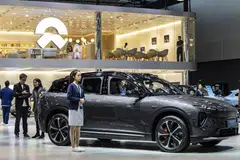
The Shanghai-based company is striking deals with rivals to boost revenue. It recently signed agreements with Chongqing Changan Automobile and Geely Automobile Holdings to partner on battery-swapping technology. The company will not rule out the possibility to separately fund or list its power swap business, Li said.
Third-quarter revenue rose 47 per cent from a year earlier to 19.1 billion yuan. Vehicle margin, which measures the profitability of its most recent car sales, returned to double digits in this quarter. The company sees that measure improving to 15 per cent in the fourth quarter and as much as 18 per cent in 2024, according to the earnings call.
Nio also said it will pay 3.2 billion yuan to acquire manufacturing equipment and assets from Anhui Jianghuai Automobile Group, which has helped produce the company’s EVs. Nio has just been approved by the government to make automobiles independently. The overall manufacturing costs will be reduced by around 10 per cent if Nio takes production fully in-house, Li said. BLOOMBERG
Decoding Asia newsletter: your guide to navigating Asia in a new global order. Sign up here to get Decoding Asia newsletter. Delivered to your inbox. Free.
Share with us your feedback on BT's products and services