

Nvidia, Volvo Cars hasten data-processing power race
 Add BT as a preferred source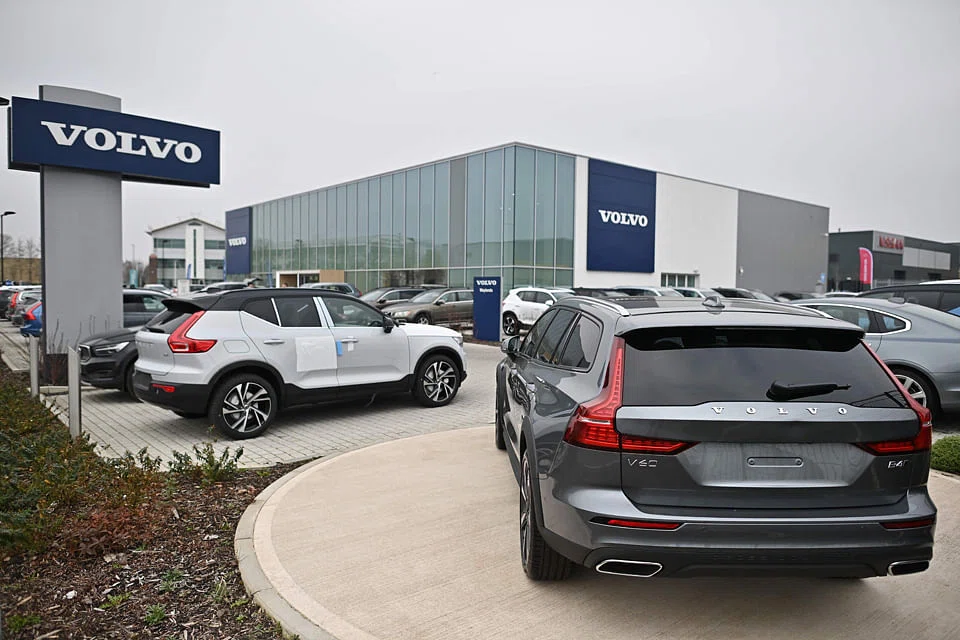
DeeperDive is a beta AI feature. Refer to full articles for the facts.
Detroit
VOLVO Cars said on March 12 it will use a new generation of high-powered chips from Nvidia to enable more autonomous driving functions in future vehicles, starting next year.
Volvo is among a crowd of new and established automakers putting digital processing power ahead of horsepower as they try to catch up with Tesla.
Tesla, the world's most valuable automaker, has taken the lead in software-driven features and functional capability in part by equipping its cars and SUVs with powerful, and expensive, onboard computers that can manage complex tasks such as automated driving, and be upgraded over the air.
For Nvidia, the Volvo agreement, a similar deal with electric vehicle startup Faraday Future, and other agreements expected in the coming weeks, mark a reboot of growth for the gaming and data centre processor company's automotive business.
"Nvidia's pipeline of automotive orders has grown into the many billions of dollars," Danny Shapiro, Nvidia's senior director of automotive, told reporters ahead of the company's GTC21 conference on March 12. Revenue for the company's automotive business fell 23 per cent in 2020.
Navigate Asia in
a new global order
Get the insights delivered to your inbox.
Volvo Cars, owned by China's Geely Holding, said it will use Nvidia's new Drive Orin system, with far more processing power than current Nvidia chips used in Volvo vehicles, starting with a new generation XC90 sport utility due to launch next year.
In a nod to Tesla, Volvo said vehicles equipped with the new Nvidia Orin systems will be "hardware-ready" for autonomous driving features such as a "Highway Pilot" feature that will be activated via a software download "when it is verified to be safe for individual geographic locations and conditions".
Faraday Future said it will offer autonomous driving, parking and a "summon" feature in its FF 91 model due out in 2022. Tesla already offers a "summon" system that allows a car to navigate through a parking lot at the owner's remote command.
Rival automakers including Daimler and several Chinese electric vehicle startups are taking a similar approach.
Nvidia also said on March 12 that it is developing a new onboard computer system on a chip called Atlan that will give a car the computing power currently found in a data center. This chip should be ready for 2025 models, Nvidia said. REUTERS
Decoding Asia newsletter: your guide to navigating Asia in a new global order. Sign up here to get Decoding Asia newsletter. Delivered to your inbox. Free.
Share with us your feedback on BT's products and services
TRENDING NOW

Ministry of Home Affairs Permanent Secretary Pang Kin Keong to retire

Shelving S$5 billion office redevelopment plan proved ‘wise’ as geopolitical risks mount: OCBC chairman

Richard Eu on how core values, customers keep Singapore’s TCM chain Eu Yan Sang relevant

China pips the US if Asean is forced to choose, but analysts warn against reading it like a sports result

