Ocean freight to enjoy better decade than previous one: HSBC

Tay Peck Gek
Singapore
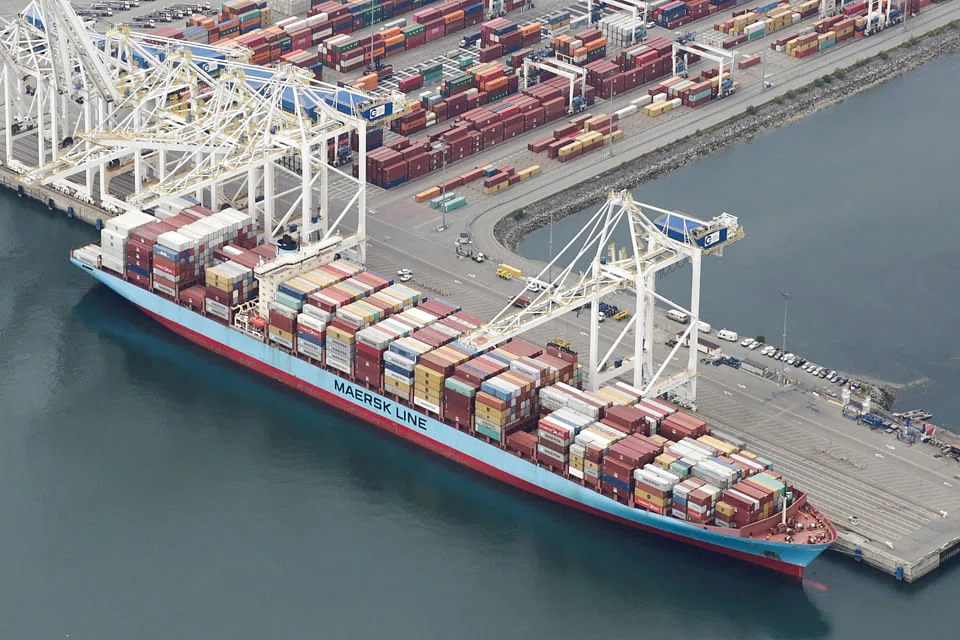
THE decade starting from 2020 will be significantly better than the last 10 years for the ocean freight industry, HSBC global research said in a recently published report.
HSBC attributed the overall losing streak in the previous decade to a downcycle as well as structural rea-sons: excessive new vessel building, price competition and a lack of discipline to manage capacity even though demand growth had been reset to a low single-digit from double-digit growth prior to the financial crisis.
The continuing streak of losses forced the sector to make adjustments that resulted in consolidation, bigger alliances and a shift in focus to profitability rather than market share. For instance, the smaller players had to find a niche or quit loss-making routes, thereby further easing competition in those routes.
Singapore's Pacific International Lines (PIL) was one that made adjustments as it exited the transpacific lane in March.
HSBC said alliances will enable active capacity management compared to slow steaming (deliberate reduction of vessel cruising speed, usually to cut fuel costs) to manage capacity in the past decade.
Supply growth is also likely to be reined in as ageing ships get scrapped but new orders remain muted, given the uncertainty around technology related to upcoming environmental regulations. The order book is now equivalent to only 1.5 years of demand growth and scrapping rate.
In contrast, during 2008-09, the order book peaked at 5.2 years of demand growth and scrapping rate. Vessel orders remained elevated thereafter due to cheap capital at near-zero interest rates.
Lower capex and higher operating cash flow would allow liners to deleverage and reward shareholders after a painful decade, HSBC said.
The current record high spot freight rates set the scene for strong contract rates in the transpacific (from US$1,400 to US$1,500 per 40- foot equivalent unit in 2020 to US$2,000 to US$2,200 in 2021) and Asia-Europe routes (from US$1,100 to US$1,200 per 20-foot equivalent unit in 2020 to about US$2,000 in 2021).
Shipping stocks Maersk, SITC International Holdings, Evergreen Marine and Cosco Shipping Holdings have also rallied by between 64 per cent and 229 per cent in the past six months, on stronger-than-expected demand recovery and record freight rates.
Debt-laden PIL will have benefited from the industry upswing and turnaround as well, Andy Lane of CTI Consultancy said. He had earlier told The Business Times that the liner's strengths are on the intra-Asia and Asia-Africa routes, and its focus should be on these trade lanes.
HSBC noted that intra-Asia routes now make up 31 per cent of global container trade volumes, up from 25 per cent in 2010. With the signing of the Regional Comprehensive Economic Partnership trade pact in November, this trend is expected not only to continue but also to strengthen in this decade.
READ MORE: Ocean freight's rising tide yet to ebb as operators steer capacity