

Oil tankers earn US$1 million a day as Iran war leaves ship shortage
Supersized earnings come as Iran and Ukraine wars mean the world is not making enough fuel to meet demand
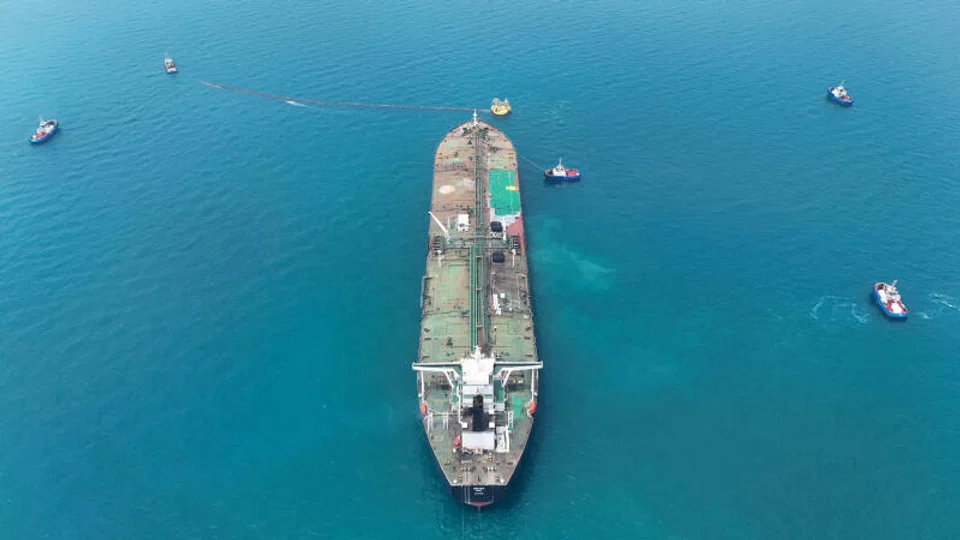
[LONDON/SINGAPORE] The cost of hiring an oil tanker on the industry’s benchmark trade route topped US$1 million a day for the first time, as the Iran war leaves too few ships willing to cross the Strait of Hormuz to collect cargoes.
Vessels hauling oil from inside the Persian Gulf to China were being hired at US$1.035 million a day, data from the Baltic Exchange in London on Monday (Sep 14) showed.
The benchmark route has become less relevant during the war because the main means of exporting Persian Gulf oil has shifted to shuttling barrels through Hormuz for collection just outside by tankers that do not want to navigate the strait.
Even so, transporting crude to China from the Gulf of Oman, which does not require transit through the choke point, costs the equivalent of about US$644,000 a day.
In bad markets in the past, the same ships sometimes barely covered their running costs.
Shipping costs have been propelled higher by a combination of factors, many of which centre around the Iran war and a giant bet by a secretive Korean tycoon.
The supersized earnings also partly reflect oil refining margins that have spiralled out of control because wars in Iran and Ukraine mean world is not making enough fuel to meet demand.
That is spurring refiners to keep purchasing and shipping whatever barrels they can get because it is still profitable for them to process the oil into finished fuels such as diesel and petrol.
At the same time, the number of vessels shuttling cargoes out of the Hormuz is adding time to each tanker journey, sucking up vessel supply.
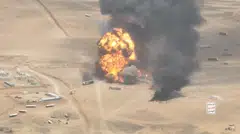

That comes alongside disruptions to Saudi oil flows from Yemen’s Houthi rebels, which have forced some ships to sail a voyage that is 30 days longer around Africa.
Commodity vessel transits at Hormuz totalled four on Monday, down from 10 during the previous day, preliminary data from Kpler showed on Tuesday.
Two dry bulk carriers exited the waterway, including one laden and one ballast vessel, while two oil tankers entered the strait, both in ballast mode.
The figures exclude some vessels that might have crossed the strait with their Automatic Identification System transponders turned off to avoid detection.
Separately, a critical Saudi oil pipeline should be back online “soon”, having closed late last week after coming under attack, US Energy Secretary Chris Wright said Monday.
“I think you’ll see that pipeline running back soon,” Wright said in an interview on Bloomberg Television.
“They’ve been very carefully assessing what the damage was and what needs to be done, and I think more clarity on that will come out very soon.”
The East-West pipeline, a key alternative to the Strait of Hormuz for its oil exports, was closed after coming under drone attacks. The seven-million-barrel-a-day conduit quickly reached full capacity earlier this year after tanker traffic came to a near standstill in Hormuz. BLOOMBERG, REUTERS
Decoding Asia newsletter: your guide to navigating Asia in a new global order. Sign up here to get Decoding Asia newsletter. Delivered to your inbox. Free.
Share with us your feedback on BT's products and services
TRENDING NOW

Government to bring forward raising of retirement age, give employers more financial support to create flexi-load jobs

If Europe goes to war, the fallout will be felt in East Asia

Indonesia stocks suffer worst plunge in nearly 30 years as MSCI proposes standalone status

Vietnam’s northern provinces, not Hanoi or Ho Chi Minh City, are powering near 10% GDP growth

