

One of China's busiest ports jammed by Covid, ship delays
 Add BT as a preferred source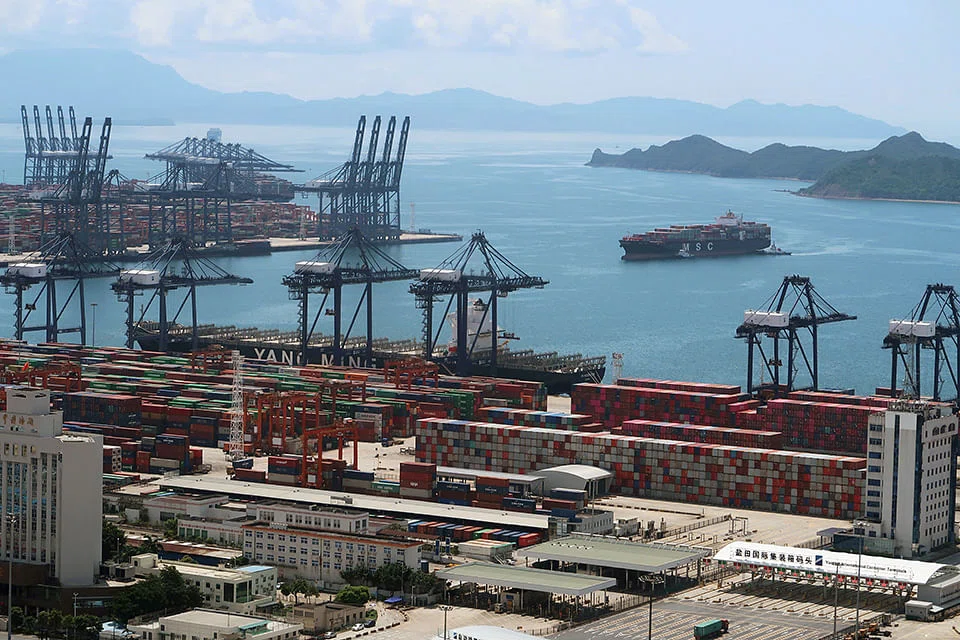
[SHENZHEN] Containers are stacking up at the already backed-up Shenzhen port in China as congestion in the US and Europe ripples back to Asia, delaying ships picking up goods from the manufacturing and technology hub.
Manufacturers in southern China are currently making a last push to ship out goods before the Chinese New Year holiday which starts next week, with the People's Daily reporting that trucked volumes into Shenzhen's Yantian terminal on Jan 13 were about 30 per cent above December levels. Those goods are stacking up as ships coming to pick them up have in turn been delayed by congestion in the US and Europe.
Ships arriving to the Yantian terminal are delayed by an average 7 days and the number of ships arriving from Europe and the US has fallen more than 40 per cent in the past 2 weeks, the terminal said in a customer advisory Wednesday (Jan 19).
That comes on top of the problems Shenzhen port was already facing, with a viral outbreak earlier this month leading to lockdowns of districts, testing of workers and trucking delays at the Yantian and Shekou container terminals.
The congestion has prompted the Yantian terminal to say it will start restricting the acceptance of containers.
To stop operations getting worse, from Friday full containers can only be trucked in 4 days before vessels are due to berth, the operator said.
The numbers of ships at the joint anchorage for Shanghai and Ningbo ports was the lowest since September. That may indicate that ships are skipping the ports there to avoid congestion, although shipping volumes also tend to drop ahead of the holidays.
This week is the peak period to ship goods in and out of China as workers will start to head home for the holiday from next week, according to digital freight forwarder Zencargo. That's followed by a lull in activity before shipping demand picks up in mid-February.
The congested ports and holiday are likely to further slow shipments of goods to the US and elsewhere, adding to already high inflation pressures.
The price of US imports from China was at the highest level for more than 6 years in December 2021.
"Delivery times lengthened significantly in 2021, and January 2022 began with many companies reporting severely constrained output, input costs rising faster than at any point in the decade prior to the pandemic, and Omicron causing fresh uncertainty," Chris Williamson, chief business economist at IHS Markit said in a recent report.
Ports globally are still grappling with congestion as the pandemic heads into its 3rd year, piling further pressure on supply chains affected by shortages of workers as the Omicron variant spreads.
"It' s not just China, all shipping operations have been affected world-wide," said Mark O'Neil, chief executive officer at Columbia Shipmanagement. "It's almost certain that we will see more delays to shipping because Omicron is a short, sharp step backwards."
Port congestion was rising in Western Europe last week, with the combined anchorage areas for Antwerp-Zeebrugge seeing the highest container vessel count in about 9 months.
Meanwhile, new cases of the Omicron variant have impacted the logistics workforce at ports on the US west coast like Los Angeles and Long Beach, according to Judah Levine, the head of research at digital freight-forwarder Freightos. That's worsened existing shipping delays and cancellation of voyages that predated the new virus strain, he said.
BLOOMBERG
Decoding Asia newsletter: your guide to navigating Asia in a new global order. Sign up here to get Decoding Asia newsletter. Delivered to your inbox. Free.
Share with us your feedback on BT's products and services
TRENDING NOW

Simba ordered to pay S$700,000 in damages to indoor skydiving operator Altitude Xperience for trespass

Apex court dismisses almost all of the appeals by Envy’s ex-employees over S$38 million of clawbacks
Singapore Airlines plans debut 5-year dim sum bond

Indonesia unveils 26.34 trillion rupiah stimulus to offset external shocks and rupiah slide

