

PM Lee, Najib witness signing of bilateral agreement for JB-Woodlands RTS link
 Add BT as a preferred source
DeeperDive is a beta AI feature. Refer to full articles for the facts.
SINGAPORE and Malaysia celebrated another milestone in their longstanding bilateral relationship when the two countries inked an agreement for the new Rapid Transit System (RTS) Link.
This MRT service, slated to begin service by the end of December 2024, will be able to carry up to 10,000 passengers per hour in each direction.
This translates to an additional capacity of 60,000 commuters crossing the Causeway during peak hours, said Singapore's Land Transport Authority and Malaysia's Land Public Transport Commission (Spad) in a joint statement on Tuesday.
The RTS Link capacity is also much higher than the average 300 passengers that the KTMB Tebrau Shuttle is able to ferry today. The shuttle service will end six months after the RTS Link begins operations.
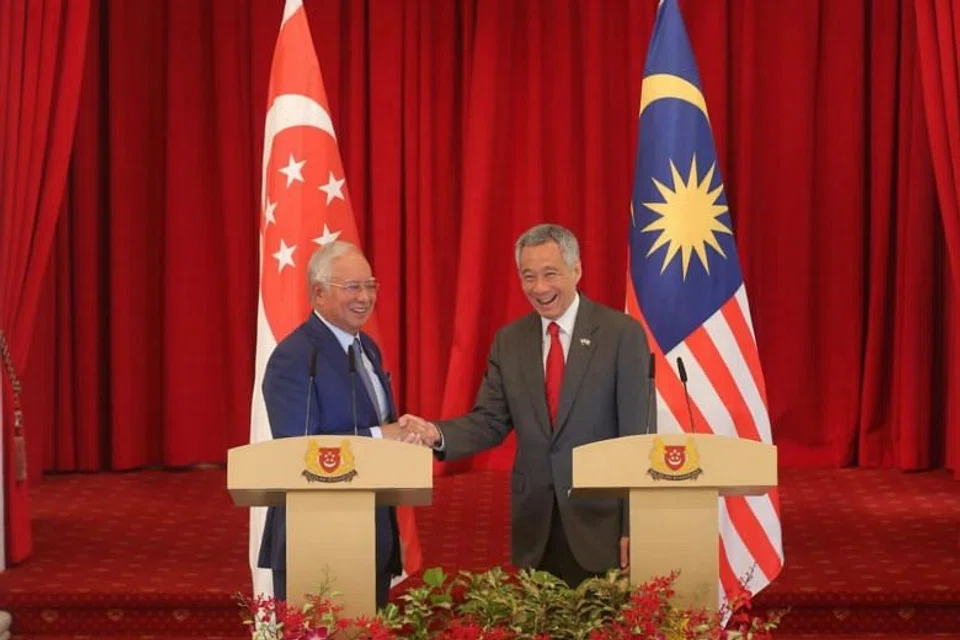
The LTA-Spad joint statement was issued shortly after Prime Minister Lee Hsien Loong and Malaysian Prime Minister Najib Razak witnessed the signing of the RTS Link bilateral agreement at the Istana.
The document was signed by Singapore's Coordinating Minister for Infrastructure and Transport Minister Khaw Boon Wan, and Malaysia's Minister in the Prime Minister's Department Abdul Rahman Dahlan.
Navigate Asia in
a new global order
Get the insights delivered to your inbox.
The RTS Link will cross the Straits of Johor via a 25 metre-high bridge, linking the Bukit Chagar station in Johor Bahru to the RTS Link Woodlands North MRT station in Singapore.
Each country will appoint an infrastructure company to fund, build, own, maintain, and renew the civil infrastructure and stations within their respective territories.
The fares have not yet been announced. The rates will be set commercially by an operating company, and will not be regulated by the two governments, said LTA and Spad.
Copyright SPH Media. All rights reserved.
TRENDING NOW
Autobahn Rent A Car directors declared bankrupt over S$50 million each owed to DBS

Higher costs, lower returns: Why are Singaporeans still betting on real estate?

Richard Eu on how core values, customers keep Singapore’s TCM chain Eu Yan Sang relevant
Loyang Valley sold for S$880 million to SingHaiyi-led consortium

