

Port squeeze threatens US retailers' holiday stocking plans
Problem stems from a shortage of trucking equipment, possible labour disruptions
Chicago
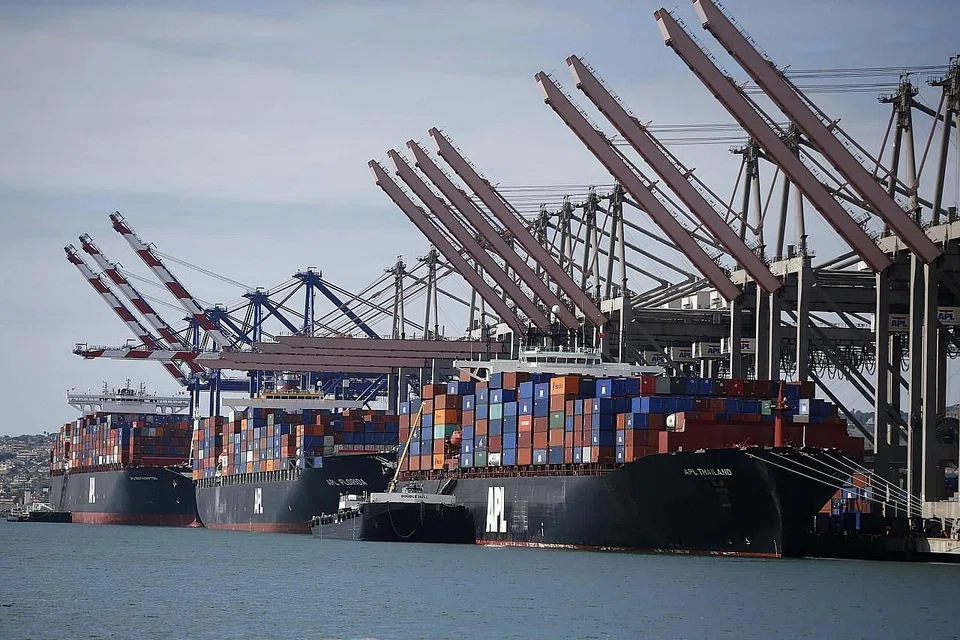
A SHORTAGE of transportation equipment and possible labour disruptions at the Los Angeles/Long Beach port complex, the nation's busiest, is delaying shipping containers for up to three weeks, threatening timely delivery to retailers for the holiday season.
The delays are affecting retailers including JC Penney Co, Macy's Inc, Kohl's Corp Nordstrom Inc, American Eagle, Ralph Lauren and Carter's, according to three people with direct knowledge of the situation.
Retail giant Walmart Stores Inc, recently diverted 300 shipment containers to Oakland to avoid the congestion, one person said. Walmart declined comment.
The problem stems from a shortage of trucking equipment, called chassis, but the National Retail Federation in a statement said that protracted labour negotiations were an issue, too. The International Longshore and Warehouse Union declined comment on whether talks were having an effect.
Most retailers acknowledged the delays at the key ports for shipments from Asia, but said that they did not anticipate product shortages during the holidays. Even so, any delay can derail a finely calibrated just-in-time inventory control system, making it costlier for retailers to put merchandise on the shelves.
"It's a domino effect," said Nate Herman, vice-president of international trade at the American Apparel and Footwear Association. "When there is an interruption, things degenerate quickly."
With major port contracts up for renewal this year, retailers including Walmart ordered early and prompted a surge of deliveries in June and July, port statistics show. But significant volume still arrived during the traditional August-October period that precedes the November-January holiday shopping season. "There will be a scramble to restock shelves this holiday season," said Mark Hirzel, president of the Los Angeles Customs Brokers and Freight Forwarders Association. "The delays are running into two to three weeks."
Cargo containers typically take two to three days to move out of the port.
A freight forwarder who spoke to Reuters on condition of anonymity said that holiday merchandise for retailers such as JC Penney, Macy's, Kohl's and Nordstrom that landed at the Los Angeles port two weeks ago still has not cleared the port.
An apparel importer who declined to be named said that American Eagle, Ralph Lauren and Carter's shipments from Bangladesh have been stuck for over two weeks. "We simply don't know when these shipments will move out," the source said.
An American Eagle spokeswoman declined comment on the delays. JC Penney and Macy's both said that they did not anticipate significant delay-related issues. A Nordstrom spokeswoman said that the company was contacting vendors for information. Walmart, Kohl's, Ralph Lauren and Carter's did not respond to requests seeking comment.
Outside the gates of Los Angeles/Long Beach Seaport on busy days, trucks stand in mile-long queues, even as stacks of unmoved containers wait for pick-up at a complex that handles 40 per cent of US container cargo. The Port of New York and New Jersey is also affected, but to a lesser extent.
Val Noronha, president of Digital Geographic Research Corp, said that the company's GPS tracking data showed a third of trucks took more than two hours to enter and leave the port, compared to about one fifth taking that long in June of 2010.
Geoffrey Hanna, vice-president of textile importer Henry W Peabody & Co, said that some truckers have refused to go to the ports because of long wait times. It took his firm more than two weeks to get a recent shipment out, Mr Hanna said.
The disruptions stem from the move by shipping lines, which struggled during the recession, to sell container trailers and other non-core assets to equipment leasing companies, port sources and outside specialists said. The change sent roughly 8,000 truckers that serve the port each day scrambling to find chassis.
The backlog of containers is creating extra work. Statistics from the Pacific Maritime Association, which represents 29 ports along the West Coast, show hours paid to terminal workers jumped 24 per cent this September over the same month last year. Last month, 750,850 inbound containers arrived at the Los Angeles/Long Beach complex, up almost 11 per cent from a year ago, the port statistics show.
Several retailers and importers are considering alternatives such as Houston or East Coast ports, Mr Hirzel of Los Angeles Customs Brokers and Freight Forwarders Association said. "It will cost more and take longer, but they want certainty," he said. "In this situation, there is value in certainty." REUTERS






