

Qantas to cut 15% of staff as it falls into red
Radical revamp planned to cut costs by A$2b in bid to get state aid
[SYDNEY] Qantas Airways is axing 15 per cent of its workforce, slashing spending and selling oil-guzzling older planes after stiff competition at home and overseas pushed the Australian flag carrier deep into the red in the first half.
In the most radical surgery at the airline since it was privatised two decades ago, Qantas plans to cut costs by A$2 billion (S$2.26 billion) over the next three years.
It hopes the shake-up will convince the Australian government that Qantas is worthy of the state assistance it says it desperately needs.
Bruised by high fuel costs, a strong Australian dollar, increasing international competition and a domestic price war with arch- rival Virgin Australia, the national flag carrier saw its debt relegated to junk status by rating agency Standard & Poor's in December.
Qantas is now asking the government for a debt guarantee which would give it access to cheaper capital.
The "Flying Kangaroo" also wants the government to change a law dating back to Qantas' privatisation that restricts how much money foreign investors can put into the carrier. Qantas claims Virgin Australia's unfettered access to foreign capital has given it an unfair advantage.
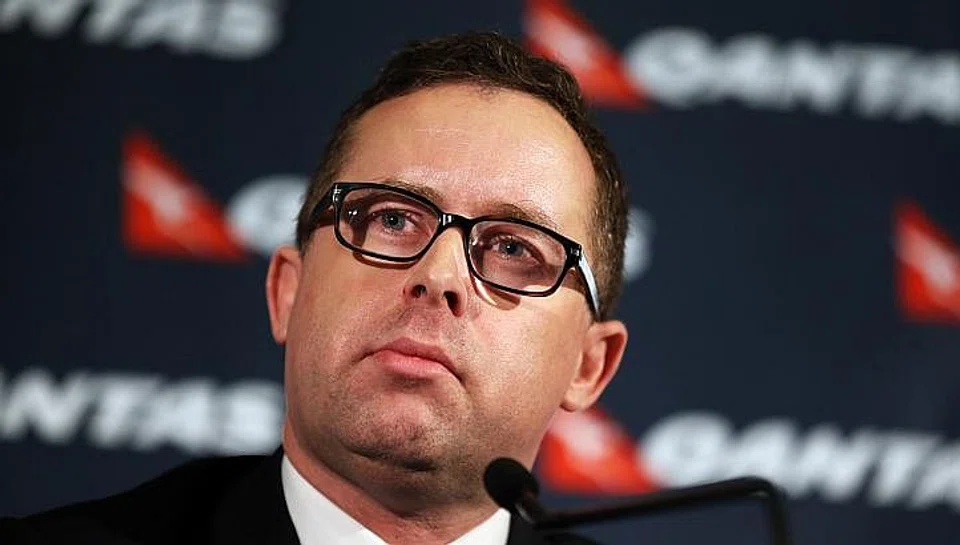
"We will cut where we can in order to invest where we must," chief executive Alan Joyce told a news conference yesterday after the company reported what was only its second first-half loss since privatisation in 1995. "We will be a far leaner Qantas Group."
Speaking in parliament after the results were announced, Prime Minister Tony Abbott offered encouragement without concrete proposals. "We want to ensure that Qantas is not competing against its rivals with a ball and chain around its leg," he said.
While Mr Joyce said that discussions were continuing with the government, Mr Abbott appeared to shy away from a debt guarantee, saying that would need to be offered to all airlines if it was given to Qantas.
The government is drafting changes to the Qantas Sale Act to lift the current 49 per cent foreign ownership limit, as well as alter restrictions on smaller shareholdings for foreign airlines. But that move will likely be blocked by the Opposition in the Upper House, preventing it from becoming law.
Mr Joyce said that the 5,000 job cuts, which have already drawn threats of strike action from trade unions, would be across the company, with pilots and cabin crew in the firing line.
Shares in Qantas, which have plummeted around 80 per cent from a high of A$6.03 in December 2007, closed down 9 per cent at A$1.15 yesterday.
"The government guaranteeing Qantas financially is the most sensitive question now in terms of market valuation," said Peter Esho, chief market analyst at Invast Financial Services. "The share price is unlikely to rise significantly until this is announced and any rally might see sellers until this is quantified."
Qantas' underlying loss before tax - viewed by analysts as the best measure of its performance - was A$252 million for the six months ended Dec 31. That was in line with the A$250 million to A$300 million loss the airline warned last month it would report.
In the same period a year earlier, Qantas made a profit of A$220 million, helped by a compensation payout for late delivery of Boeing's Dreamliner jets.
The A$262 million loss in Qantas' international division was greater than analysts anticipated, raising concern that an alliance it signed last year with Gulf carrier Emirates is not yet paying off.
Meanwhile, Jetstar, its low-cost Asian airline, has suspended the planned expansion of its business.
At home, Qantas did make a profit of A$57 million - but that was a quarter of the A$218 million it made the previous year.
Qantas complains that Virgin Australia retains the international traffic rights and benefits of an Australian-designated carrier even though it is effectively foreign-owned - its major shareholders are Middle East carrier Etihad, Singapore Airlines and Air New Zealand.
That access to foreign funding has allowed Virgin Australia to undercut Qantas on fares and increase capacity in an overcrowded domestic market, even while making a loss itself.
Virgin Australia has said it expects to post a first-half loss of A$49 million before tax, excluding large losses from Tigerair Australia and other one-off restructuring costs, when it reports its earnings today. - Reuters
TRENDING NOW

Indonesia’s coal tycoon Low Tuck Kwong replaced as Bayan Resources president-director

OCBC names Ang Eng Siong as global corporate banking head in rejig of wholesale banking business

Consider lowering homeownership barriers for some non-resident foreigners

DBS opens flagship investment strategy to retail investors with new fund

