

Record Chinese turnout puts European carmakers under pressure at Paris show
Chinese brands hold a 10.7% share of the European market in Q2, according to data
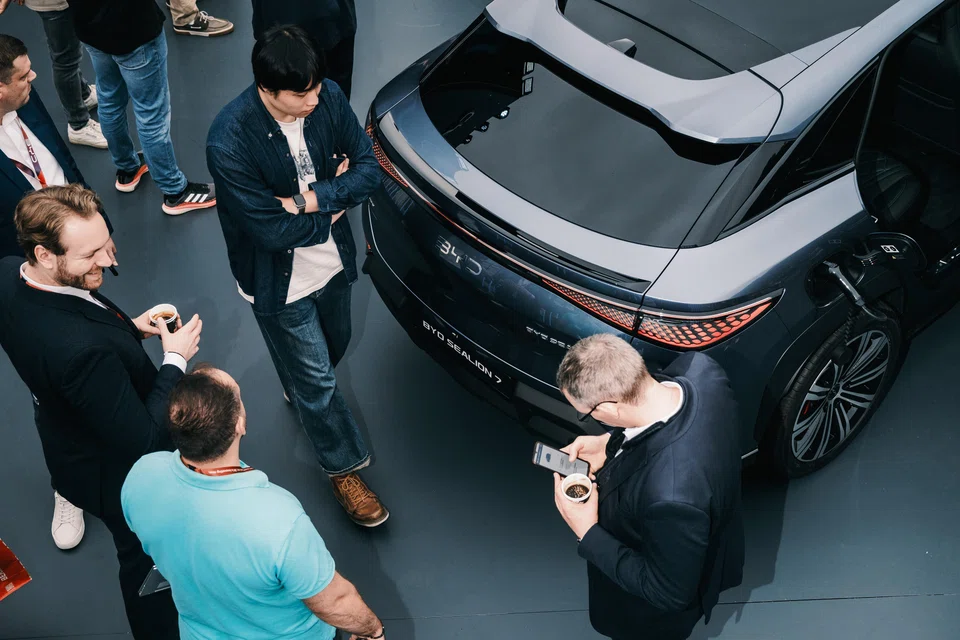
[PARIS] A record 20 Chinese car brands will descend on next week’s Paris Motor Show, underscoring how rapidly China’s automakers have established themselves as a competitive threat in Europe despite mounting trade barriers.
European carmakers will use the show to unveil new models and try to reassure investors they can compete, as Chinese rivals gain market share with a growing range of electric vehicles and hybrids.
This year’s Chinese contingent will be twice the size of the one at the last show in 2024, with established names such as BYD and Chery joined by newcomers including Aito and Avatr.
The Paris Motor Show comes at a pivotal moment for Europe’s auto industry. Sales by European manufacturers in China have slumped since the Covid-19 pandemic, while Chinese automakers, largely shut out of the US and facing weaker demand at home, have increasingly turned their attention to Europe.
“The Chinese are saying ‘we’ve got to try and dominate Europe because we can’t do anything in the US’,” said Brad Kunz, a partner at consultancy Grant Thornton Stax. “If the US had allowed Chinese automakers in, Europe ... wouldn’t be so much of a battleground.”
Data from Schmidt Automotive Research show Chinese brands held a 10.7 per cent share of the European market in the second quarter, up from 5.7 per cent a year earlier and above Japanese rivals who arrived in Europe in the 1970s.
European carmakers play a ‘double game’
Pressure from Chinese competition, alongside weak European demand, US tariffs and the costs of electrification, is starting to tell on European automakers.
Volkswagen is cutting thousands of jobs and considering factory closures to slash costs, while luxury rival BMW is also shedding thousands of workers.
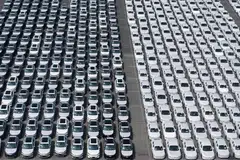
The European Union imposed tariffs on Chinese-made fully electric cars two years ago, but Chinese automakers have responded by expanding into combustion-engine models and plug-in hybrids.
Chinese brands accounted for more than 26 per cent of the Western European plug-in hybrid market in the second quarter, up from just 2.2 per cent in the same period two years earlier.
Europe’s auto industry is now pushing for tariffs on Chinese plug-in hybrids, while the EU is working on legislation that will include “Made in Europe” provisions requiring minimum local content levels for EVs to qualify for key subsidies or government contracts.
While battling Chinese rivals for market share, European automakers are also seeking to benefit from their rise by selling them capacity at underutilised factories and tapping into their EV technology. Stellantis, for example, has partnered with China’s state-owned Dongfeng.
“The Europeans are playing a sort of double game,” said Pedro Pacheco, vice-president of research at Gartner.
‘Still strong and still ready’
Chinese automakers have emerged as formidable competitors in EV technology, but European manufacturers are seeking to fight back with a new generation of more affordable electric models.
“This motor show will probably be the most important one in the region since the pandemic,” said automotive analyst Felipe Munoz. “This is the platform the Europeans are using to tell the Chinese they’re still strong and still ready.”
One of the headline European launches at the show, Stellantis’ revival of the Citroen 2CV, will test new rules allowing carmakers to cut back on some features in order to offer more affordable EVs and counter Chinese competition.
Meanwhile, previously little-known Chinese brands such as Aito, the premium marque owned by Chongqing-based carmaker Seres Group, will be looking for a breakthrough.
Aito wants overseas sales to account for 20 per cent of total volumes within three years, up from less than 1 per cent currently, and plans to launch four premium electric SUVs for Europe in Paris.
Francois Roudier, secretary-general of the International Organisation of Motor Vehicle Manufacturers, said the arrival of Chinese brands had helped reinvigorate motor shows after interest from some traditional manufacturers waned.
The large turnout in Paris reflects growing pressure on automakers on both sides to compete for buyers in an increasingly crowded market, he said.
“For years people were buying cars, now manufacturers have to sell them,” he said, adding that manufacturers who did not attend “have made a mistake”.
“It’s no show, no sell in a way.” REUTERS
Decoding Asia newsletter: your guide to navigating Asia in a new global order. Sign up here to get Decoding Asia newsletter. Delivered to your inbox. Free.
Share with us your feedback on BT's products and services
TRENDING NOW
Prima to move out of historic Keppel Road flour mill building in 2028
Temasek-related Azalea, SeaTown, Seviora Capital to merge in 2027
Family offices see more tailored products, leverage ‘collective firepower’ for direct deal access
Singapore room rates soar, but hotels seeing mixed demand from F1 race and events

