

Record volumes at LA ports to become 'new normal' after crisis
 Add BT as a preferred source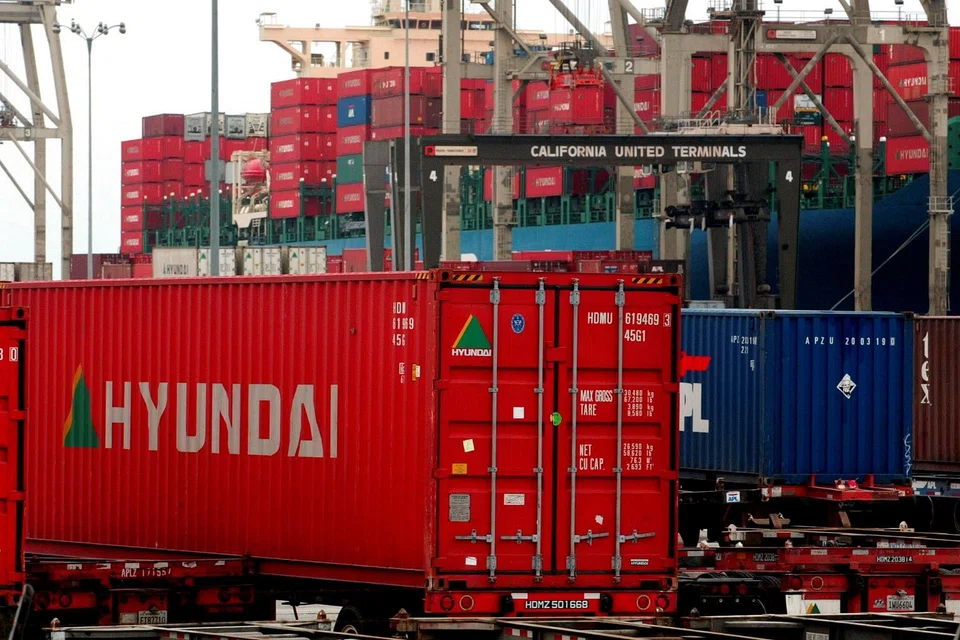
DeeperDive is a beta AI feature. Refer to full articles for the facts.
Los Angeles
THE record volume of cargo moving through the United States' busiest port complex is likely to continue amid high consumer demand for goods, the head of the Port of Long Beach said.
"It's going to be the new normal in terms of the amount of containers that you're going to be seeing here going to this complex," executive director Mario Cordero said in an interview with Taylor Riggs on Bloomberg Television on Wednesday (Dec 1).
"That 20-million number is not going to get reduced even after the crisis," he said, referring to the number of 20-foot equivalent units Long Beach and the neighboring port of Los Angeles expect to move this year, which will be the most yet.
The two ports together make the biggest gateway for ocean trade in the US, handling more than one-third of inbound containers. The bottlenecks at West Coast ports are tying up container capacity and underpinning already-soaring rates for transpacific ocean freight.
Despite efforts to ease congestion, long delays continue. Forty-nine container vessels were anchored off the southern California coast as of Tuesday, seemingly an improvement from the more than 80 waiting a few weeks ago.
Navigate Asia in
a new global order
Get the insights delivered to your inbox.
However, much of the decrease stems from a new queuing system for ships that keeps them farther away from the coast and slows their progression across the Pacific Ocean, said James Kipling Louttit of the Marine Exchange of Southern California, a nonprofit involved in maritime traffic. "All it does is move the parking lot," he said in an interview.
Cordero said that the easing is in part because of California-bound ships that are leaving China at reduced speeds and taking longer to make it to the West Coast, but that the port is witnessing improvements. "There is light at the end of the tunnel," he added.
Meanwhile, in an effort to move containers more quickly, companies operating at the twin ports have agreed to eliminate fees for shipping boxes picked up at night and on weekends, instead of during peak hours. And CMA CGM Group - one of the world's biggest ocean carriers - is offering as much as US$200 per container removed from the terminal in incentives for importers to help clear the ports' backlog.
The hubs have said they're considering charging fines for containers that sit on the docks for too long, and that the threat of penalties alone has helped ease bottlenecks. "We've been able to get the stakeholders to move this cargo," Cordero said.
On the demand side, he said upward demand is likely to help ease bottlenecks as household and consumer spending continue to climb. "It gives me optimism that hopefully at the beginning of the new year, we'll start seeing continued progress," he added. BLOOMBERG
Decoding Asia newsletter: your guide to navigating Asia in a new global order. Sign up here to get Decoding Asia newsletter. Delivered to your inbox. Free.
Share with us your feedback on BT's products and services
TRENDING NOW

China pips the US if Asean is forced to choose, but analysts warn against reading it like a sports result

Beijing’s calculated silence on the Iran war

Shelving S$5 billion office redevelopment plan proved ‘wise’ as geopolitical risks mount: OCBC chairman

Vietnam formalises new state leadership, redefining ‘four pillars’ power balance

