

Rising inflation may aid debt-heavy aviation industry: IATA chief

Tay Peck Gek
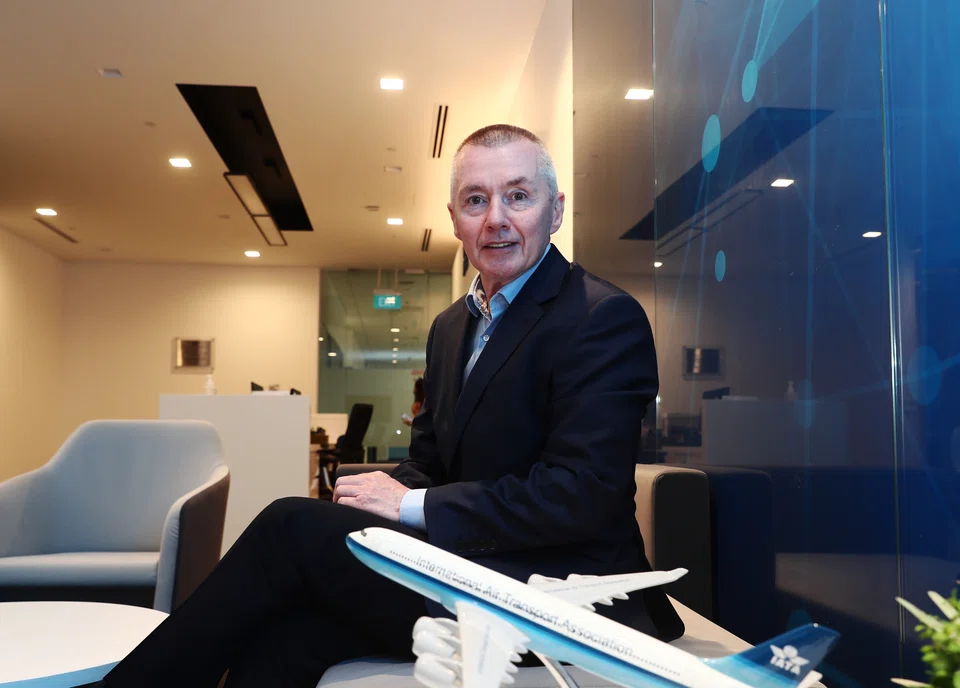
RISING Inflation, a growing concern globally, could actually “help” the debt-laden aviation industry as it reduces the real cost of debt, said Willie Walsh, the director-general of the International Air Transport Association (IATA).
He said: “You could argue that high inflation, given that the industry has taken on a lot of debt, could be turned into a positive (factor) because it reduces the real cost of debt. Inflation is always seen as a help when you have a lot of debt”.
He was responding to questions at a media roundtable on Monday (May 16) on which factors from elevated oil prices, inflation, rising interest rates or the spectre of a recession were of the greatest concern to the aviation industry.
“Interest rates are rising but … they’re still very low relative to where we’ve been in the past,” said Walsh, who is in Singapore for the inaugural 2-day Changi Aviation Summit beginning Tuesday. The event, jointly organised by the Singapore Ministry of Transport and the Civil Aviation Authority of Singapore, will host over 300 global aviation leaders, policymakers and senior executives from more than 45 countries.
Walsh, who has 4 decades of industry experience and was formerly chief executive of the International Airlines Group, British Airways and Aer Lingus, further pointed out that elevated oil prices, recession and rising interest rates were challenges that the aviation industry has encountered in the past as well.
“I would say this is just the day job, you know, we deal with those issues on a regular basis. So once we get through this crisis caused by the pandemic, we’re now into managing what I would call business as usual issues,” added Walsh.
He also expressed confidence that the aviation industry will be able to overcome these bumps, particularly given the robust recovery in air travel demand since the pandemic-led border restrictions in much of the world were lifted.
Walsh also opined that Singapore will clearly benefit from reopening its borders earlier than Hong Kong - another aviation hub that had handled more international passenger traffic than the city state pre-pandemic, but has yet to relax its border restrictions.
He commented: “I think you will see a shift... because Singapore Airlines is ambitious... the government of Singapore is ambitious... (and) Changi Airport is ambitious. The reason I’m here is because they are reaffirming their ambition in terms of being a leader on the global stage. This is an opportunity. I’ve no doubt that Singapore will take advantage of it.”
While the Chinese travel market was a key segment for airlines in the Asia Pacific before the pandemic, the tight border restrictions as the country battles renewed waves of Covid-19 infections, are unlikely to dampen the recovery of the aviation industry in 2022 and 2023. Airlines are also “reassessing” the importance of the Chinese travel market to their network strategies and are likely to make bigger moves into markets that are open.
On whether the business travel segment will be able to recover to pre-pandemic levels, Walsh replied that the segment will do so, although the pace is lagging leisure travel demand. Some industry observers have in fact reckoned that a full recovery may be elusive for corporate travel as virtual meetings, which became vital during the time most borders were closed as governments fought to curb surging infections, will remain popular.
“If you had asked me a year ago, I would have said: ‘No, I think there was going to be a structural adjustment’... but actually everything we see now suggests that it will come back. It may take a little bit longer,” said Walsh.
He stated that corporate travellers do intend to travel, based on information gathered by the airlines, although the duty of care that corporations owe to staff could be holding back such travel for the moment. He explained: “You know, what happens if the person is in a country and then the borders closed again?”
TRENDING NOW

Philippine power giant First Gen rebuffs foreign offers, plans up to US$2.6 billion in expansion

Once staunchly pro-China, Malaysian Chinese businesses are now distancing themselves from Beijing

Nearly half of Singapore workers put in at least six unpaid hours a week: survey

Vietnam’s data-centre investment rush faces reality check on power and site constraints

