

Safety alert over rusty pilots and jets activated after long pandemic storage
Regulators, insurers and experts cite potential pilot rustiness, maintenance errors and even insect nests blocking key sensors
 Add BT as a preferred source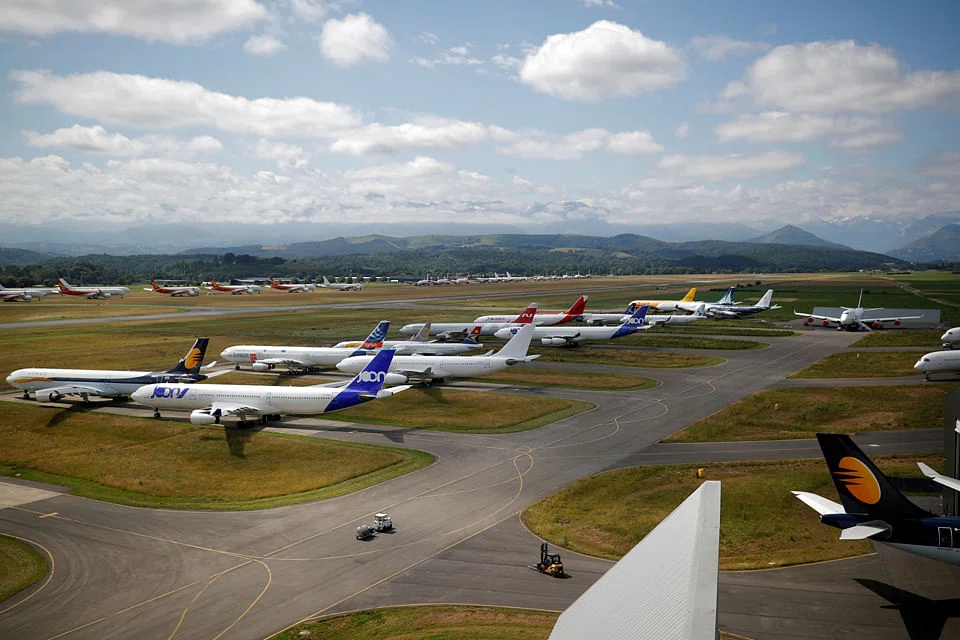
DeeperDive is a beta AI feature. Refer to full articles for the facts.
Sydney
REGULATORS, insurers and experts are warning airlines to take extra care when reactivating planes left in extended storage during the Covid-19 pandemic, citing potential pilot rustiness, maintenance errors and even insect nests blocking key sensors.
The unprecedented number of aircraft grounded as coronavirus lockdowns blocked air travel - at one point reaching two-thirds of the global fleet - has created a spike in the number of reported problems as airlines return them to service.
The number of "unstabilised" or poorly handled approaches has risen sharply this year, according to the International Air Transport Association (Iata). Such mishaps can result in hard landings, runway overshoots or even crashes.
Worried by Iata's data, insurers are questioning airlines about whether they are doing extra pilot training to focus on landings, said Gary Moran, head of Asia aviation at insurance broker Aon plc. "They want to know about the circumstances of the training," he added.
Approaches and landings place significant demands on crew for which training and regular experience are seen as vital. According to aircraft maker Airbus SE, the largest category of fatal accidents can be traced back to the approach to an airport, while the largest number of non-fatal accidents happen during landing.
Navigate Asia in
a new global order
Get the insights delivered to your inbox.
In May, a Pakistan International Airlines jet crashed after an unstabilised approach, killing 97 people, while 18 died in an Air India Express crash on landing in August, also after an unstabilised approach.
Training is not the only concern. The European Union Aviation Safety Agency (EASA) has reported an "alarming trend" in the number of reports of unreliable airspeed and altitude readings during the first flight after a plane leaves storage.
In some cases, take-offs had to be abandoned or the aircraft had to return to base. In most cases, the problem was traced back to undetected insect nests inside the aircraft's pitot tubes, pressure-sensitive sensors that feed key data to an avionics computer.
In June, a Wizz Air Holdings plc jet halted take-off after the captain found the airspeed was reading zero. Examination of the plane found insect larvae in one of the pitot tubes, with the aircraft having been parked for 12 weeks before the flight, the UK Air Accidents Investigation Branch said last month. No passengers were on board.
Insects blocking a pitot tube contributed to the 1996 crash of a chartered Birgenair plane in the Dominican Republic that killed all 189 people on board.
Kate Seaton, a Singapore-based aerospace partner at law firm HFW, said flight crews need to be aware of potential defects that might not have been identified properly as planes return to service after an unprecedented grounding.
"We are in new territory - the industry must take steps to mitigate the risks but need to be prepared for the unexpected," she noted.
EASA said last month that issues found after prolonged parking included an engine shutdown in flight after technical problems, fuel system contamination, reduced parking brake pressure and emergency batteries losing their charge.
"We've got people returning to work who are quite rusty, which is a big issue," insurer Aon's Mr Moran said.
Airlines have developed training programmes for pilots re-entering service ranging from theory refreshers to multiple simulator sessions and supervised in-flight checks, depending on the length of absence. REUTERS
Decoding Asia newsletter: your guide to navigating Asia in a new global order. Sign up here to get Decoding Asia newsletter. Delivered to your inbox. Free.
Share with us your feedback on BT's products and services
TRENDING NOW

Shelving S$5 billion office redevelopment plan proved ‘wise’ as geopolitical risks mount: OCBC chairman

China pips the US if Asean is forced to choose, but analysts warn against reading it like a sports result

Beijing’s calculated silence on the Iran war

Middle East-linked energy supply shocks put Asean Power Grid back in focus

