

Scheduled passenger flights to Cuba resume - now with jets
Fort Lauderdale, Florida
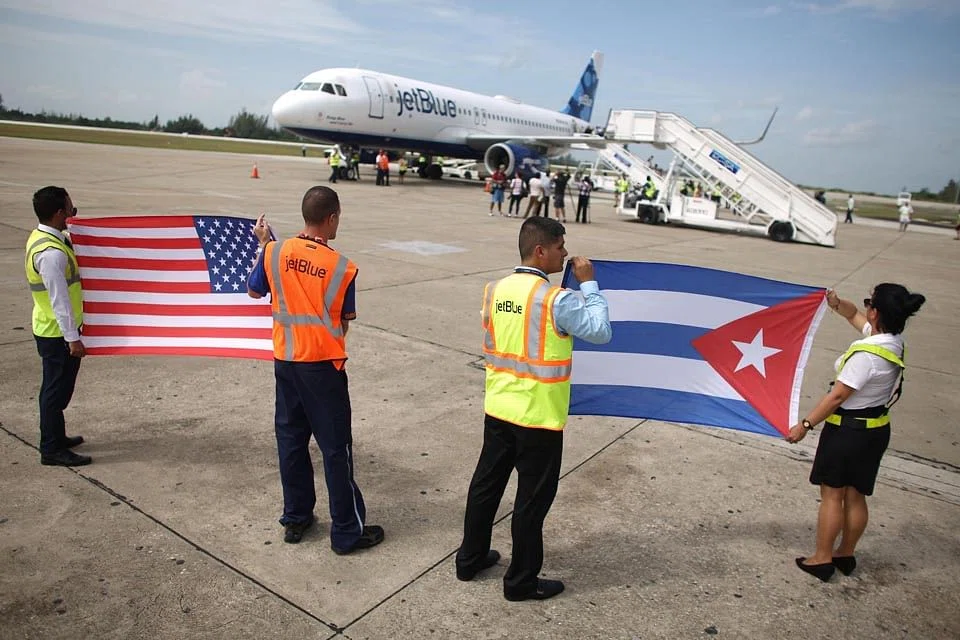
AMID live Cuban music, fresh guava pastries and a water cannon salute, the first scheduled passenger jet service in history between Cuba and the United States kicked off on Wednesday with a 9.45am flight from here to Santa Clara, about three hours east of Havana.
The flight on JetBlue - the first regularly scheduled flight from the US to Cuba in more than 50 years - was another important step towards normalised relations between two former Cold War foes, which promises to sharply reduce airfares and ease travel between the nations.
It has been so long since an airline in the US flew a regularly scheduled flight to the island that the last time it happened, the passengers flew on a propeller plane.
Erik Díaz Oliva, 41, choked back tears as he described the significance of flying on the first scheduled flight to his home country after eight years away. "I got here at 5am and was the first to check in; everyone started to cheer!" Mr Díaz said. "To the people who say these flights don't help: Yes, it does help. It opens Cuba to the world!"
The scheduled air service was the latest in a string of important changes between the nations since President Barack Obama decided in 2014 to restore diplomatic relations with Cuba. Embassies were opened, direct mail service was restored, and Carnival Cruise Line ships have sailed to Cuba.
Other moves, like ferry service and the building in Cuba of a US company's tractor assembly plant, were authorised by the Obama administration, but were stalled by the Cuban government.
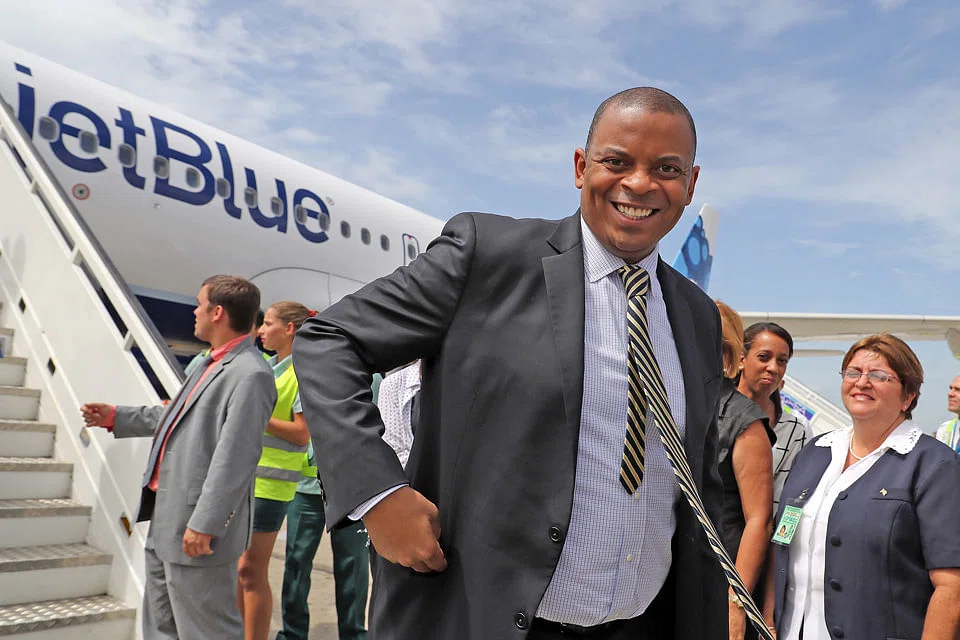
"Today opens the door to further exchange between the American people and the Cuban people," US Transportation Secretary Anthony Foxx said in an interview. "We think that's ultimately good for the expansion of freedom and democracy." He was among the inaugural flight's 150 passengers, which included more than two dozen journalists and assorted dignitaries.
"This is a novelty for me, to be able to fly direct without having to travel to a third country," said Orestes García Vásquez, 68, who was travelling from Villa Clara to South Florida. "This allows me to save time and money."
Cuba and the United States agreed to allow up to 90 daily round-trip flights between the two nations, the Department of Transportation said. Six airlines have been approved for flights to nine Cuban cities other than Havana, but not all of them have announced their schedules.
Mr Foxx said far more airlines had expressed interest in flying to Havana, the capital, than could be accommodated. "I haven't seen anything like it," he said.
On Wednesday, the US Transportation Department announced that Alaska Airlines, American Airlines, Delta Air Lines, Frontier Airlines, JetBlue, Southwest Airlines, Spirit Airlines and United Airlines would operate the coveted Havana flights.
The airlines will fly from Atlanta; Charlotte, North Carolina; Fort Lauderdale; Houston; Los Angeles; Miami; Newark, New Jersey; New York; and Orlando and Tampa, Florida.
Calling it "good pressure", Mr Foxx acknowledged that Cuba would have to improve its airport infrastructure to be able to handle the increased flow of airlines.
The country is notorious for poor airport facilities, and passengers often endure hourslong waits because baggage carousels or staircases needed to disembark are tied up.
José Ramón Cabañas Rodríguez, Cuba's ambassador to the US, said the country's 10 international airports were safe and secure, and had fielded nearly 5,000 charter flights from the United States last year. He added that the flight on Wednesday was yet another first for the two countries announced in the past few months.
"We hope that in the near future, all remaining obstacles that limit further exchange between the two countries will be removed," he said, referring to the US trade embargo, which remains in place.
For passengers, the difference will be immense. Until now, people flying to Cuba had to book charter flights - which meant passengers had to arrive at the airport four hours before takeoff and were charged steep fees for luggage. Prices were high, lines were long, and flights were often hours late. The document review process was time-consuming, and passengers stood in separate lines to check in, check bags, have bags weighed, and pay for the checked luggage.
"The last time I went to Cuba, I paid US$300 or US$400 just for the luggage - absurd!" said Yosleidys Rodríguez, 39, who left Cuba less than two years ago for South Florida. "This is the best thing that could have happened."
Now customers who qualify under the 12 authorised categories approved for travel can book flights directly on an airline's website, and many have paid fares as low as US$99 each way.
JetBlue expects to have up to seven daily flights to Cuba, although most of them will go to cities other than Havana, like Holguín and Camaguey. They are set to begin in the fall.
Silver Airways, a commuter airline, began offering three weekly flights to Santa Clara on Thursday, and later this year will start flights to Cienfuegos, Santiago de Cuba, Cayo Coco, Varadero, Cayo Largo and Manzanillo. American Airlines begins service on Sept 7 to Cienfuegos and Holguín, and will expand to three more Cuban cities later in the year.
Although the number of Americans flying to Cuba has been steadily increasing, experts say it is unlikely that the market will be able to bear such an abundance of seats.
"There's going to be a lot of seats on the market," said Michael Zuccato of Cuba Travel Services, a charter company whose business is in peril now that consumers can book directly with airlines. "I do not believe the flights are going to be full."
Marty St George, executive vice- president of JetBlue, said the airline expected brisk business, particularly among Cubans visiting their families. "We do think it's an important part of history," he said. "From a challenge perspective, we know the drill. Cuba has some unique elements because of 50 years of history between the US and Cuba, but we're ready to go." NYT
TRENDING NOW

World’s largest offshore wind platform by Seatrium consortium on track to be completed by 2028

Is stamp collecting enjoying an analogue revival or are its best days over?

GovTech retrenches another 38 staff in second round of layoffs

MBS adjusted property Ebitda falls 20.6% in Q3 with fewer high-roller visits, weaker hold

