

Sea cargo rates surge to pandemic highs
Market watchers say they will have limited impact on Singapore’s inflation rate for now, though Singapore exporters will feel the effects. But the higher rates could make themselves more felt in the US, says OCBC chief economist

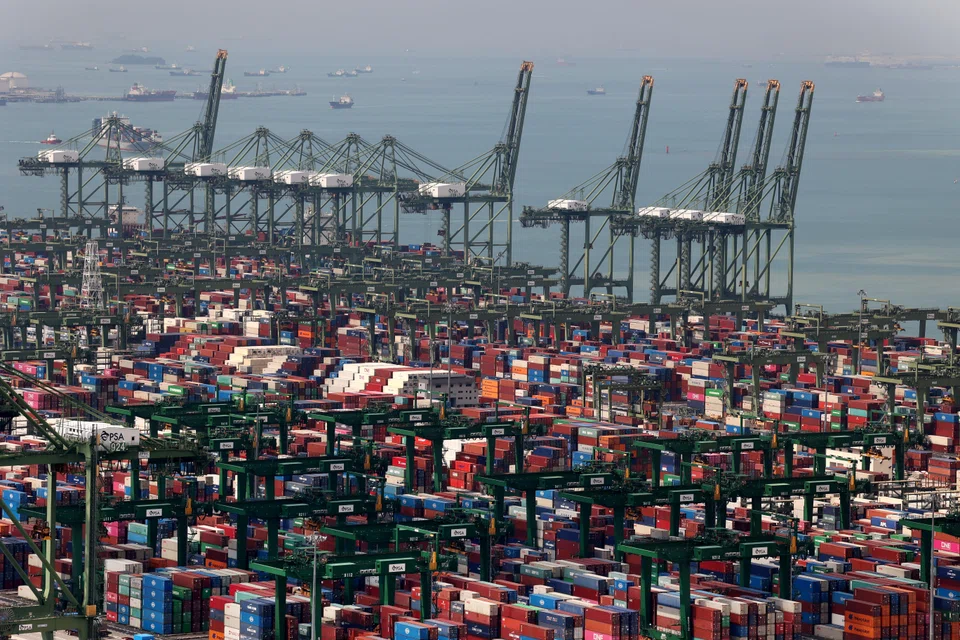
EQUIPMENT shortage, port congestion and a surge in shipments have come together to create a perfect storm, sending ocean freight rates up to highs last seen during the pandemic – and no relief is in sight for the short-term.
Market watchers believe this might have little impact on Singapore’s inflation rate for now unless the surge in rates sticks around.
But at least one economist thinks that exporters in Singapore might feel the effects of the spike in sea cargo rates acutely, and that the elevated rates could also move the needle for the closely-watched inflation figure in the US.
The Shanghai Containerized Freight Index covers 13 export trades out of Shanghai and is the world’s most widely used index for spot market ocean freight rates for Chinese imports. This index rose 7.2 per cent week on week to 2,703.43 points on May 24, a level that was 40 per cent higher than at the start of the month.
The gauge is now also 20 per cent higher than the early-February 2024 peak caused by the initial reaction to the Red Sea crisis, noted container shipping industry watcher Lars Jensen, the chief executive officer of consultancy Vespucci Maritime.
He noted that the current level is as high as that in early September 2022, during the pandemic.
Another gauge, the Drewry’s World Container Index, spiked 16 per cent in a week to US$4,072 for each 40-foot container as at May 23; this was a surge of 142 per cent year on year.
Jensen said that if the Red Sea crisis stays unresolved, there needs to be a rapid solution to the port congestion, equipment shortage and surge in demand in Asia for the currently high freight rates to ease off.
Trine Nielsen, head of ocean for Europe, the Middle East and Africa markets at global logistics platform Flexport, said the situation in the Red Sea, triggered by rebel attacks on ships, remains chaotic. To avoid these attacks, ships plying the Europe-Asia route have taken to sailing round the Cape of Good Hope off South Africa, instead of the shortest passage through the Red Sea/Suez Canal.
The far-longer route has disrupted these vessels’ punctuality and schedules, so they are bunching up at some ports; some carriers have been unloading their containers in transhipment hubs such as Singapore to make good on their upset schedules, so ports have become congested.
There has been another knock-on effect of these upset schedules: Because of the longer-than-normal transit times and the rapidly-rising sea freight rates, companies have changed their usual practices.
Nielsen said: “Shippers are pushing cargo for earlier departures to avoid increasing freight costs. Many companies are also changing their strategy to accept higher stock levels, fearing the even-more-costly stock-outs that many of them faced during the pandemic.”
She said there has been no major uptick in demand for goods from consumers, unlike during the height of the pandemic. “What has changed is the buying behaviour in companies: They have gone into panic mode due to the longer-than-anticipated transit times.”
Their fear of going out of stock on goods has pushed them to raise their stock levels, creating an unnatural spike in demand. This, coupled with the usual mid-year holiday season, is putting pressure on the supply-demand situation and driving up rates rapidly.
HSBC Global Research flagged that concerns over US tariff increases on certain China imports are also driving some of this front-loading.
The container trading market has tightened further in the last two months, a trend reflected in the persistent rise in container prices and container leasing rates in China, said Container xChange, an online marketplace for container trading and leasing.
The average prices of 40-foot-high cube containers in China shot up 17 per cent in May from the level in April.
Container xChange chief executive officer Christian Roeloffs said: “Many container sellers are holding on to their inventory, anticipating increased demand pressure for freight, especially since the second half of the year is typically a busier, more competitive and profitable season for the shipping industry.”
Shipping costs are set to rise for transhipments as well.
A group of feeder operators, the Asian Feeder Discussion Group, will raise the emergency cost recovery surcharge levied by its members: the current surcharge, between US$40 and US$100, will double to between US$80 and US$200 in June. Group members say they need to cover the increase in operational costs caused by the delays at transhipment ports in South-east Asia.
Danish container liner Maersk expects the Red Sea situation to continue in the second half of the year. It has raised its full-year profit guidance after having posted better-than-expected quarterly earnings, which were buoyed by strong shipping demand and the diversion of vessels away from the Red Sea.
Jefferies analyst Andrew Lee wrote in a May 26 report that the research house’s view of the higher-for-longer container freight rates was reinforced by observations of an early peak season and the scarcity of available charter ships.
A Citi report said demand is expected to outstrip supply through the end-September-quarter peak. With limited scrapping of vessels amid the elevated freight rates, however, supply is likely to catch up, so the high rates are likely to roll off from the end of the year.
Selena Ling, OCBC’s chief economist, pointed out that shipping rates are a very small component of Singapore’s consumer price index basket – at less than 0.1 per cent – so the direct impact of the higher freight rates should be limited for now, unless the surge is persistent, and pushes businesses into passing on the increased costs to end-consumers.
But she added: “The impact may be more acute for (Singapore) exporters. US inflation may have more at stake, since demand conditions have been strong and tariffs are also going up for some items, especially those from China.”
TRENDING NOW

Singapore identifies 7 firms responsible for haze fires, notices issued urging action: Grace Fu

Philippine power giant First Gen rebuffs foreign offers, plans up to US$2.6 billion in expansion

DBS remains analysts’ pick ahead of Q3 earnings after Singapore banks’ share slump

Indonesia imposes US$116 million in fines over manipulation of Sinar Mas, Prajogo-linked stocks

